Archive for Sunday, March 2, 2008
E-mail scam artists prey on trusting souls
KU student loses thousands of dollars
March 2, 2008
Advertisement
Local women speak out against email scams
A KU student is bilked out of more than $3,000 - another student almost loses thousands more. Two women are victims of scam artists operating out of Nigeria and other overseas countries - who prey on unsuspecting victims over the internet. Enlarge video
It's called the Nigerian scam, and it comes in many forms.
But it's more like a Nigerian nightmare for those who fall prey to the overly polite, poorly written e-mails and write checks for thousands of dollars.
"I'm continually checking my bank account and my credit card because I have no idea what they are capable of," said Meaghan Osa, a Kansas University senior from Denver.
In January, Osa needed to sublease an apartment and placed a notice for it on an online network with free classified ads. She got three initial responses from women claiming to be in Canada, South America and England. Communicating by e-mail, two of the women said they'd rent the apartment and share it.
One sent Osa a money order for $3,700, and the other sent a cashier's check for $2,800. They wanted her to deposit the money and send back the excess amount. Certain rules and regulations required the checks to be sent in large sums, Osa was told. She made the deposits, and a few days later, her account at US Bank showed they had cleared.
But when Osa tried to withdraw the money she was to send back, bankers stopped her. The money had only been credited to her account. The money order and cashier's check hadn't yet cleared. When Osa told bankers what she was doing and why, they told her she was a victim of a Nigerian scam. It was also determined that the cashier's check and the money order were fraudulent.
Osa received another $3,700 money order from a woman in East Africa.
"She claimed a company she worked for was transferring her out here," Osa said.
When Osa didn't send money back to the scammers, she started receiving intimidating e-mails. Someone from an international number called her cell phone repeatedly. She woke up one morning to find she had received 37 calls. No verbal messages were left. Osa received a mysterious package in the mail and turned it over to Lawrence police. The package had yet another check in it from someone wanting her to deposit it.
"It was getting out of control. It was really scary," Osa said. The calls have mostly stopped, she said.
Scams evolve
The Nigerian scam has been around for several years, but it has evolved, law enforcement authorities said. The scam got its name in the early days because mail was sent from people claiming to be from Nigeria and in need of help to move large sums of money out of their country. The latest version involves overages, or cashier's checks or money orders made out for large amounts of money for items being sold over the Internet.
The overage scams are relatively new, said Jeff Lanza, spokesman for the FBI headquarters in Kansas City, Mo.
"When you see cashier's checks and money orders mentioned, they are big red flags," he said.
The FBI will attempt to investigate such frauds, but many times there is little that can be done, Lanza said. The countries where the offers originate have to be willing to cooperate, and then the culprits have to be identified and found, he said.
The FBI and the Federal Trade Commission urge people never to give out their banking information. If you think you have become a victim of a scam, contact the FBI or Secret Service.
Lawrence police occasionally get complaints about Internet scams, Sgt. Paul Fellers said. The best protection is awareness and skepticism, he said.
"Usually, if it sounds too good to be true, it is," Fellers said.
Information about Internet crime and frauds can be found on the FBI, FTC and Internet Crime Complaint Center Web sites.
Honesty 'a downfall'
Tivoli Myers found out the hard way about the inability of law enforcement to help her recover from a scam. The KU freshman from Burlington lost nearly $3,000.
Myers wanted to sell a camera for $300 and placed an online ad.
She exchanged e-mails with a Fiona Smith, who said she ran a business in Africa. Smith sent Myers a check for $3,200. Myers deposited the check in her account at Commerce Bank, and three days later, it appeared that it had cleared, she said. She sent the camera.
Additional e-mail exchanges led to her getting requests to send a mobile phone and a laptop computer to either Smith or to what turned out to be a fake company in the United States.
Myers was stunned when she checked her online bank account on Presidents Day and saw that she was $2,800 overdrawn. Just as Osa's bank had done, Myers had initially been credited with the deposit even though it had not officially cleared.
Myers got no help from law enforcement agencies. There was nothing they could do, she was told. She said she was chastised for her mistakes by a banker and someone with a MoneyGram firm in New Jersey.
"I was told that if I didn't pay the money back within 25 days, my credit would be completely shot," Myers said. A friend loaned Myers the money.
"I thought being honest and trustworthy were two of my biggest assets," Myers said. "It turns out they are my biggest downfall."
Top ads RSS
- Retired/Semi Retired Pharmacists A pharmacist is needed for coverage when ...
- Apartment Maintenance Leading Regional Management Company Seeking full time hourly, ...
- Electrician Experienced, licensed Electrician needed. Need to be motivated & ...
- SECURE YOUR FUTURE! High earnings, creative freedom, lifetime security. Reece ...
- LEASING ASSISTANT Full or part-time position. Prior leasing experience preferred. ...
- Blog: Sarah Palin: With Interest July 4, 2009 · 166 comments
- On the street: What foreign country would you like to travel to? July 6, 2009 · 27 comments
- Should we celebrate freedom of religion on July 4? July 4, 2009 · 11 comments
- Proposed cap-and-trade legislation would mean bigger rate hikes for northern Kansas Westar customers July 6, 2009 · 22 comments
- Ten percent of women in Kansas have reported being a victim of domestic or sexual violence. Personal 11 comments
- On the street: Do you like your driver’s license photo? July 6, 2009 · 16 comments
- Three detained after Sunday nightclub shooting July 5, 2009 · 66 comments
- Blog: Name That Tune! July 5, 2009 · 47 comments
- Oread hotel on schedule for debut in February July 6, 2009 · 2 comments
- New law: Left lane only for passing July 2, 2009 · 206 comments
- Man arrested after Monday morning home invasion July 6, 2009
- Say cheese (or don’t): How to look good in your driver’s license photo July 6, 2009
- A new reign: Lawrence landmark the Castle Tea Room open again after extensive renovations July 5, 2009
- Shooting in Douglas County sends Eudora man to hospital, suspect turns gun on himself July 5, 2009
- Despite economic downtown — and market losses — Kansas university endowments see record donations July 6, 2009
- KU’s Self hitting recruiting trail July 6, 2009
- KU gains football commitment July 6, 2009
- A new crop of farmer July 5, 2009
- Ducking responsibility July 6, 2009
- Couple speak out on transgender issues July 5, 2009


2 March 2008
at 8:18 a.m.
Suggest removal
Permalink
zettapixel (Anonymous) says…
Here are some tips directly from Craigslist.
You can sidestep would-be scammers by following these common-sense rules:
* deal locally with folks you can meet in person - follow this one simple rule and you will avoid 99% of the scam attempts on craigslist.
* never wire funds via western union, moneygram or any other wire service - anyone who asks you to do so is a scammer.
* fake cashier checks & money orders are common, and banks will cash them and then hold you responsible when the fake is discovered weeks later.
* never give out financial information (bank account number, social security number, eBay/PayPal info, etc.)
* avoid deals involving shipping or escrow services and know that only a scammer will “guarantee” your transaction.
2 March 2008
at 8:46 a.m.
Suggest removal
Permalink
garrenfamily (Anonymous) says…
If the bank credits the account three days after depositing it, why would she question that is hadn't cleared? Shouldn't they be somewhat responsible as well? On the other hand, they has been in the news for a few years now…too bad people are still getting scammed.
2 March 2008
at 8:46 a.m.
Suggest removal
Permalink
50YearResident (Anonymous) says…
The Banks could end this type of scamming if they if they with-held these deposits from showing in your bank account until they guarantee the funds are legitimate.
Post a sign on the bank deposit areas that says: Out of country deposits will not be credited until absolute guarantee of authenticity can be guaranteed.
2 March 2008
at 9:24 a.m.
Suggest removal
Permalink
Marion (Marion Lynn) says…
The flip side f this is that sellers are constantly scammed by people who unfairly claim chargebacks for items and/or services paid via credit card.
Example:
I sell an online service which if purchased and used properly can be very profitable for the buyer. The problem which I faced was that guys were buying the service, using it, profiting from it and then issuing bogus chargebacks, which they can do under the TOS of the credit card sompanies. Since this is an online service, recovering the funds was very difficult for me. It's the kind of thing that once it is done, it's done and they've got it and cannot “return” it as they have already used it and is not the kind of thing that can be *returned*. The consequence of this is that I will *only* accept payment for this service by Western Union or USPS Money orders, which money orders I can cash at the post office. Do I *lose* the occasional sale as the result of these payment terms? Maybe but I don't get chargebacks and the accompianing fees, overdrafts, etc.
When I sell a car online, I will take your check but you will not be able to pick up the car for 21 banking days following deposit of the check as it can take that long for a check to be returned. Want the car on the day you pay? Send a wire transfer or bring cash. Period. Don't like the payment terms? Don't buy the car! I sell antique cars requiring at least some degree of restoration, so the cars are what they are and if you later get a case of “Buyer's Remorse”, that just *ain't* my problem!
Getting paid does no good if you do not stay paid.
PayPal will now withold eBay seller's funds for certain unspecifed items until positive feedback is left by the buyer or 21 days have passed which means that the seller must go out of pocket to cover shipping costs as his money languishes in PayPal who is earning interest on it.
The seller must now ship the item *before* he has received the funds!
eBay sellers may no longer leave negative feedback for even the most scamming buyer on the planet; bet you didn't know that, did you?
Oh, banks are required by law to credit your account for deposits with the times varying according to the kind of instrument deposited. Banks could exercise some common sense but so many transactions are handled by machine that most depostied items are actually never handled by humans.
One day I got annoyed at a bank at which I had an account so I started signing all my checks “Mickey Mouse”.
All of the checks so signed cleared without problem one.
2 March 2008
at 9:29 a.m.
Suggest removal
Permalink
sdinges (Anonymous) says…
I agree. While people need to be a bit more cautious with this kind of thing, banks really need to help them do that.
Banks need to make sure people cannot withdraw money until they are certain it is authentic. A bank hold is a simple matter, and it occurs all the time for a variety of reasons.
Or at the very least, they need to be providing very clear warnings to customers who deposit uncleared money orders. No customer should be withdrawing money without having had a verbal warning indicating that they will be held responsible for any money if the order turns out to be false. They need to be given an additional verbal warning that if they do not personally know the person who provided he money, then they should be aware that scams are common and to proceed with caution.
2 March 2008
at 10:24 a.m.
Suggest removal
Permalink
Marion (Marion Lynn) says…
Here is a good reference on the “419” scam, which is what this is:
http://www.scam419.com/
The FBI site about online scams:
http://www.fbi.gov/majcases/fraud/fra…
The guys who screw with the “419ers” (This is really funny!):
http://www.419eater.com/
2 March 2008
at 10:24 a.m.
Suggest removal
Permalink
Pogo (Anonymous) says…
Greed on the part of the recipients of the emails. They got something for nothing….just what they signed up for.
2 March 2008
at 10:35 a.m.
Suggest removal
Permalink
PeteJayhawk (Anonymous) says…
Morons.
Anyone that falls victim to these obvious scams deserves what they get.
2 March 2008
at 11:11 a.m.
Suggest removal
Permalink
BorderRat (Anonymous) says…
Pete, you beat me to it. How long has this scam been running in one form or another. Kind of like the Canadian Lottery Scam that was going around a few years ago. How can you win if you never played?
2 March 2008
at 11:14 a.m.
Suggest removal
Permalink
frwent (Anonymous) says…
The internet is a great thing for shopping and communication, but as we have seen, great opportunity for scammers. As many above have said, beware. You do not know who you are dealing with and regardless of many claims of security, there is no such thing. Pay pal is especially guilty, they claim their system is secure, but I have found charges from Russia and Latvia on my credit card. Fortunately, most credit card companies will chase these down and fix them. And some folks have become so wary that they will not even accept legitimate cashier's checks for Ebay purchases. Do not accept any claims of security when working online. It is so easy to accept the ease of dealing on line, especially with credit cards but their claims of security are very suspicious and should be carefully evaluated. And do not do ANY business with anyone out of country especially in Africa. As noted, those scams have been previously noted, many time.
2 March 2008
at 11:34 a.m.
Suggest removal
Permalink
Marion (Marion Lynn) says…
Cashier's checks can be faked and they can be stopped or reversed. You want to pay me by cashier's check, you get to wait 21 banking days before you get what you gave the check for.
An uscrupulous buyer who has sent a cashier's check can go back to his bank and yell, “Fraud!”, even when no fraud was involved and his bank will ACH my bank so fast that you won't even see the money disappear!
2 March 2008
at 11:47 a.m.
Suggest removal
Permalink
beatrice (Anonymous) says…
Scammers and spammers — all are scumbags. Right Nick?
2 March 2008
at 12:12 p.m.
Suggest removal
Permalink
sharper (Anonymous) says…
Banks are actually legally required to clear the funds on your deposited checks before they've been authenticated. Can you imagine two weeks waiting for your paycheck while your bank tries to make sure that it's legitimate? Or waiting another 3 weeks while the banks make sure that check from grandma for your birthday is a real check?
There are people who take advantage of this system, scammers, check-kiters, you name it, but that system is in place to make the lives of the average Joe (or Joanna) a little easier.
2 March 2008
at 12:27 p.m.
Suggest removal
Permalink
UfoPilot (Anonymous) says…
A KU senior? I thought college was supposed to be a place where you gained knowlege, Maybe she can get her money back.
2 March 2008
at 12:32 p.m.
Suggest removal
Permalink
notajayhawk (Anonymous) says…
sharper (Anonymous) says:
“Banks are actually legally required to clear the funds on your deposited checks before they've been authenticated.”
This *may* be true, if it takes longer than two weeks to “authenticate” a check, which it almost never does. I had a bank that started holding out-of-state checks for ten business days, and having the check issuer inquire with their bank revealed the checks had always cleared in three days or less.
Most, or at least many, banks do not hold your money as long as they're legally able to. My own bank will honor checks drawn written by me as soon as I make a deposit, and let me have the cash (even from an out of state deposit) the day after the deposit is made. Other banks hold money forever, much longer than it takes to clear, especially as having the physical piece of paper is no longer required and an electronic copy is just as good. Check the fine print in your banking agreement, it will tell you how long they *can* hold deposits, even if they don't. And it doesn't matter if you deposit a check drawn on a small bank in Oregon into another small bank in Maine - in the modern banking age it never takes as long to verify a deposit as the bank says they can hold it. (Of course, foreign transactions can take longer.)
2 March 2008
at 12:37 p.m.
Suggest removal
Permalink
The_Original_Bob (Anonymous) says…
Nigerian internet fraud? What about Leavenworth Co./Wyco internet fraud?
2 March 2008
at 12:44 p.m.
Suggest removal
Permalink
notajayhawk (Anonymous) says…
frwent (Anonymous) says:
“Pay pal is especially guilty, they claim their system is secure, but I have found charges from Russia and Latvia on my credit card. Fortunately, most credit card companies will chase these down and fix them.”
PayPal s*cks. The last time I tried to use it, it was for the purchase of a software program - something small, it was only like $6.00, then I got a key to use to download the software. There were problems with either E-bay's or PayPal's system that night (not that it matters, since I think E-bay owns PayPal), and twice I got errors before it told me the transaction had been completed. When I finally got the transaction to go all the way through, it said it had gone through - three times! (Why would I need to download three copies of the same software???)
Both PayPal and my card issuer told me there was nothing they could do, I had to go after the seller to get my money back. Sad thing was the seller (being brighter than either PayPal or my bank) had already noticed and already processed the refund for two copies. But it took quite a while before the credit reappeared in PayPal, and then the amount was such that it was too small to transfer back to my bank account (it was a debit card) and I had to jump through all kinds of hoops and barrels just to get them to give me back my money that I was overcharged solely because of an error in their system!
I have a lot of stuff around here that I would love to get rid of on E-bay, maybe even enough to consider opening an E-bay store, but the problems I've had processing payments through their system make me very leery.
2 March 2008
at 1:05 p.m.
Suggest removal
Permalink
Uhlrick_Hetfield_III (Anonymous) says…
I just saw something on ebay that said that their paypal account was down and that you should send a cashiers check, or money order.
2 March 2008
at 1:05 p.m.
Suggest removal
Permalink
Marion (Marion Lynn) says…
When it comes to dealing with 419 scams, you are pretty much on your own. The 419 scammers are very, very good at what they do and have a phenomenal delivery rate of their emails. The grammatical errors are typical of native Ibo or Hausa speakers who have sort of learned British English, which is what is taught in Nigeria but many of the spelling errors are *intentional* as the text-based emails then slide right past your spam filters, circumventing the algorithms!
Further, in spite of the noise that the Nigerian government makes about halting the 419ers, it is not going to happen. The 419 scams may contribute to as much as 40% of that nation's economy and is a cottage industry there. There are literally thousands of people sitting around on old 386s, laptops and other boxes, supervising the email sending programs through all sorts of ISPs and stopping them could well precipitate a complete economic collapse in that country.
You can contact the Nigerian government here but it won't do you any good:
http://www.eda.admin.ch/eda/en/home/r…
2 March 2008
at 1:16 p.m.
Suggest removal
Permalink
Sigmund (Anonymous) says…
Anyone who falls for this kind of scam is either a moron or a greedy moron. If this reflects the quality of students and their education at KU then our tax dollars and their tuition is being wasted at a unconscionable rate.
2 March 2008
at 1:50 p.m.
Suggest removal
Permalink
snap_pop_no_crackle (Anonymous) says…
snap writes:
yeah, outingbulkerbiz knows all about doing business on the internet.
http://groups.google.com/group/news.a…
Also see:
http://ikillspammers.blogspot.com/sea…
Adult language.
2 March 2008
at 1:53 p.m.
Suggest removal
Permalink
jumpin_catfish (Anonymous) says…
Genius and stupidity are alike except genius has limits.
2 March 2008
at 1:54 p.m.
Suggest removal
Permalink
camper (Anonymous) says…
Be wary of online scammers who ask for your mailing address and credit card info. They send you an e-mail via a web page link, and make that page almost identical to the true one. I received one of these e-mails and got almost half-way through my response before a light bulb went on over my head and I said “wait a minute”. I called the legit online merchant and they advised me of the scam.
Another thing. When I buy things on line from an unknown seller, rather than using a credit card or money order, I just mail them cash. I know this is not recommended, but it works well for me. I'm more willing to lose a couple hundred bucks in green as opposed to risking my checking account and/or credit. I have not been duped yet. Can anyone else tell me if this theory of mine is ok. Is it perfectly legal to send a 20 dollar bill via mail?
Thanks,
2 March 2008
at 1:56 p.m.
Suggest removal
Permalink
sdinges (Anonymous) says…
It's_Getting_Warmer: Marion's statement about buyers easily having internet credit card charges reversed is no lie. This is a risk for any online business that has a “virtual” product - such as a service or software that cannot be taken back once sold.
It is also extremely common.
If anyone was thinking of getting into that kind of business, they should be well aware of this inevitable problem.
2 March 2008
at 2:09 p.m.
Suggest removal
Permalink
compmd (Anonymous) says…
I can't believe these people fall for this.
Sigmund, you took the words right out of my mouth.
If you think this is happening to you, do *not* delete the emails you get from the other party. File a complaint with IC3 (ic3.gov) and hopefully something can come of it. Sometimes you can get lucky and the loser is in the US.
A few years ago I had an ad for a car I was selling online. I got a couple of fake buyers interested in it. I enjoyed screwing with the one guy who claimed his name was Mr. Butt. The other guy actually asked some pertinent questions about the car, which I gave him absurd answers to. He didn't seem fazed when I told him the car had 3,141,592.6 miles on it, and that it had a little body damage because it had been hit by a meteor that I couldn't swerve to avoid. We made a deal for a stupid amount of money ($22,343.82, the car wasn't worth nearly that amount) but I had to send him a certain amount back. He needed my address. So I told him my address was 1300 Summit, Kansas City, MO 64105. I never heard from him again.
2 March 2008
at 2:22 p.m.
Suggest removal
Permalink
Marion (Marion Lynn) says…
PayPal accounts can be locked for all sorts of reasons,most of which have nothing to do with the integrity of the seller.
PayPal is a payment service and therefore essentially not subject to federal or state laws and makes up its own rules as it goes along.
To read about PayPal horror stories, go here:
paypalsucks.com
2 March 2008
at 2:38 p.m.
Suggest removal
Permalink
ralphralph (Anonymous) says…
In the days of the 'full service bank', which still may exist in some small towns, the people at the bank would have prevented this by working with the customers and advising them how to avoid getting stuck. The big conglomerate banks don't care, nor do the branches of regional chain banks. It's a Wal*Mart world, and service has vanished.
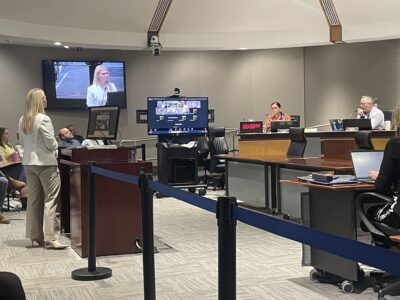
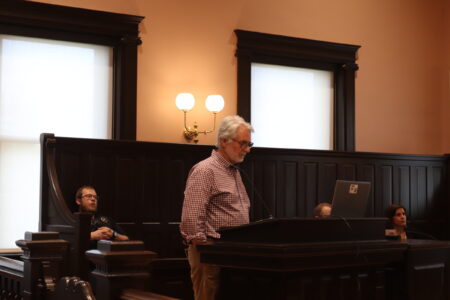
p.s. - only out of respect for Tiv did I not act on the urge to note that both pictured victims are blonde.
2 March 2008
at 2:42 p.m.
Suggest removal
Permalink
camper (Anonymous) says…
Cmpnd. I also had a little fun with an on-line scammer. I did not give them an address, but I gave them a place and time where we could meet personally. Never heard from them again.
This was probably stupid on my part however, because I hear a lot of these on line scammers are tied to organized crime.
2 March 2008
at 2:57 p.m.
Suggest removal
Permalink
Eride (Anonymous) says…
People who fall victim to this scam deserve what is coming to them.
Why would someone send you money with the expectation that you would send some of it back to them? Would *you* send someone extra money under the expectation that they would return it to you?
I mean seriously, how stupid are these people?!
2 March 2008
at 2:58 p.m.
Suggest removal
Permalink
notajayhawk (Anonymous) says…
Sigmund (Anonymous) says:
“Anyone who falls for this kind of scam is either a moron or a greedy moron. If this reflects the quality of students and their education at KU then our tax dollars and their tuition is being wasted at a unconscionable rate.”
Agreed. This is so amusing, that the supposed renters couldn't cash the money orders in their own country and send only the correct amount (or to believe that they would be so trusting to do so in the first place). Okay, I don't know a lot about Nigeria, but I'm pretty sure that in Canada and South America they have banks of their own! :)
________________
sdinges (Anonymous) says:
“It's_Getting_Warmer: Marion's statement about buyers easily having internet credit card charges reversed is no lie.”
The problem isn't only online. Mastercard and Visa know which side of the bread is buttered, and they always take the side of the cardholder, not the merchant (as opposed to American Express, who makes more off the merchant discount rate than they do from interest charges to the cardholder - at least it used to be that way). If a cardholder claims they have a reason to request their money back, MC and Visa take it back from the merchant, which with a very small business, can have devastating effects, especially when there's no notice and it can set off cascades of bounced checks and huge bank charges. When I was working for a small repair shop we had this happen, the customer paid a bill that was several thousand dollars without complaining to us, but we found out a month and a half later they disputed the charge with their CC company and the money was just removed from our bank account. The first thing that bouced was the 941 payroll tax deposit, which is never a good thing. But on any given day, there would be 15-20 checks hitting the bank (and they charge commercial customers more than they charge you for your personal accounts), and every day it became a losing struggle to deposit more and more not to cover the costs of doing daily business, but just to keep up with the bank charges. I did successfully get the money back for the business, it took months and sending them something like 27 pages of documentation that the charges were justified, and the company (which was struggling before that) never did recover.
2 March 2008
at 3:10 p.m.
Suggest removal
Permalink
Eride (Anonymous) says…
“This *may* be true, if it takes longer than two weeks to “authenticate” a check, which it almost never does. I had a bank that started holding out-of-state checks for ten business days, and having the check issuer inquire with their bank revealed the checks had always cleared in three days or less.”
There are rules regarding the amount of time a bank can place a check on hold (Refer to Regulation CC if you want the complete list of rules on funds availability) and the amount of time varies depending on the type of item it is (check, money order, cashiers check, cash, ACH) and where it is drawn from. There are also some exceptions to the general rules including when a bank knows an item is bad or if there have been issues with the depositor in the past.
The majority of items that go through a bank have next day (cashiers checks have next day availability) or two day availability and even though electronic check clearing is becoming more prevalent it still takes a lot longer than a couple of days, on average, to receive funds for those items. So your idea of how banks are the ones at fault for these idiots falling victim to this ridiculous scam is asinine. The banks can't hold these items until they actually receive the money, it isn't legal and on top of that it would piss off the majority of their customers.
2 March 2008
at 3:14 p.m.
Suggest removal
Permalink
redneck (Anonymous) says…
Are these people stupid or what? If it walks like a duck and quacks like a duck, then it's probably a duck. Same thing with a scam. I don't think these people desirve to be ripped off, but I don't feel too sorry for them.
2 March 2008
at 3:17 p.m.
Suggest removal
Permalink
Eride (Anonymous) says…
On another note, banks actually work very hard to try to catch people before they fall victim to these scams because it almost always ends up being a loss to the bank.
I don't think people really have an understanding about how much money banks lose from these scams and debit card fraud every year. We are talking about billions and billions of dollars.
Instead of blaming the banks who have plenty of reasons to try to prevent the losses (IE. Banks are profit driven companies, they don't like losing money), why don't you blame all of the idiots who are falling victim to incredibly absurd scams that shouldn't fool anyone!!!
2 March 2008
at 3:17 p.m.
Suggest removal
Permalink
Marion (Marion Lynn) says…
Oh, this gets better and better!
I once deposited a deep five-figure certified check to my account; the proceeds of a real estate transaction.
The bank gave me *incremental* credit, that is, one-fourth of the total amount of the check on each of four days, spaced three days apart, beginning three banking days *after* the check was deposited.
Well, that was the “last straw” so I simply waited until the full amount had credited, went into the bank and withdrew the entire amount in cash, just to p*ss them off.
Banks don't like cash transactions; it messes with their heads and they then have to order more cash from the Fed.
I took the cash to another bank and deposited it there.
Banks also operate on theri own “policies” which may or man not follow the law. Banks count on folks not knowing the law so they get away with it.
2 March 2008
at 3:19 p.m.
Suggest removal
Permalink
ImTooOldForThis (Anonymous) says…
They obviously dont teach those kids common sense at KU.
http://www.419baiter.com/
These people have fun with the “419ers”
2 March 2008
at 3:23 p.m.
Suggest removal
Permalink
Marion (Marion Lynn) says…
Thanks RT!
2 March 2008
at 3:38 p.m.
Suggest removal
Permalink
Baille (Anonymous) says…
I agree with some of what was said above. Certainly as consumers we have to be aware and be careful, but the banking industry shouldn't be showing these transactions until the money is actually verified. As anyone who regularly has to transfer large sums of money knows, the banking industry is far less sophisticated that they should be in this matter. It's not that they don't know better, either. They know.
Before I ever count on large sums of money being in my account as it should be, I get verification in writing from my bank.
2 March 2008
at 3:39 p.m.
Suggest removal
Permalink
Marion (Marion Lynn) says…
I think that snap, IGW and TOB may be in love with me as they seem to try to make every thread on which I post, *about* me!
Whattaya think?
Do I have a secret gay following?
2 March 2008
at 3:43 p.m.
Suggest removal
Permalink
geekin_topekan (Anonymous) says…
Blonds…
2 March 2008
at 3:44 p.m.
Suggest removal
Permalink
Baille (Anonymous) says…
All you d-bags out there slagging these girls need to stand down. Most people have no working knowledge of commercial paper unless they have been in the business and taught (hard or easy) or have learned it through business or legal classes. That vast majority of people still think that cashier's checks, certified checks and money orders are “good as cash.”
And banks don't have to verify or guarantee or act as if money from commercial paper is in your bank account. They can and do refuse to credit it to your account for a period of time. The length of this period changes depending on the bank and it can be short-circuited to an extent, but the fact is our system itself creates this opportunity for fraud.
I remember reading some time ago about institutional changes that could be instituted that would prevent this type of fraud. I wish I could remember the details - or even where I read it. Anyone read something similar?
2 March 2008
at 3:52 p.m.
Suggest removal
Permalink
booyalab (Anonymous) says…
Holy crap, people have actually fallen for the nigerian scams?
No wonder I keep receiving those emails.
I wouldn't call someone who buys into that 'trusting' so much as appallingly foolish.
2 March 2008
at 3:56 p.m.
Suggest removal
Permalink
booyalab (Anonymous) says…
Baille, you shouldn't have to be in “the business” to know that you don't give random strangers your personal information, and you shouldn't be using the internet period if you think any email you're not expecting is anything but spam.
2 March 2008
at 4:08 p.m.
Suggest removal
Permalink
frwent (Anonymous) says…
Old saying I learned in 3rd grade…..”Caveat emptor”….”Let the buyer beware. Says it ALL.
2 March 2008
at 4:08 p.m.
Suggest removal
Permalink
Baille (Anonymous) says…
As previously explained, this type of scam is not limited to internet deals and does not require you give any personal information over. For example, it happens with people handling their own auto deals and their own real estate deals.
Commercial paper scams are fairly common whether on the internet or off.
2 March 2008
at 4:09 p.m.
Suggest removal
Permalink
notajayhawk (Anonymous) says…
Eride (Anonymous) says:
“So your idea of how banks are the ones at fault for these idiots falling victim to this ridiculous scam is asinine. The banks can't hold these items until they actually receive the money, it isn't legal and on top of that it would piss off the majority of their customers.”
Good word, “asinine.” For those who would like to know more about Eride, look that word up in the dictionary, and you'll find his picture next to it.
Tell me, genius, where I said the “banks are the ones at fault for these idiots falling victim to this ridiculous scam.” I responded to another poster's remark that the banks are “legally required to clear the funds on your deposited checks before they've been authenticated.” Yes, Eride, I am aware that there are banking regulations that say when funds must be made available; maybe you can cite the specific passage where it says anything about “before they've been authenticated?” And the list of exceptions spelled out in section 229.13 of Regulation CC gives banks ample time to “authenticate” a deposit before making funds available, beyond the 5 business days they are already granted to make funds available from non-local deposits. Even if the aggregate deposit into all of a depositor's accounts for a business day exceed $5000, then the availability schedule spelled out in 292.12 does not apply.
“The banks can't hold these items until they actually receive the money, it isn't legal and on top of that it would piss off the majority of their customers.”
First, according to the same regulations you referenced, yes, they can. And second, maybe when you're old enough to have a bank account without mom & dad's name on it, you'll learn that p*ssing off their customers is not exactly a major concern for banks.
In any event, nowhere in the post you quoted did I say anything about the availability of funds having anything to do with these people being scammed. Please do try to read and think, Eride, before posting a retort (if you're capable of doing either).
2 March 2008
at 4:20 p.m.
Suggest removal
Permalink
Marion (Marion Lynn) says…
Nice post, Not but watch out!
The Internet Curs might fall in love with you too and then where will you be?
2 March 2008
at 4:25 p.m.
Suggest removal
Permalink
oxandale (Anonymous) says…
Wow, how naiive can a person be?
2 March 2008
at 4:28 p.m.
Suggest removal
Permalink
a2thek (Anonymous) says…
I do think it is kind of funny that both of these girls are blond. How ironic. No pun intended.
2 March 2008
at 4:29 p.m.
Suggest removal
Permalink
oxandale (Anonymous) says…
SHe seriously earned the privledge of being chastised over this. Yes, it is unfortunate that being trustworthy and honest people will be taken advantage, but it isnt not an asset of a person is naiive. There is a difference in being trustworthy and being naiive. Hopefully the people in this article will take this as an expensive learning lesson.
2 March 2008
at 4:33 p.m.
Suggest removal
Permalink
a2thek (Anonymous) says…
Come on people, do you think that anyone would give you money. Okay im going to give you a million dollars, is that okay? Come on wake up girls.
2 March 2008
at 4:38 p.m.
Suggest removal
Permalink
notajayhawk (Anonymous) says…
frwent (Anonymous) says:
“Old saying I learned in 3rd grade:..”Caveat emptor”:.”Let the buyer beware. Says it ALL.”
Except, unfortunately, both of these victims were “sellers,” not “buyers,” and that is to whom this particular type of scam is targetted - sellers.
2 March 2008
at 4:44 p.m.
Suggest removal
Permalink
OldEnuf2BYurDad (Anonymous) says…
These statements regarding I.Q. are unnecessary. This has little to do with intelligence and everything to do with greed. When being led by greed; even smart, experienced people will do “stupid” things. It's like men who cheat on their wives and don't think they'll get in trouble. When one's penis is doing all the thinking - logic and reason go bye-bye. The same here: when college girls and little old ladies get stung by scams like this, it's the lure of big easy cash that obscures their usual thought processes. “I can finally buy those Italian shoes I've been wanting” gets ahead of “This seems too easy”.
I mean… these are college girls. Smart enough to be in college means smart enough to see this coming… unless your eyes aren't open. This is ALL about greed.
2 March 2008
at 4:53 p.m.
Suggest removal
Permalink
World_Vision (Anonymous) says…
Isn't this what our government does with our taxes?
2 March 2008
at 4:57 p.m.
Suggest removal
Permalink
hockmano (Anonymous) says…
There has been alot of coverage in the news about these sorts of scams.I thought everyone would be aware of these scammers by now!Who would deal with someone from a foreign country anyways!If I really won the lottery as many times as those emails say, I would be a millionaire a hundred times over!
2 March 2008
at 4:58 p.m.
Suggest removal
Permalink
themomof4js (Anonymous) says…
For all of you that call people morons for falling for the “scam”, you need to look closely in the mirror. It doesn't have anything to do with whether they are smart or not. These scammers are very good at what they do, and before you know it, you're screwed. I can't stand people that JUDGE others. Especially when they haven't walked in their shoes. Unless you've been there and done that, you need to just keep your mouth shut.
2 March 2008
at 5:31 p.m.
Suggest removal
Permalink
Eride (Anonymous) says…
“First, according to the same regulations you referenced, yes, they can. And second, maybe when you're old enough to have a bank account without mom & dad's name on it, you'll learn that p*ssing off their customers is not exactly a major concern for banks.”
Um except that actually the regulations I cited DO say that banks can't place holds on cashiers checks until they clear. Reg CC clearly states that cashiers checks are next day availability items and a bank will NOT have obtained the funds by the next business day. You either didn't read Reg CC or you have trouble comprehending simple concepts, I am going to lean towards both of those reasons for your confusion.
“This *may* be true, if it takes longer than two weeks to “authenticate” a check, which it almost never does. I had a bank that started holding out-of-state checks for ten business days, and having the check issuer inquire with their bank revealed the checks had always cleared in three days or less.”
You didn't have a bank that was holding out-of-state checks for ten business days. That would be illegal. For starters the check being out of state doesn't matter, what matters is what check clearing region the financial institution is located in. These regions cross state boundaries. Second a non-local check, which is a check from a region other than the region you are depositing it into, can be held for up to only five business days. Barring some circumstance that allows the bank to place an exception hold on it. But from the content of your post you implied the only criteria for the hold was that it was “out-of-state” so we can ignore the exception rules.
You my friend are the one who doesn't know what they are talking about. You know *nothing* about Reg CC which is obviously from the lack of accurate information displayed in your posts.
Why don't you refrain from posting again until you learn something that will help you contribute factual information.
2 March 2008
at 5:33 p.m.
Suggest removal
Permalink
notajayhawk (Anonymous) says…
themomof4js (Anonymous) says:
“These scammers are very good at what they do…”
Agreed. This particular variation of the scam does not prey on greed, or even for people's desire to make money. As a matter of fact, the whole thing depends on you *not* being greedy and *not* trying to keep more than you're entitled to, else you wouldn't send them the money. As far as inordinate trust goes, they do everything to make it appear *they* are the ones trusting *you*. It's not a matter of saying “Send me some money and I'll send you back a lot more.” What these particular scammers are doing is sending *you* money, more than you were requesting, and saying they trust you to send back the change, after you've had a chance for the deposit to clear. It's really nothing more an elaborate counterfeit scam - “I'll buy that from you for $20, but all I have is a hundred - take it, break it in your own bank, and then send me back the change.” Pretty clever, really.
However, as I said earlier, there really should have been some red flags - like why is this stranger who dropped out of nowhere trusting you with $3000 of their money and asking you to send back the change? And why couldn't they cash the money order or whatever themselves and send you the right amount instead of you cashing it and sending them the difference?
2 March 2008
at 5:39 p.m.
Suggest removal
Permalink
snap_pop_no_crackle (Anonymous) says…
snap writes:
Gaunt old dudes, steeped in whiskey and reeking of stale cigarette smoke, they're teh new gey idols.
Especially when they're wearing the Blu-Blockers and a crazy leer.
2 March 2008
at 5:43 p.m.
Suggest removal
Permalink
mommy3 (Anonymous) says…
This is sad that these people think we are so stupid in the good U.S.A, that they continue to do this. I have a really hard time with it, when you think of the elderly or young (such as in this story). I know of a few people who would be so desperate for some money, and don't have a clue that people like this are around…that they would fall for it. I kept getting emails from a “Bank of Nigeria” saying I have inherited $3 million dollars because some guy over there with the same last name died and no family. They never asked for money in return, but said, “A rep. from our bank with be arriving in your local airport in the morning. Please send us your picture and address, along with the name of the local airport.”……”He will be holding a case full of the money…but do not mention to him anything about the money because he does not know what is in there.” “He also has a envelope with a key inside, please board him in your house, and feed him, and take care of him overnight.” It was really scarry. I sent the a reply, saying I sent their email to the FBI and never heard another word. I did send it to the SC but I am sure they have no time for this, but again…….I feel for the elderly or poor who are desperate for money.
2 March 2008
at 5:47 p.m.
Suggest removal
Permalink
Baille (Anonymous) says…
But wait, notajayhawk, I though it was ALL about money. Could the previous posters be wrong about that?
2 March 2008
at 6:03 p.m.
Suggest removal
Permalink
Multidisciplinary (Anonymous) says…
You must take into account these girls are the prime age that people take advantage of. They are the main people who get involved with pyramid schemes..especially the ones where someone they know and would never think bad about, is already involved and that person says someone involved has checked with a lawyer, and IT NOT a pyramid scheme, all perfectly legal. And they then go to roomates, floormates, friends.
This is also the age group that tends to NOT consult their parents, they are trying to be independent women (and men).
It also factors back to what biology gave them to raise children. The necessary blindness to see good, and potential in people, even when it's clearly not there.
If a mother could make these judgements about which child to care for or not, would we have survived as a species? Many men also have a blindspot.
Problem stemming from the same mental process: These women apply the same “guiltless approach” to dating. Red flags come up in a man's personality, but they think, oh, he couldn't have meant to do that, etc. He couldn't be so two faced to his friends, I must have misunderstood.
They then overlook everything they see that has “reared it's ungly head” and hope for the future, and that the person they're seeing will not end up having these faults.
Yeah..maybe when they're 55..maybe.
2 March 2008
at 6:16 p.m.
Suggest removal
Permalink
notajayhawk (Anonymous) says…
Eride (Anonymous) says:
“Reg CC clearly states that cashiers checks are next day availability items and a bank will NOT have obtained the funds by the next business day.”
*SOME* cashier's checks, idiot, speaking of not being able to read. You noted yourself the existence of exceptions to the availability schedule in sections 292.10 and 292.12, exceptions for, among other things, new accounts, large deposits, redeposited checks, history of overdrafts, “reasonable cause to doubt collectibility,” etc. Maybe you should have read through the whole regulation you referred to, moron.
Regulation CC Sec. 292.13 Exceptions, paragraph (h):
“(1) If an exception contained in paragraphs (b) through (e) of this section applies, the depositary bank may extend the time periods established under Secs. 229.10(c) and 229.12 by a reasonable period of time.”
and
“(4) For the purposes of this section, a “reasonable period'' is an extension of up to one business day for checks described in Sec. 229.10(c)(1)(vi), five business days for checks described in Sec. 229.12(b) (1) through (4), and six business days for checks described in Sec. 229.12(c) (1) and (2) or Sec. 229.12(f). A longer extension may be reasonable, but the bank has the burden of so establishing.”
In other words, a non-local check *can* be held for up to six days beyond the normal five days based on the exceptions described in section 292.13, one of which I even spelled out for you, and while I doubt your math skills are any better than your reading skills, 5+6 =11, and believe it or not, that's more than 10. But according to Eride, “You didn't have a bank that was holding out-of-state checks for ten business days. That would be illegal.” As amusing as it is to listen to you tell me what my bank did or didn't do, you might also have seen Marion's example of how long a bank held his large deposit.
(continued)
2 March 2008
at 6:16 p.m.
Suggest removal
Permalink
notajayhawk (Anonymous) says…
(continued)
“But from the content of your post you implied the only criteria for the hold was that it was “out-of-state” so we can ignore the exception rules.”
Uh, yeah. Maybe you 'missed' this part: “And the list of exceptions spelled out in section 229.13 of Regulation CC gives banks ample time to “authenticate” a deposit before making funds available, beyond the 5 business days they are already granted to make funds available from non-local deposits. Even if the aggregate deposit into all of a depositor's accounts for a business day exceed $5000, then the availability schedule spelled out in 292.12 does not apply.” Again, reading and comprehension don't seem to be your strong suits.
“You my friend are the one who doesn't know what they are talking about. You know *nothing* about Reg CC which is obviously from the lack of accurate information displayed in your posts.”
Uh, yeah. I quoted the regs you referenced. If you actually do “know what you're talking about,” then you're just an idiot-liar. Let's let the readers decide - here's a link to the regulations, which I can't help but notice Eride didn't provide, even though it was his reference:
http://www.bankersonline.com/regs/229…
2 March 2008
at 6:25 p.m.
Suggest removal
Permalink
notajayhawk (Anonymous) says…
Baille (Anonymous) says:
“But wait, notajayhawk, I though it was ALL about money. Could the previous posters be wrong about that?”
Depends on how broad you interpret “this kind of scam.” The Nigerian scam, in general, does prey on the greed of the victim. Variations include things like “You've won the lottery (or received an inheritance) and if you send me money we'll process your check,” or “I need your help to smuggle this money out of my home country, send me the money I need to do it and you're in for a real windfall,” or something to that effect. It is predicated on getting something for nothing (except your “investment” or “processing fee”), and the motivation for the victim is to make money.
The variation in play with both of the girls in this article doesn't ask for the victim to send any money first, the scammers sent *them* money first. They just sent “too much” and asked for the victims to return the change. In both cases the money the victims received wasn't for nothing, they were selling something. If the victims were motivated by greed and making money, why would they send back the “change” (or in the case of one of the two girls, additional items for sale) *after* they had received the money orders, which is the only way the scammers can profit?
2 March 2008
at 7:33 p.m.
Suggest removal
Permalink
beobachter (Anonymous) says…
rt that's how we got W.
2 March 2008
at 7:58 p.m.
Suggest removal
Permalink
Eride (Anonymous) says…
I am going to quote you again with my response since you did such a good job at only quoting a part of what I said to make your point SEEM valid.
“
“This *may* be true, if it takes longer than two weeks to “authenticate” a check, which it almost never does. I had a bank that started holding out-of-state checks for ten business days, and having the check issuer inquire with their bank revealed the checks had always cleared in three days or less.”
You didn't have a bank that was holding out-of-state checks for ten business days. That would be illegal. For starters the check being out of state doesn't matter, what matters is what check clearing region the financial institution is located in. These regions cross state boundaries. Second a non-local check, which is a check from a region other than the region you are depositing it into, can be held for up to only five business days. Barring some circumstance that allows the bank to place an exception hold on it. But from the content of your post you implied the only criteria for the hold was that it was “out-of-state” so we can ignore the exception rules.
”
As I stated, and as is clear from your post which I actually quoted in FULL instead of quoting partial sentences to make myself look right, the only criterion you used was that the check was out of state which isn't even applicable to anything as the state of the check has nothing to do with the funds availability of an item. You didn't specify anything else that would imply the validity of an exception rule being used and indeed from your own wording you imply that they were holding EVERY check that was ONLY out of state for ten business days which is clearly not legal.
Thanks again dude, keep the laughs coming.
2 March 2008
at 8:04 p.m.
Suggest removal
Permalink
Eride (Anonymous) says…
notajayhawk (Anonymous) says:
Eride (Anonymous) says:
“Reg CC clearly states that cashiers checks are next day availability items and a bank will NOT have obtained the funds by the next business day.”
*SOME* cashier's checks, idiot, speaking of not being able to read. You noted yourself the existence of exceptions to the availability schedule in sections 292.10 and 292.12, exceptions for, among other things, new accounts, large deposits, redeposited checks, history of overdrafts, “reasonable cause to doubt collectibility,” etc. Maybe you should have read through the whole regulation you referred to, moron.”
I am fairly sure that the only moron here is you. Do I need to define the word 'exception' for you?
Read a dictionary sometime.
2 March 2008
at 8:13 p.m.
Suggest removal
Permalink
Marion (Marion Lynn) says…
Wanna find out how much fun a bank can have with you, just deposit a draft from an insurance company paid to you for a loss.
2 March 2008
at 8:34 p.m.
Suggest removal
Permalink
notajayhawk (Anonymous) says…
Eridiot, why don't you come back when you're old enough to read?
“You didn't have a bank that was holding out-of-state checks for ten business days. That would be illegal.” Eridiot
I was right. You either can't add 5+6 or you really didn't know that 11 was more than 10.
“You didn't specify anything else that would imply the validity of an exception rule being used and indeed from your own wording you imply that they were holding EVERY check that was ONLY out of state for ten business days which is clearly not legal.”
So if I said the police pulled over a red car, I'm implying it was pulled over ONLY because it was red and that the police pull over EVERY red car? What planet are you from? Really?
Tell us all, Eridiot: Where did I say “only because they were out of state?” Was it before or after I said that the “banks are the ones at fault for these idiots falling victim to this ridiculous scam?” Oops, forgot, didn't say that either - just Eridiot thought I did.
“Do I need to define the word 'exception' for you?”
Thanks, I already did that for you. A bank can extend the time for funds to become available if the account it's deposited into is new, if the aggregate of all deposits to all the depositir's accounts exceed $5000 (which it's pretty obvious you didn't know about from personal experience, unless daddy has really increased your allowance), checks being redeposited, the depositor's history with the bank, or if the bank has cause to suspect the funds might not be collectable (in *their* opinion). Wow. You're right, moron. That's almost never. Bet there can't be more than 3 or 4 times a deposit somewhere in this country meets any of those criteria in a given year.
And by the way, Eridiot, did you read the article? Let's go back to this brilliant piece of Eridiocracy:
“Reg CC clearly states that cashiers checks are next day availability items and a bank will NOT have obtained the funds by the next business day.”
Did you happen to notice that in the article, the bank did not release the funds to Ms. Osa “a few days” after she deposited the cashier's check and money order? That although her account had been “credited,” the funds had not been made “available?” I thought that was illegal, Eridiot?
2 March 2008
at 9:46 p.m.
Suggest removal
Permalink
Multidisciplinary (Anonymous) says…
Marion..
You got that right. I got a large check, with which I included another deposit. They said it would be held until a given date. I bought a car, the local dealership knew the date, and deposited it then. When a title issue came up, I called the dealer and they told me the check hadn't cleared. I called the bank, they said it had been cashed on a date, well over a week past. I called the dealership again, and was told that they had in fact resubmitted the check, but their rule was to wait two weeks before sending the title to the owner.
Mind now, that this is time for the 30 tag to expire.The dealership first said the title wasn't available yet, and that there was nothing they could do about the expiring tag. I then had to drive to the dealership on the last day to get the title, but they didn't have it until too late to not be driving my car without a tag. Had to wait until the following Monday.
2 March 2008
at 10:16 p.m.
Suggest removal
Permalink
JoRight (Anonymous) says…
I'd be pretty embarrassed if I were them. Sheesh, these girls are the reason why I get emails from the Dutchess of Nigeria asking me to hold onto the million dollars of assets they have.
And, I must say, they got what they deserved and I hope they learned a lesson.
2 March 2008
at 10:45 p.m.
Suggest removal
Permalink
notajayhawk (Anonymous) says…
“Sheesh, these girls are the reason why I get emails from the Dutchess of Nigeria asking me to hold onto the million dollars of assets they have.”
A blond is driving along in the countryside when she sees another blond sitting in a rowboat in the middle of a field. She stops and asks “What the heck are you doing?”
The blond in the boat says she's trying to row the boat but can't seem to get anywhere. The first blond goes off on her, calling her every name in the book. “It's because of morons like you that I have to put up with stupid blond jokes,” she says.
“If I could swim I'd come out there and kick your *ss!”
2 March 2008
at 10:58 p.m.
Suggest removal
Permalink
Multidisciplinary (Anonymous) says…
*shaking head in shame*
2 March 2008
at 11:54 p.m.
Suggest removal
Permalink
Marion (Marion Lynn) says…
Anyone know why I'm getting a sort of pop-up from Crown Chevrolet like four times on the page?
3 March 2008
at 12:37 a.m.
Suggest removal
Permalink
notajayhawk (Anonymous) says…
Marion (Marion Lynn) says:
“Anyone know why I'm getting a sort of pop-up from Crown Chevrolet like four times on the page?”
Been happening here, too, depending on which browser I use. If I use IE, it shows up at the bottom, but appears to sick or something, and copies of it creep up the page as I scroll up. I'm using Opera now, and while it doesn't have the banner problem, everything else is moving very slowly, sometimes entire words lag behind the typing.
3 March 2008
at 12:50 a.m.
Suggest removal
Permalink
compmd (Anonymous) says…
Marion & Notajayhawk,
Get the Adblock plugin for Firefox and add ads2.ljworld.com/* to the block list. That should take care of the annoyances. I haven't been getting anything.
3 March 2008
at 1:23 a.m.
Suggest removal
Permalink
Multidisciplinary (Anonymous) says…
Will it take care of those many annoying posts too?
3 March 2008
at 1:28 a.m.
Suggest removal
Permalink
notajayhawk (Anonymous) says…
Multidisciplinary (Anonymous) says:
“Will it take care of those many annoying posts too?”
We can only dream…
________________
compmd;
As I said, I'm using Opera now, and it is keeping the ads away, but I think that's also why it's slowing things down so much; the built-in adblocker in Opera is handling it, but using up a lot of resources doing so.
3 March 2008
at 3:48 a.m.
Suggest removal
Permalink
Multidisciplinary (Anonymous) says…
So you're saying your Opera handles STD'S, but needs Viagra?
3 March 2008
at 4:26 a.m.
Suggest removal
Permalink
snap_pop_no_crackle (Anonymous) says…
typical marioni post: “blah, blah, blah, cur, blah, blah, David Irving, blah, blah, Packard, blah, biosolids, blah, cur, blah, blah, David Irving, blah, blah, cyberthug, blah, blah, blah, cur, blah, blah, David Irving, blah, blah, cur,blah, blah, blah, cur, blah, blah, David Irving, blah, blah, cyberthug, blah, blah, blah, cur, blah, blah, David Irving, blah, blah, Packard, blah, blah, blah, cur, blah, biosolids, David Irving, blah, blah, cyberthug, blah, blah, blah, cur, blah, blah, David Irving, blah, blah, cur,blah, blah, blah, cur, blah, blah, David Irving, blah, blah, cyberthug”
3 March 2008
at 6:04 a.m.
Suggest removal
Permalink
themomof4js (Anonymous) says…
They don't just get people that want to sell stuff, they are also on the dating sites. Yes, I was scammed. I didn't send them any of my money, but they sent me theirs and I was caught up in the crap, and when I realized what was really going on, it was to late. So like I said, unless you've been there, you have no clue.
3 March 2008
at 7:24 a.m.
Suggest removal
Permalink
KLATTU (Anonymous) says…
There are a million scams out there. Almost all of them bait the hook with the tasty idea that the scammee will get a better return than they should, a free lunch, an amazingly great deal or bargain, etc… While some of the scam victims truly are innocent victims, to get really deep into one of these scams the scammee needs to let their greed get in the way of their common sense. Get a clue.
3 March 2008
at 8:39 a.m.
Suggest removal
Permalink
gr (Anonymous) says…
“eBay sellers may no longer leave negative feedback for even the most scamming buyer on the planet; bet you didn't know that, did you?”
Could someone explain that?
And speaking of misleading labeling, wasn't there something that was promoted as being beneficial for bank customers but really was just so the bank can make interest on customer's money? Your check clears immediately, but when you deposit a check, it takes several days. Why can't it be the same?
Why, with all these computers and electronic transactions, cannot a bank within a few hours (or minutes), determine if there is money where the check is being drawn on? It's either in another bank or it's not. A simple transfer transaction should suffice. The source bank verifies the money is there, and then transfers it. If they transfer money that is not there, that's their problem. If it's not there, then the target bank should not show it's been cleared.
The only thing I can think of is that all money is in transit so it takes 21 days for some to settle down?
By the way, does one get to keep any interest earned during that time before it's found out it's a fraud? If so, send me your fraud checks and I'll hold them for the interest.
3 March 2008
at 8:50 a.m.
Suggest removal
Permalink
compmd (Anonymous) says…
notajayhawk,
Adblock is closer to Noscript than a traditional ad-blocker. Also it works by having you tell it explicitly what not to load on a page. Once you teach it, it is very effective. You can also tell it to not load any external tracking scripts or other ads, and that will actually speed up your browsing experience tremendously.
3 March 2008
at 9:06 a.m.
Suggest removal
Permalink
Marion (Marion Lynn) says…
gr (Anonymous) says:
“eBay sellers may no longer leave negative feedback for even the most scamming buyer on the planet; bet you didn't know that, did you?”
Could someone explain that?”
Marion writes:
From eBay's site:
“Sellers will no longer be able to leave negative or neutral Feedback for buyers. This change will occur in May, 2008.”
http://pages.ebay.com/services/forum/…
3 March 2008
at 9:37 a.m.
Suggest removal
Permalink
gr (Anonymous) says…
Thanks Marion,
I guess a sham feedback system is still a sham feedback system. The real reason appears to be, the buyers may “reduce their activity in the marketplace”.
Know of an alternative to PayPal which doesn't cost if you don't sell anything? I see merchantinc and others have two monthly fees whereas it doesn't look like PayPal does.
3 March 2008
at 9:54 a.m.
Suggest removal
Permalink
Marion (Marion Lynn) says…
gr:
Sent you PM.
3 March 2008
at 11:05 a.m.
Suggest removal
Permalink
notajayhawk (Anonymous) says…
compmd;
Thanx, I'll give it a try.
_____________
Multidisciplinary (Anonymous) says:
“So you're saying your Opera handles STD'S, but needs Viagra?”
Don't be silly, multi, Opera is software, Viagra is for hardware. ;)
3 March 2008
at 11:14 a.m.
Suggest removal
Permalink
notajayhawk (Anonymous) says…
gr (Anonymous) says:
“Why, with all these computers and electronic transactions, cannot a bank within a few hours (or minutes), determine if there is money where the check is being drawn on?”
Still better than it was in the good old days. It used to be common practice in the business world to use an out-of-state bank for the checks you wrote (did you ever get an insurance check from a Hartford-based company that was drawn on a bank in Oregon?). They were still teaching it in finance classes when I got my business degree. To a huge corporation writing millions and millions of dollars in checks, having an extra couple of days with the money sitting in their own bank accounts is big bucks.
Anyway, there was a particular bank, I think it was in South Dakota, the going joke was that it was two days west of the Mississippi - by phone.
3 March 2008
at 11:17 a.m.
Suggest removal
Permalink
hopper (Anonymous) says…
So it's ridiculous that Myers could not get her money back there should be a way that they can control that and find the person who did it. Then fine them.
3 March 2008
at 2:18 p.m.
Suggest removal
Permalink
workinghard (Anonymous) says…
I noticed all the dumb blonde and KU student jokes and just thought I would mention that LJW carried a story of a similar scam in the last few years and the victim was a middle aged man living in the area and I believe he lost a lot more money than these girls. He was older and he fell for it so give the girls a little bit of a break.
P.S. I'm not blonde and really not a big fan of KU students, I will agree that many of them don't have much common sense. Have we had our yearly KU student falling from a window or roof yet?
3 March 2008
at 2:23 p.m.
Suggest removal
Permalink
Marion (Marion Lynn) says…
It is interesting but coincidental, I'm sure that the article on the language uo Nigeria appeared so close in time to this article.
http://www2.ljworld.com/news/2008/mar…
The language is the primary reason that so many of the 419 scam emails get through past the spam filters. I often read such emails and have noticed that the word “free”; a word which trip a filter big-time, will *not* trip the filters and slide right past if spelled “free-o”. I wondered why they were doing that and now I know!
The 419 scammers are not dummies folks!