Minimum wage jumps to $6.55 per hour Thursday
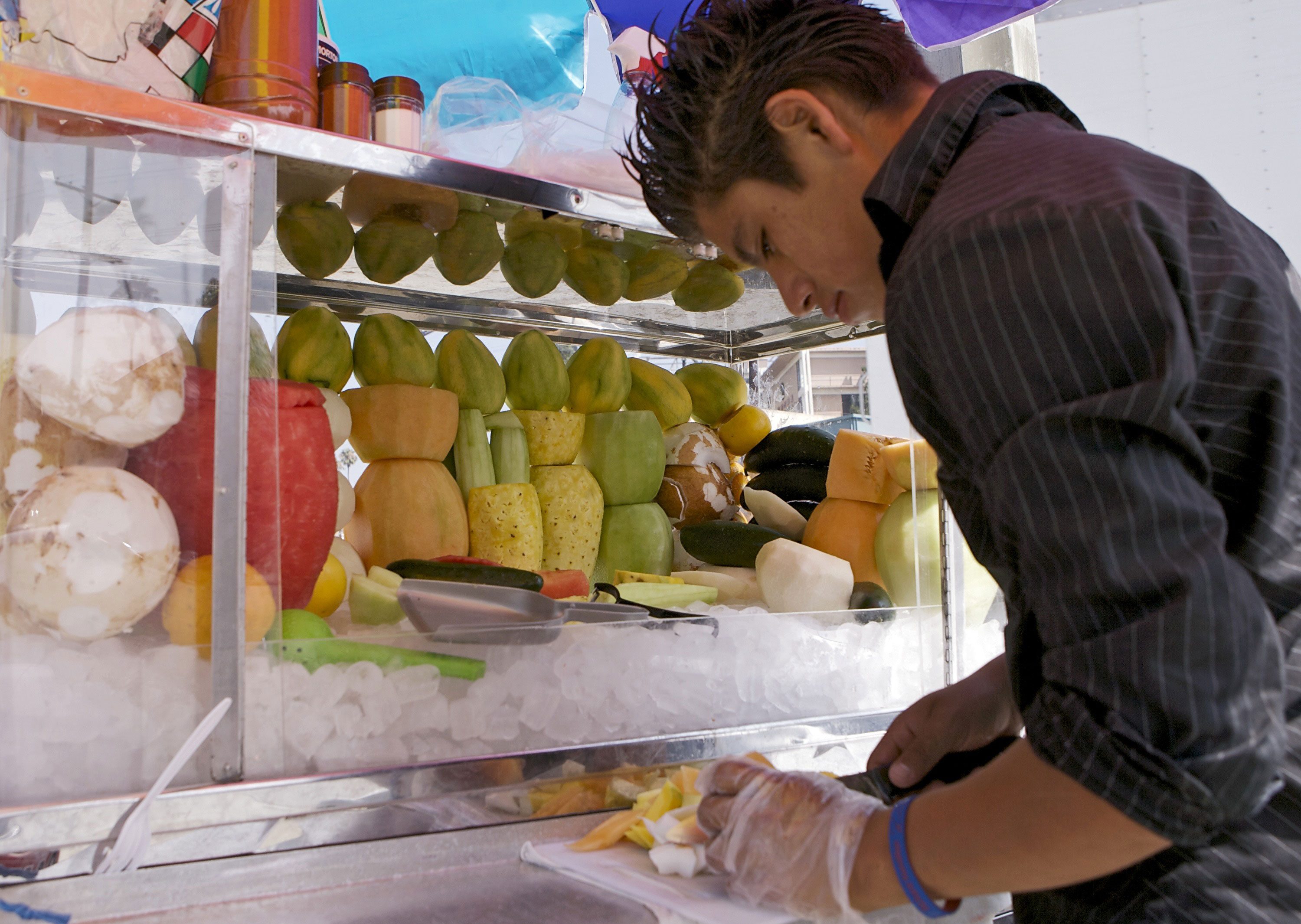
Street vendor Antonio Tellez, 18, prepares a fruit salad Wednesday in Los Angeles. Tellez works for the minimum wage and extra tips from customers. The federal minimum wage is expected to increase 70 cents per hour today to .55 per hour, the second in a three-phase increase that will bring the minimum federal pay rate to .25 per hour.
The federal minimum wage rate increases to $6.55 an hour today, which will affect thousands of paychecks in Kansas.
While the state minimum wage, $2.65, remains the lowest in the nation, businesses that fall under the Fair Labor Standards Act are required to comply with the federal minimum wage.
This includes any business that engages in interstate commerce, a state spokeswoman said, which means companies that receive goods from another state or accept credit cards with a processing company in another state.
The 70-cent federal minimum wage rate increase comes after a 70-cent wage increase on July 24, 2007 – from $5.15 an hour to $5.85 an hour. The rate will also go up an additional 70 cents, to $7.25, on July 24, 2009.
The 70-cent increase taking effect today will mean $28 more per week for a full-time minimum wage earner.
About 6,000 people in the state were paid the federal minimum wage in 2006, the latest year in which the state has assembled wage data.
Restaurant servers who earn tips do not have to be paid the federal minimum wage.
Mark Mehrer, owner of Sheridan’s Frozen Custard, 2030 W. 23rd Street, said he questions whether the government should be able to mandate how much he pays his employees, especially teenagers.
Still, he said, he’s been planning for the wage rate increases for about a year. He said he’s already paying new employees $7 per hour.
“Bottom line, as a business owner, I’m the one who absorbs the cost,” Mehrer said.
Mark Arndt, owner of Border Bandido, 1528 W. 23rd St., said he had also been anticipating the minimum wage increase, and that he hadn’t been able to hire as many workers as a result.
With rising food and gasoline prices, Arndt said, it’s just one more cost that’s passed to customers.
“Most restaurants can’t take those costs without passing them on,” he said.
City Government
Developer seeks incentive from City of Lawrence to build 131 units of housing near Wakarusa and Queens

Lawrence city leaders will consider whether to keep Community Building open, make 2 other rec centers free to access
A STAR Bond application raises questions for city leaders about Costco and housing west of the SLT
Soccer gear honoring Lawrence history’s all-star team is now on sale as part of city’s public art exhibition
To honor public servants, Lawrence’s July 4 celebration will have a whole gallery of their photos on display; submissions open now