Farmland cleanup pricier than thought
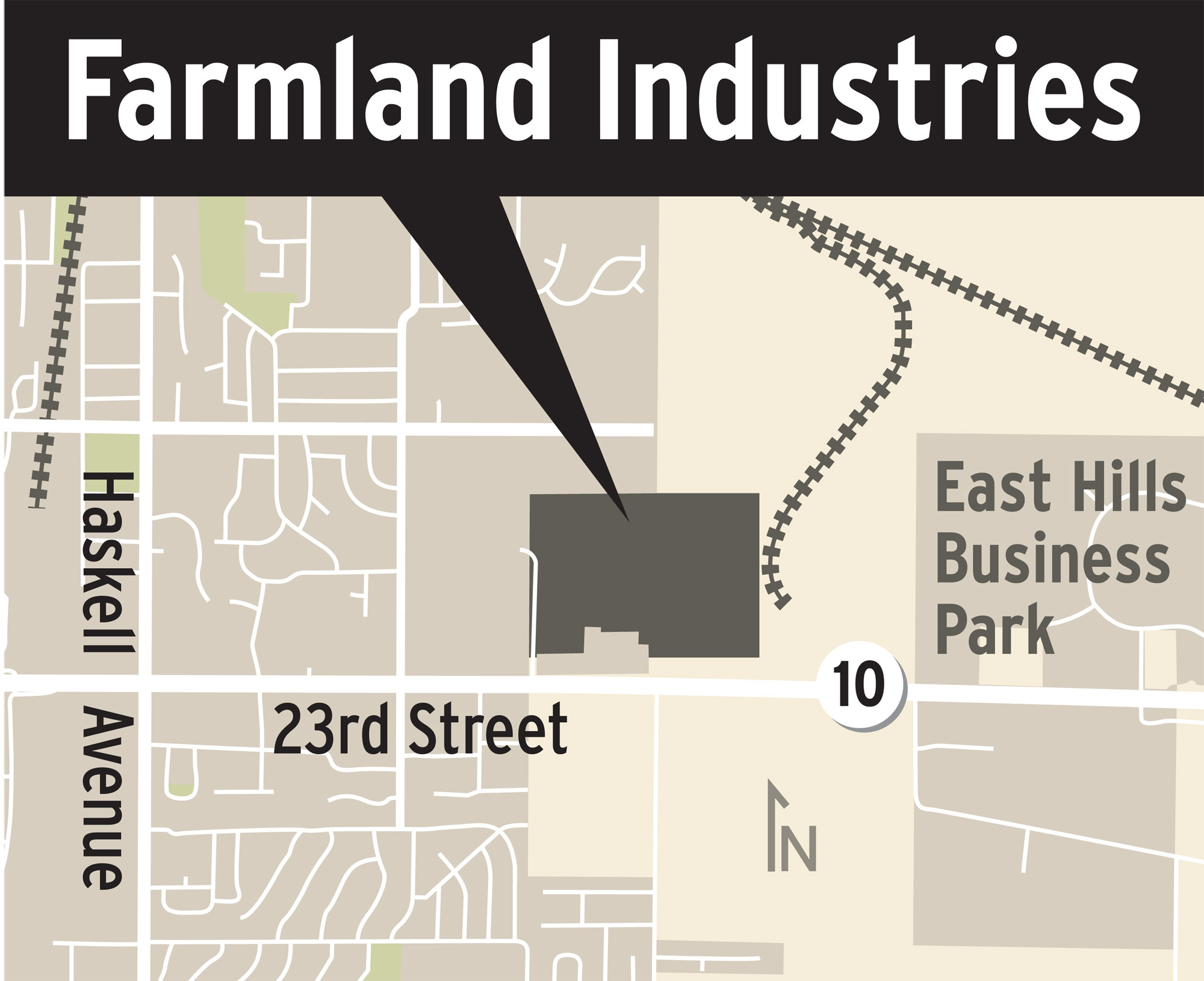
Cost estimates to clean up the environmentally blighted Farmland Industries property have increased, creating new questions about whether the city can afford to convert the property into an industrial park.
City Manager David Corliss said Friday that he is becoming concerned about the feasibility of the city’s plan, following a new cost estimate that predicts it will take at least $10 million over 30 years and perhaps up to $16 million to clean the environmental hazards at the former fertilizer plant.
“I think it is looking less promising, but it doesn’t mean we still don’t want to do further analysis of the property,” Corliss said.
The new estimates from the Kansas Department of Health and Environment create a serious wrinkle to the city’s plan to purchase the property and convert it into a business park.
The city previously had thought the cleanup costs would be near $5 million, and that there would be enough money in a bankruptcy trust fund established by the now defunct Farmland corporation to cover the costs.
As late as March, KDHE leaders had expressed optimism in those cost estimates as well. But recently, more detailed work has been done to evaluate the property, and the Environmental Protection Agency has become more involved in the discussions.
Corliss learned of the increased cost estimates last week.
At $16 million, the cleanup costs would be greater than what remains in two bankruptcy trust funds set aside for the property. Those funds have a combined $12 million.
The new information has some city commissioners rethinking whether the city should continue working on a deal to purchase the property.
“I just don’t feel comfortable with this right now,” City Commissioner Sue Hack said.
Both Hack and City Commissioner Rob Chestnut said they had serious concerns about moving forward with a purchase if it would require city taxpayers to pay for a portion of the cleanup costs.
“I’m probably not willing to consider that because if these cost estimates are really that far off from the original estimates, I’m not sure where the bottom of the well is,” Chestnut said. “That gets scary.”
None of the cleanup estimates include any money for new infrastructure that would be needed to convert the 467-acre property into a business park. The city believes bringing new roads and utilities to the site will be a multimillion-dollar proposition. Originally, the city had hoped enough money would be left from the bankruptcy trust funds to pay for a portion of those costs.
Some community leaders are still urging the city to move ahead on the deal. Douglas County Commissioner Charles Jones has been critical of how long it has taken the city to move forward on the Farmland deal. He had not seen the increased cost estimates, but he said Friday it still made the most sense for the city to own the property.
Jones doesn’t believe the private sector will purchase the property with the environmental problems, which means it will be up to government to clean up the property that sits at a major gateway to the community.
“I think this is an eyesore that could be made into an asset,” Jones said. “But if you get enough lawyers involved, I think you can scare yourself to death over anything.”
Hack disagrees. She said the city is acting responsibly by moving deliberately on the project.
“I think these new estimates show there have been good reasons for us to proceed cautiously,” Hack said. “I think that is the only way we can proceed.”
City Government
Developer seeks incentive from City of Lawrence to build 131 units of housing near Wakarusa and Queens

Lawrence city leaders will consider whether to keep Community Building open, make 2 other rec centers free to access
A STAR Bond application raises questions for city leaders about Costco and housing west of the SLT

Soccer gear honoring Lawrence history’s all-star team is now on sale as part of city’s public art exhibition
To honor public servants, Lawrence’s July 4 celebration will have a whole gallery of their photos on display; submissions open now