Coal plant developers hoping for compromise
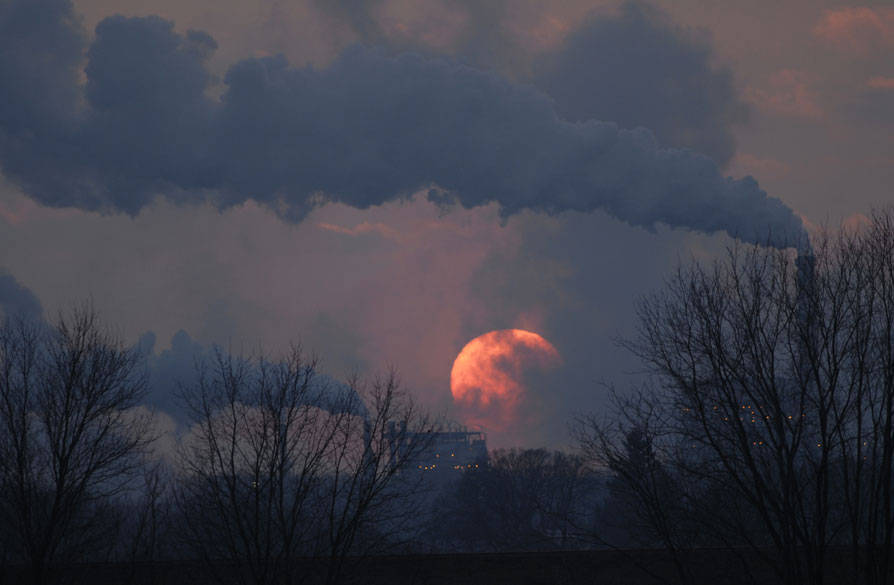
The sun sets between two Westar Energy Plant towers earlier this month viewed from North Lawrence. Developers of two coal-burning power plants that were rejected by the Kansas Department of Health and Environment are seeking a compromise instead of a legal battle.
Topeka ? Developers of two coal-burning power plants that were rejected by Gov. Kathleen Sebelius’ administration say that, for now at least, they are seeking compromise instead of an all-out legislative battle.
“It’s a touchy time,” said Steve Miller, a spokesman for Hays-based Sunflower Electric Power Corp. “There are a lot of people with lots of ideas about how energy matters should be dealt with.”
In October, the Kansas Department of Health and Environment rejected Sunflower’s request for permits to build two 700-megawatt coal-burning plants in western Kansas near Holcomb.
KDHE Secretary Rod Bremby cited concerns about the proposal’s 11 million tons per year of carbon dioxide emissions and its effect on global warming.
Since then, speculation has run high that the company, with support of legislative leaders from western Kansas, would ask the Legislature to approve legislation that would overturn the decision. Last week, a legislative committee introduced a “shell” bill that some lawmakers said eventually would be used as a vehicle for Sunflower’s plants.
But Miller said the company doesn’t have such legislation lined up.
“That would be in keeping” with comments from Senate President Steve Morris, Miller said.
Morris, R-Hugoton, has said that he doesn’t believe legislation could be made to reverse an administrative decision. Sunflower has appealed the decision to the Kansas Supreme Court.
But Morris and other supporters say they hope some kind of compromise could be worked out with Sebelius that would allow coal-burning development.
House Minority Leader Dennis McKinney, D-Greensburg, said perhaps more mitigation can be used to offset the environmental impact.
McKinney pointed to Sunflower’s proposed bioenergy center, which would include an algae reactor. Sunflower says 40 percent of the CO2 emissions from the coal plants could be diverted into pools of algae and processed to produce oil for biodiesel, starch for ethanol production and protein for cattle feed.
But environmentalists say the algae reactor is unproven and wouldn’t address all of their concerns.
“The reactor would be prohibitively expensive because the algae would need to be arrayed over a huge surface area to be optimally exposed to sunlight, and then it must be protected from the cold,” according to an assessment by the Kansas chapter of the Sierra Club.
State Government

In debate, Marshall says the Ukraine war, not the Iran war, has caused high diesel prices
Candidates lean on their prominent supporters in District 2 race
TOPEKA — Democrat Don Coover and Republican Derek Schmidt stood with partisan allies as their congressional race ...
Funding for new Chiefs stadium moves forward, setting sales tax revenue district
TOPEKA — State officials answered a key question this week underpinning the complex financing of the Kansas City ...
Voters Guide: A look at the candidates seeking to become Kansas Insurance Commissioner
The Kansas Department of Insurance regulates insurance companies that sell policies in Kansas. Voters will decide ...
Voters Guide: A look at the candidates seeking the job of Kansas State Treasurer
In the Nov. 3 election, Republican Kansas Treasurer Steven Johnson faces two challengers for his job as the chief ...