Salted butter may add water to recipe
Q: Can I substitute salted butter for unsalted in a baked product?
A: Unsalted butter is used in many recipes today, so extra salt is not being added to the baked item. Salted butter has about 1/3 teaspoon salt per stick (1/2 cup). Therefore, if the recipe calls for salt, it would be best to reduce the amount accordingly. Be aware that salted butter can also have extra water, which can affect the quality of the finished recipe.
Just for your information, many recipes also call for softened butter. The ideal temperature to achieve is 67 degrees, about room temperature. To speed up this process, cut the stick of butter into smaller pieces and let set at room temperature for 30-60 minutes. Another option is to soften in the microwave, but be careful not to melt it!
Since we’re talking about baking tips, here’s a few more to keep in mind:
• Adding eggs: Some cookie recipes specify to add eggs one at a time and mix between each addition. If eggs are added one at a time, the cookies can be thick and chewy. This allows the eggs to combine evenly with the fat. When eggs are added all at once, the cookies will spread more, uneven in shape, and not chewy.
• Sifting: This step can be important as it incorporates air into the dry ingredient, such as flour. While measuring by weight is ideal, not all cooks have a scale. Therefore, it is important to sift when using measuring cups. One cup of sifted flour will weigh less than one cup of unsifted flour. This can drastically affect the quality and texture of a baked product. Also, follow recipe directions regarding when to sift. “One cup flour, sifted” is measured, then sifted. “One cup sifted flour” is sifted, then measured.
• Substitute for cocoa: This chocolate powder is unique. There is not a good substitute as other chocolates have too much fat compared to cocoa. So, if a recipe calls for cocoa, that is what should be used.
• Substitute for other chocolate: Years ago, we typically had only semi-sweet or bittersweet chocolates to choose from for baking. They both have less than 60 percent cacao or cocoa bean content. (Cacao contains cocoa butter and dry cocoa solids, i.e. cocoa powder). Today, there are a variety of chocolates ranging from 54 percent to 70 percent cacao. In general, a bar of semisweet chocolate with 54 percent cacao has 45 percent sugar. A 70 percent cacao chocolate has 30 percent sugar. So an increase in cacao percentage means less sugar. So, are these chocolates interchangeable in recipes? Not really. When a chocolate with high cacao content is used, it will make a cake, for example, dry, crumbly and more bitter. Sauces may curdle. This is because sugar is taken away and dry cocoa powder is added just by using a chocolate with higher cacao content.
To combat this problem, newer recipes may specify the type of chocolate to use. It is best to not replace it with a different chocolate. Traditional recipes were created with 60 percent cacao chocolates, so it is best to use those.
Q: I just received some Mexican vanilla for a Christmas gift. I thought I’ve read before that it’s not safe to use. Is that right?
A: The so-called Mexican “vanilla” that is sold south of the border may smell and taste like vanilla, but it’s often made with coumarin, a toxic substance banned in food in the United States. The FDA advises consumers not to purchase this product.
Pure vanilla is made with the extract of beans from the vanilla plant, a type of orchid that grows as a vine. Mexican vanilla is frequently made with the extract of beans from the tonka tree, an entirely different plant that belongs to the pea family. Tonka bean extract contains coumarin, a compound related to warfarin, which is in some blood-thinning medications. Eating food containing coumarin may be especially risky for people taking blood-thinning drugs because the interaction of coumarin and blood thinners can increase the likelihood of bleeding.
FDA standards specify that only vanilla beans can be used to make vanilla for use in any food product. Vanilla-like flavors that don’t meet the standard must be labeled as “imitation” vanilla and must be made from safe ingredients that are permitted for that use. FDA does not allow tonka bean extract, even in imitation vanilla.
To be safe, look for “vanilla bean” in the ingredient list on the label. If it has “tonka bean” or if there is no ingredient list or a vague one, avoid this product.
— Susan Krumm is an Extension agent in family and consumer sciences with K-State Research and Extension-Douglas County, 2110 Harper St. She can be reached at 843-7058.
Food
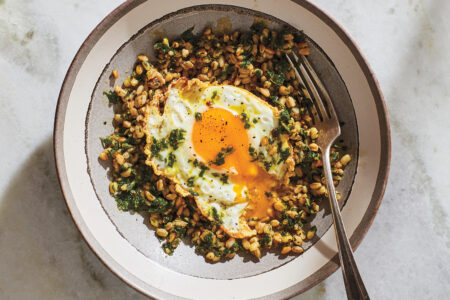
David Tamarkin’s recipe for Greens, Grains and Fried Egg works for any meal
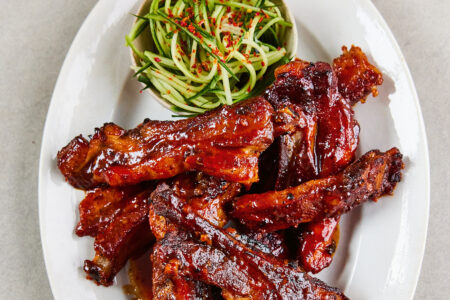
Slow-cooked, sticky-glazed pork ribs go with cucumber slaw in Sam Way’s recipe