Soaring fuel costs felt throughout region
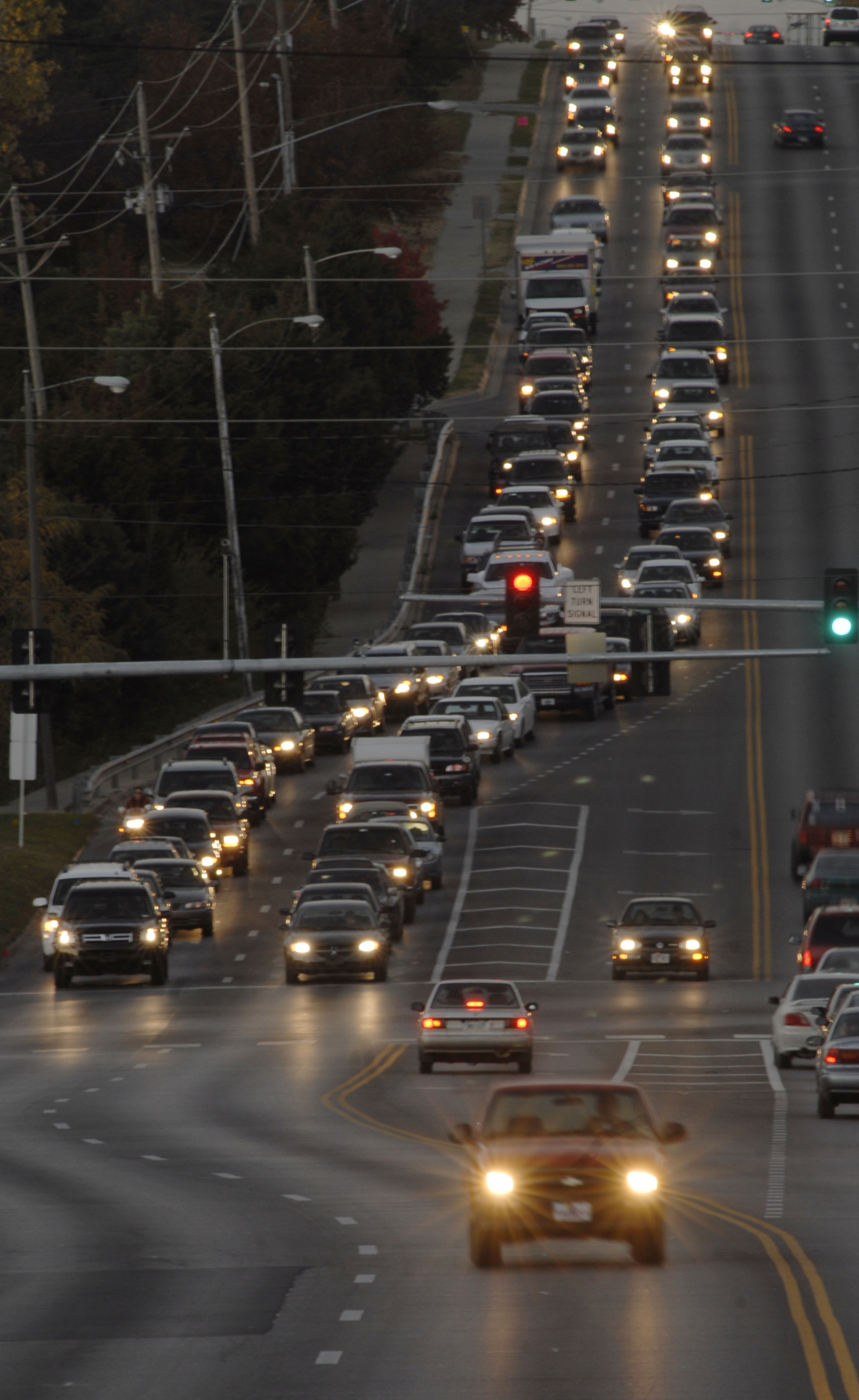
Traffic speeds along Iowa Street near 15th Street during rush hour. Despite higher gasoline prices, drivers aren't yet making many changes in their driving habits. Although rising fuel prices can boost ridership, Cliff Galante of the Lawrence Transit System says it's a
Year after year, as oil prices continue to skyrocket, it’s the same old story: Oil prices go up, gas costs rise, and budgets get tighter.
But since February, when oil prices closed above $100 a barrel for the first time ever, fuel costs have been reaching new heights.
The national average gas price as of March had risen about 70 cents a gallon from last year, according to data from the AAA and Oil Price Information Service’s Fuel Gauge Report.
In Lawrence, lowest gasoline prices have been hovering between at least $3 and $3.18 a gallon since the beginning of March, according to the Journal-World’s Pump Patrol.
As a result, budgets continue to get tighter for everyone from daily commuters to city government.
The daily commute
In Douglas County, 89 percent of residents drive to work, either alone or in a car pool, according to the U.S. Census Bureau’s 2006 American Community Survey. So, when gas prices rise, nearly everyone is affected, especially when the average commute time for residents in the Census survey is 19.6 minutes.
So how much more will fuel cost drivers this year? On the low end, for someone who drives 20 miles a day, it will cost about $660 to fill up this year. That’s $137.90 more than last year, according to the Kansas Department of Labor’s Labor Market Information Services.
But with 12,800 residents driving to other counties or Missouri for work, according to 2000 Census Bureau data, many people are paying hundreds more. The increase in gas costs from a year ago can jump as high as $500 or $600 more for commuters putting at least 80 miles on their cars a day, according to the Labor Department data.
Government impact
City services also have been affected by increased gas costs. The city’s fleet, which includes police cars and dump trucks and everything in between, can go through 8,000 gallons of gas every few weeks.
Fleet Manager Steve Stewart says that with that kind of consumption of gas, watching the price of gas is crucial to keeping costs down.
“The more we have to spend on fuel, the less we have to spend on other things,” Stewart said.
He said the city buys gas by the tanker load, so little price differences can make a big difference. In a recent purchase, he said, the fleet dodged an increase of 15 cents per gallon.
“We try to judge the market the best we can,” Stewart said.
But with such an unpredictable market, he said the fleet also works to conserve fuel the best it can, such as consolidating jobs to cut down on how many vehicles are out at once.
Public transportation
One of the few entities that might actually benefit from increased fuel costs is public transportation.
For instance, Johnson County Transit, which runs the K-10 Connector from Lawrence to Johnson County Community College, has seen some increased ridership.
“People are using it,” said Phil Detrixhe, marketing manager for Johnson County Transit. “When gas prices keep going up, it seems like we get more riders, not just on the K-10 but all our others.”
But although rising fuel prices can boost ridership, Cliff Galante of the Lawrence Transit System says it’s “a double-edged sword for the public transportation industry.”
“(The) upside is that rising fuel costs force people to consider other viable and more affordable transportation options. … The downside is that public transportation is an industry that is heavily reliant on fuel to operate service,” Galante said. “Rising fuel costs have had a negative impact on transit systems as many struggle to keep pace with growing demand while their operating budgets are adversely impacted, making it difficult to put more service on the street.”
Lawrence Transit’s operator, MV Transportation Inc., tries to reduce the impact in several ways, Galante said. T Lift paratransit vehicle drivers are instructed to minimize idle time, for instance. MV Transportation pays for all fuel costs, under the terms of its contract with the city. With a weekly fuel consumption of 3,500 gallons per week, according to Galante, that can add up quickly.
Unlike Johnson County Transit, Lawrence’s bus system has seen a decline in ridership, Galante said. Ridership dropped last year after a fare increase that resulted in part from higher fuel costs, he said.
But Galante expects the ridership to increase again because of its relatively low cost.
“Only walking or biking are more affordable transportation options,” Galante said.
City Government
Developer seeks incentive from City of Lawrence to build 131 units of housing near Wakarusa and Queens

Lawrence city leaders will consider whether to keep Community Building open, make 2 other rec centers free to access
A STAR Bond application raises questions for city leaders about Costco and housing west of the SLT

Soccer gear honoring Lawrence history’s all-star team is now on sale as part of city’s public art exhibition
To honor public servants, Lawrence’s July 4 celebration will have a whole gallery of their photos on display; submissions open now