New KU vice provost sets research agenda
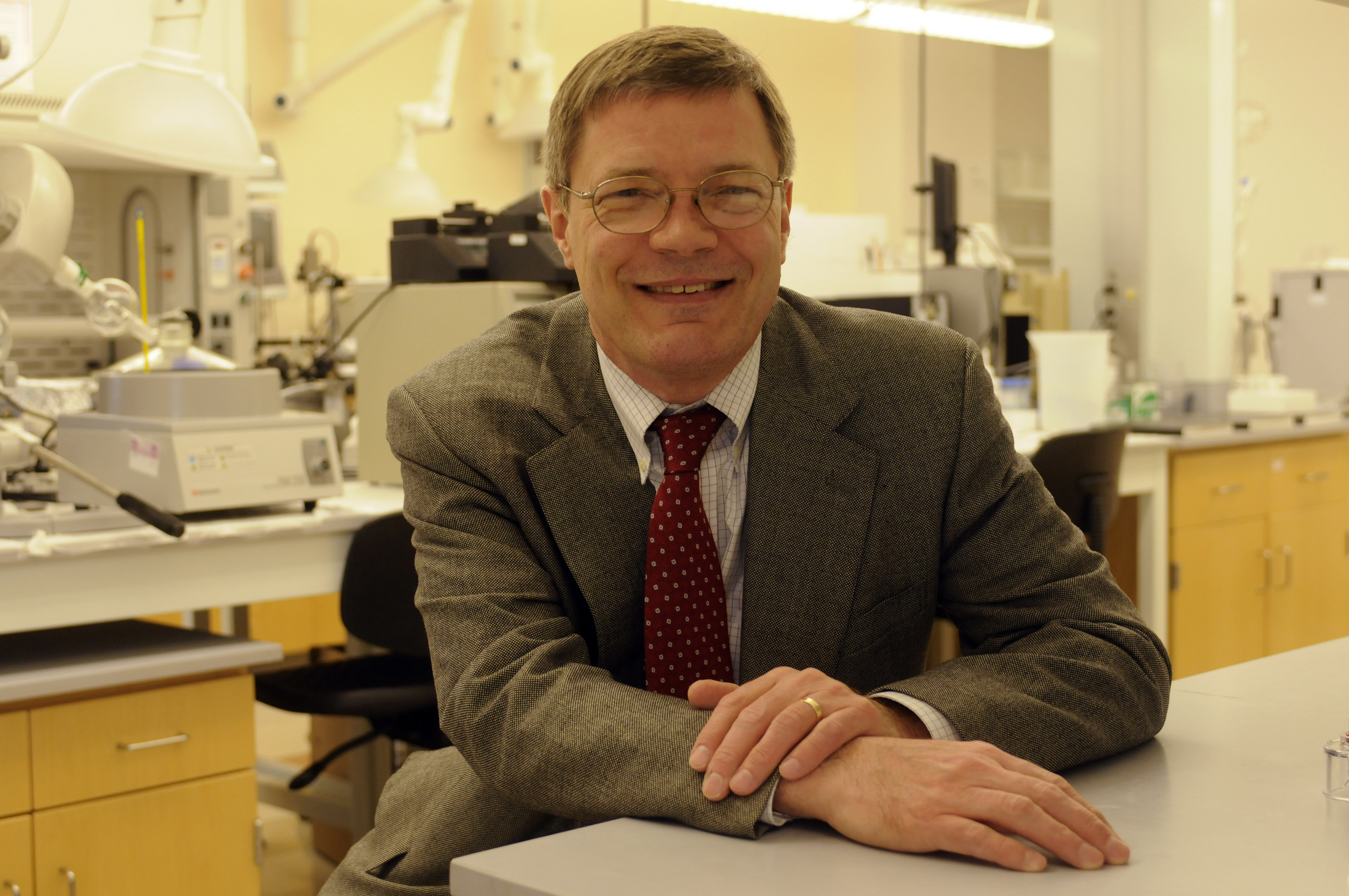
Steve Warren is in charge of running Kansas University's seven research centers. He became vice provost for research and graduate studies in January.
Steve Warren cherishes his mornings.
They are the calm before the storm. He relaxes over a couple of cups of coffee and a bagel while going through the morning paper.
But when he shuttles to work in his new job as vice provost for research and graduate studies at Kansas University, his day quickly spirals into a frenzied fury jammed with responsibility.
“My days are very intense. They are just packed with meetings,” Warren said. “There’s a lot of things to do, but I like that.”
Since January, Warren has been in charge of running KU’s seven research centers, which last year accounted for $289 million in research expenditures. In addition, he oversees graduate education at the university. He’s the first to fill the position now that those two areas have merged.
Warren has worked at KU since 1999, doing his own research in early childhood language development and the prevention of mental retardation and child neglect. He eventually rose to direct KU’s Schiefelbusch Institute for Life Span Studies.
Writing interest
Warren grew up in Hastings, Neb., the son of parents who valued education.
“It was just assumed in our family that you’d go to college,” Warren said. “There wasn’t ever a question about it. It was just the assumption.”
Warren liked writing in high school and contributed articles for a daily newspaper. He also served as co-captain and quarterback for his football team. But that was the only sport he played, allowing him to spend the rest of the year working on the paper.
“I was very interested in writing,” Warren said. “I come from a family of writers.”
He moved to Kansas in 1970 to study journalism at KU. Within a few months, his interests started to shift.
He cites a summer spent volunteering at a psychiatric hospital as a large contributor in the change. At the hospital, Warren facilitated social interaction groups with people who had serious mental problems, holding conversations with patients about their lives.
The experience triggered a string of questions.
“Why do these people have these troubles? What led to this? How can you stop this? How can you treat this?” Warren said. “(I) asked those kinds of questions, and that is what encouraged (me) to study in those areas and learn more about them.”
Time off
Still unsure of what to major in, Warren put his education on hiatus and obtained a passport. He spent a semester in South America in 1972, not as a student but a traveler.
“I actually call myself a stopout, not a dropout,” Warren said. “I intended to take a semester off because I didn’t know what I wanted to major in. So I traveled extensively with a friend, and we got to see a lot of the world.”
Exposure to South American cultures further reinforced Warren’s interest in psychology.
“When I came back I really focused very intensely, at that point, on human development, and psychology became my passion,” he said.
He ended up earning three degrees from KU – two bachelor’s degrees in 1974, and a doctorate in child and developmental psychology three years later.
In school, Warren applied his early interest in writing and reading to his scientific work. When he wrote his first academic research paper, he avoided the passive, dull voice so common with science, cramming the paper full of active verbs. His adviser handed it back covered in red ink.
“He looked at me and said, ‘That was the most exciting result section I have ever read,'” Warren said. “He didn’t exactly mean that as a compliment. I had to learn how to do that kind of writing.”
Warren would go on to write between 130 and 140 research papers and edit about a dozen books.
KU goals
Warren’s professional career started at Vanderbilt University, where he taught courses on language development and language intervention in children.
That also was where he met his wife, Eva Horn, now a KU professor in special education. They have two daughters and one granddaughter.
In 1999, Warren came back to KU and was named the director for Life Span Institute in 2001.
“Steve has a distinguished research record as well as a vision for where we can take research at KU overall,” said Richard Lariviere, KU’s provost. “He’s someone who demonstrated outstanding leadership at the Life Span Institute, guiding that nationally recognized program as it made discoveries that have a direct benefit for people’s lives. And ultimately, that’s what good research does – it benefits people, either through new products, new treatments or a new understanding of our world.”
Lariviere said Warren’s experience as a researcher both at KU and Vanderbilt helps him to address barriers that could be removed to lead to more research success.
Warren said he is optimistic about KU’s research future, noting that pharmacy, chemistry, biological sciences, special education and speech and hearing sciences are among the university’s strengths.
“KU has made enormous progress over the past decade as a research university,” he said. “There is every reason to believe this progress will continue even though the present funding environment is challenging due to tight federal funding.”
But he said there’s no reason KU can’t compete in that tight funding environment. The university already ranks 44th nationally for federally funded science and engineering research.
“I believe that we at KU, in Kansas and in the Midwest in general should welcome and actively seek out competition in national and international arenas because competition hones our research and scholarship and ultimately produces the kind of outcomes that stand the test of time and have impact across the generations,” Warren said. “This is what we should strive for at the University of Kansas.”
To get there, Warren said he tries to take a big-picture focus and doesn’t like to micromanage.
But that doesn’t mean his days aren’t busy.
“A job like this is about making decisions, about strategic directions and how we are developing as a university and how our research programs are developing,” Warren said. “There’s always a lot to do. Some people wouldn’t like it, but I do.”
City Government
Developer seeks incentive from City of Lawrence to build 131 units of housing near Wakarusa and Queens

Lawrence city leaders will consider whether to keep Community Building open, make 2 other rec centers free to access
A STAR Bond application raises questions for city leaders about Costco and housing west of the SLT
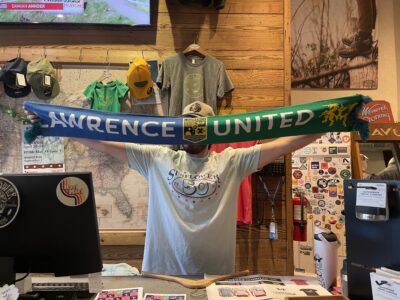
Soccer gear honoring Lawrence history’s all-star team is now on sale as part of city’s public art exhibition
To honor public servants, Lawrence’s July 4 celebration will have a whole gallery of their photos on display; submissions open now