LMH nears completion on expansion project
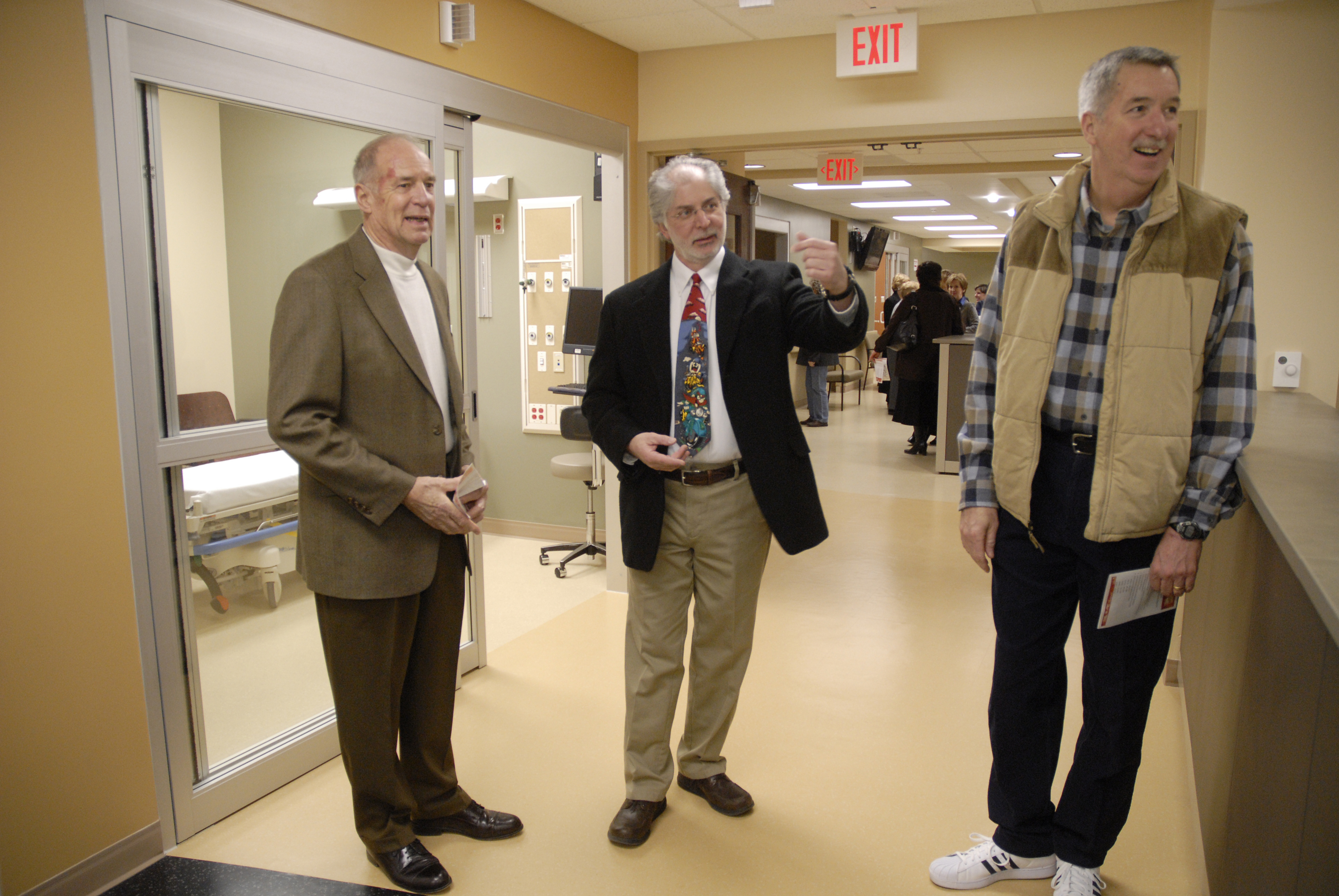
Dr. Scott Robinson, Lawrence Memorial Hospital's emergency department medical director, center, gives a tour of the new Simons Center for Emergency Medicine to David Ambler, left, and Roger Morningstar.
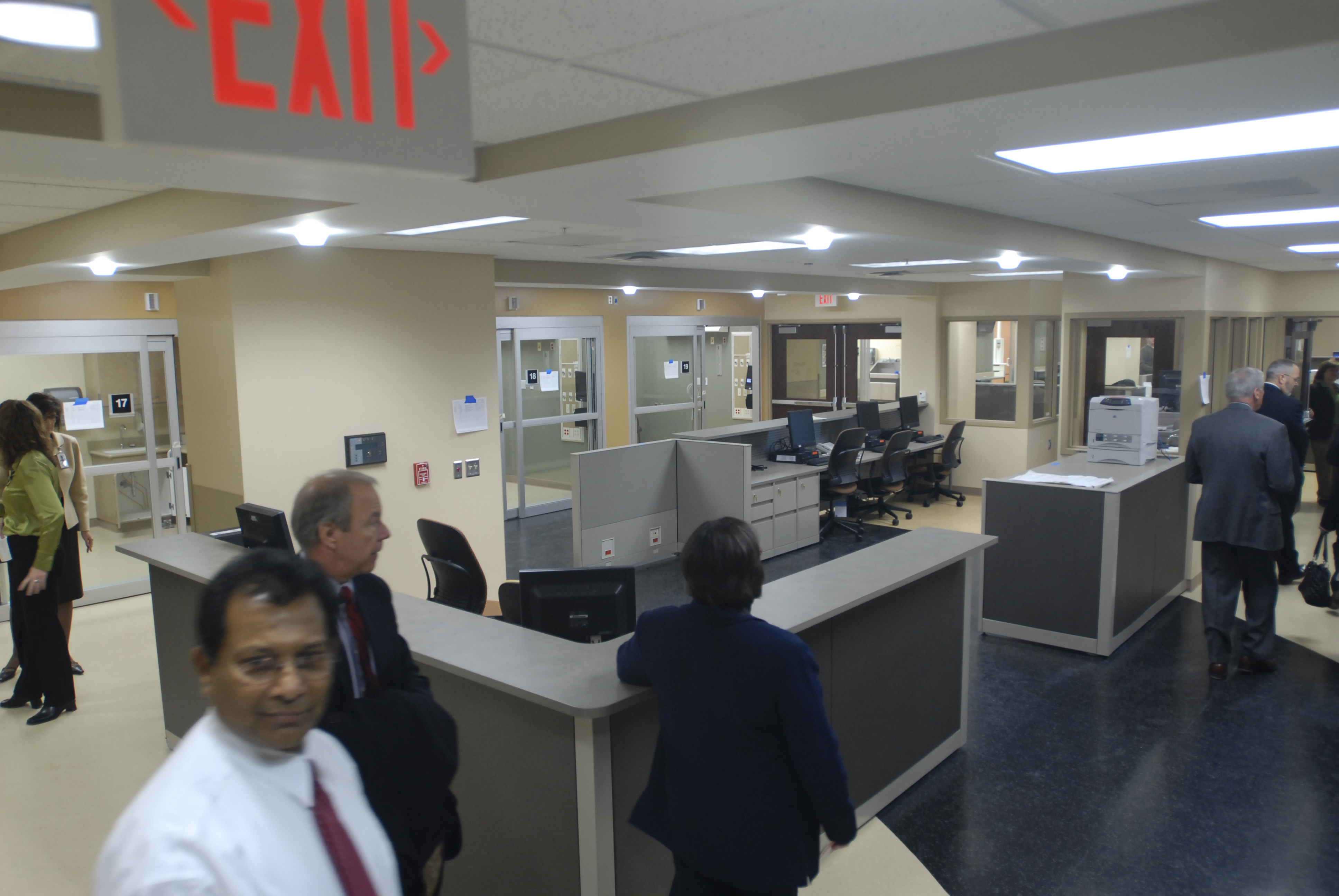
LMH board members and hospital staff inspect the new department during a tour Feb. 20. The expansion added 21 private rooms to the department, among other updates.
The expansion has arrived.
Portions of a $50 million project to expand Lawrence Memorial Hospital have turned from talk to reality, and the rest is quickly on the way.
Hospital leaders in early March opened the new Simons Center for Emergency Medicine, a new emergency department that is nearly twice the size of the hospital’s previous 1970s-era emergency room.
The new ER is the most visible part of the hospital’s expansion thus far, and LMH leaders were intent on making sure it made the right impression.
“In a lot of ways, the emergency room really is the front door of the hospital,” said Gene Meyer, LMH president and CEO. “We really want that first impression to be a positive one and one of efficiency.”
Work also is under way on an expansion of the hospital’s maternity ward and additions to the intensive care and cardiac care units. Once that work is completed this spring, construction can begin on a new set of surgery suites that will be located on the north end of the hospital, where the old emergency department was located.
Plus, work already is complete in renovating the hospital’s shared patient rooms into private rooms, a change that LMH expects to pay dividends in the form of higher patient satisfaction.
“We don’t get many complaints, but the most frequent is that patients don’t like their roommates,” Meyer said.
The entire expansion is designed to boost levels of care for area residents. It also aims to help the hospital become more of a regional health care provider by enticing patients from Franklin, Jefferson and other surrounding counties to choose LMH over competitors in the Topeka and Kansas City markets.
“All this will allow us to serve that regional population that we want to attract, and it will allow us to do so in a way that we won’t have to worry about privacy issues or capacity issues,” Meyer said.
But for the moment, the public focus is squarely on the new emergency department – named after the Dolph C. Simons Jr. family, owners of The World Company and publisher of the Journal-World. The family contributed $1 million to the hospital expansion project.
Here’s a look at some of the department’s major features:
¢ Private rooms. The department has 26 of them, up from five in the old ER. Each room also is equipped with a TV. More importantly, the rooms are set up to handle a variety of medical cases. The old ER was largely limited to specialized uses – one room for heart attack patients, another for setting broken bones, for example.
“In every room, we can do almost everything,” said Dr. Scott Robinson, the emergency department medical director.
¢ Dedicated waiting room: The old ER shared a waiting room with the lab, forcing patients needing a simple lab test to sit with ill patients waiting to enter the ER. The waiting room also will be staffed by an EMT, allowing a preliminary medical assessment to begin right away.
¢ Bedside computers: Each room in the emergency department has a computer for use by physicians and nurses. The dedicated computers should speed up access to lab results and other needed information. It also is expected to decrease the amount of time patients must wait to be checked into the hospital.
¢ New entrance: The department is on the eastern side of the hospital, making it more visible from Maine Street.
¢ Mental health area: The new department has three crisis-stabilization rooms, specialized areas for patients suffering from a mental illness to be evaluated. The old department had two such rooms.
In total, the new emergency department is about 8,000 square feet larger than the previous department. But emergency room staffers said the improvements go beyond size. The layout of the space promotes efficiency, and the design – everything from soothing colors to built-in privacy features – is structured to make patients feel more comfortable.
“Patient care has been what everything has been designed around,” Meyer said.
City Government

Developer seeks incentive from City of Lawrence to build 131 units of housing near Wakarusa and Queens

Lawrence city leaders will consider whether to keep Community Building open, make 2 other rec centers free to access
A STAR Bond application raises questions for city leaders about Costco and housing west of the SLT

Soccer gear honoring Lawrence history’s all-star team is now on sale as part of city’s public art exhibition
To honor public servants, Lawrence’s July 4 celebration will have a whole gallery of their photos on display; submissions open now