Lawrence businesses mixed on convenience, cost of taking credit cards
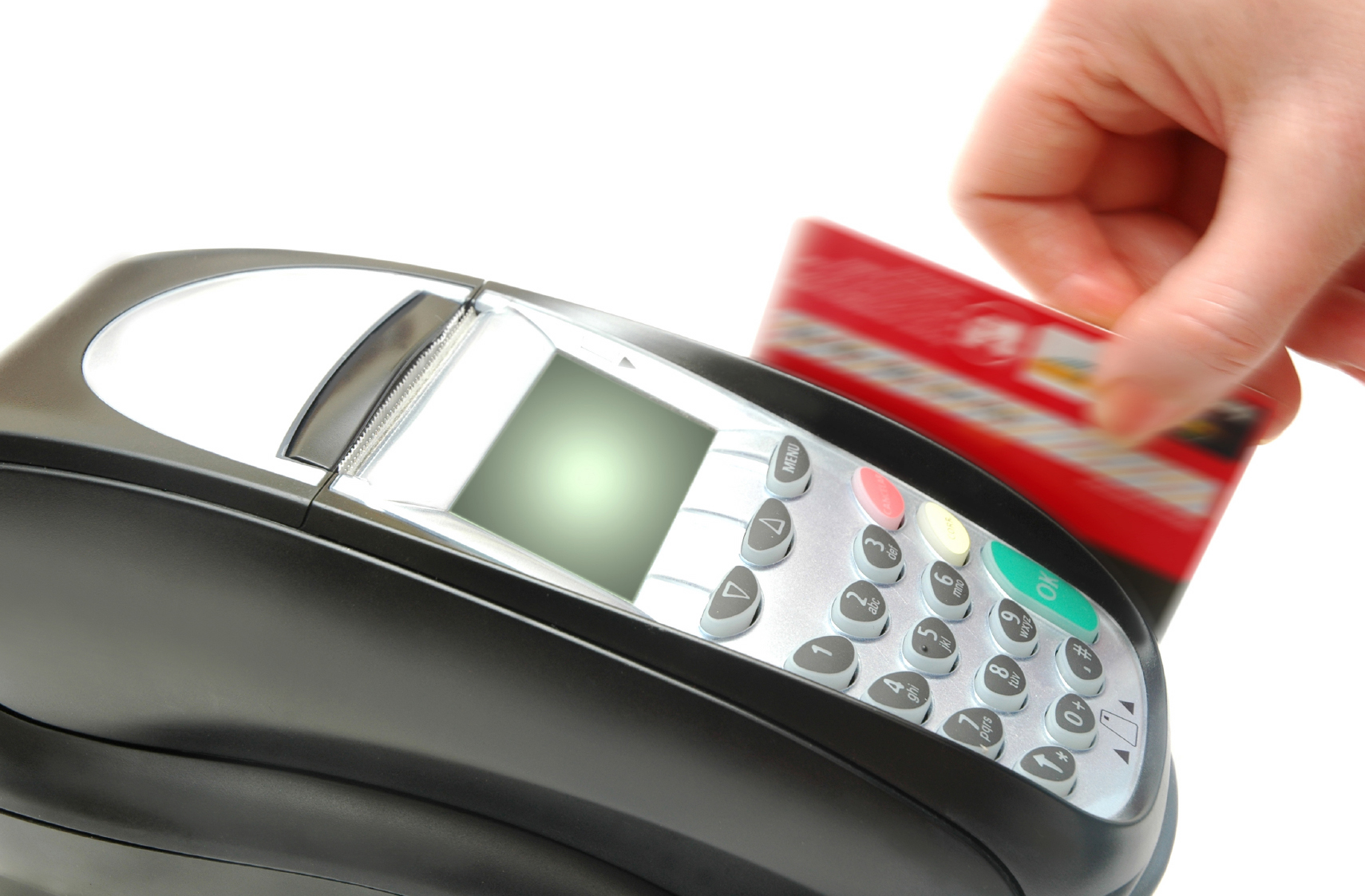
Studies conducted by credit research firm Experian indicate that the average American holds four credit cards.
Anne Whealdon hates to use cash.
The Kansas University senior relies on her two credit cards to fund her lifestyle, using plastic to pay for everything from new clothes to dinner at her favorite downtown restaurant, Ingredient.
Cash, she said, is inconvenient. And her shopping habits are dictated by which businesses accept credit cards.
“Usually I tend to go places that I know take credit cards, so I don’t have to plan ahead and take cash out,” Whealdon said. “I think it’s probably a convenience issue. Also, it allows for more flexibility when you’re out spending.”
Americans love their plastic, and they expect businesses they patronize to cater to their customers. Studies conducted by credit research firm Experian indicate that the average American holds four credit cards. It’s no surprise, then, that buying on credit is popular.
But business owners incur additional costs by accommodating their customers. From purchasing equipment to processing credit or debit cards to paying lending institutions fees to reimburse credit, the consumer’s preferred payment method can be a colossal pain in the neck for businesses.
That’s one reason why the owners of Louise’s West, 1307 W. Seventh St., have resisted the move to accepting plastic.
“One of the reasons we don’t take credit cards is that we never have,” said Mike Kvasnicka, one of the tavern’s managers.
He said the bar’s management “likes the idea that people can’t come in and drop a credit card and also leave it, and you have to charge them, and you have to pay service fees to credit card companies, you have to buy a credit card machine.”
Josh Reese, a manager at Rudy’s Pizzeria, 704 Mass., said his restaurant began accepting credit cards several years ago.
“It was mainly a convenience for our customers,” Reese said. “A lot of times they’d only have a credit card. They’d have to go to an ATM or get mad.”
Customers like the idea of having a quick way to pay for items, said Sarah Richardson, a manager at La Prima Tazza, a downtown coffee shop. La Prima Tazza, 648 Mass., began accepting credit cards about a year ago.
“I think that credit cards and debit cards are just more convenient, in a way,” Richardson said. “Carrying cash means having to stop at the ATM, and get money out. If you don’t want to take the time to do that, you can just bring your debit card in.”
But the idea of having to pay credit card companies fees on top of everything else is irksome to Reese, and one of the main reasons businesses like Louise’s West remain plastic-free.
The cost of business
The procedure by which businesses process credit cards is complicated, with different credit cards requiring merchants to pay different fees. It can be an expensive routine for businesses, which use outside vendors to process credit card purchases, docking fees from their revenue and returning money earned from purchases.
“The biggest thing is that merchants have many different processors out there, so the fees and the way the charges work (differ) by processor,” said Cecily French, a cash management specialist at People’s Bank in Overland Park. “Each processor has its own way of setting it up.”
French said processors monitor merchants’ intake throughout the day, compiling receipts at the end of the day and depositing their credit all at once. Merchants see deposits in their bank accounts within a few days, French said.
Businesses also incur charges on each credit card purchase.
“Pricing is based off an average ticket amount,” French said. “Based on what their average sale is, that’s where it comes from.”
For instance, if a store’s average ticket price is $100, the store may pay 2 percent of each ticket to the processor; the percentage differs depending on the processor. French said some merchants might charge more for certain items in anticipation of these costs, or in the case of some businesses, charge a minimum. Reese, of Rudy’s Pizza, said his business has a minimum charge of $2.50.
“It’s kind of ridiculous for us to sell a 35-cent refill on a credit card,” he said. “We get charged for every transaction. For a 35-cent transaction, that really cuts into our (bottom line).”
Businesses can expect different credit cards to have different fee structures.
“People pay a percentage rate on their total volume in credit card sales, and there are additional surcharges that may apply based on card type,” French said.
Merchants are responsible for the extra fees. French said this is how reward programs make money.
In an era of instant gratification and machine-powered convenience, it’s expected that businesses would warm to their customers’ spending habits.
But Kvasnicka said there’s been no discussion of that at Louise’s West.
“It’s almost a niche thing. There aren’t a lot of places that don’t take credit cards,” he said.
It’s a practice that the bar’s regulars expect.
“I’m sure it would be convenient for our customers, but we have a solid base of regulars that come in here,” Kvasnicka said. “I think our customer base is a little more mature than most are. As opposed to using the credit card their parents gave them, they can’t do that. They actually have to have money.”
That’s a phenomenon that is foreign to Whealdon.
“Everyone uses their card. I hardly ever see someone use cash,” she said. “It seems like an anomaly when someone uses cash.”
Reese understands that the customer gets what the customer wants.
“It’s definitely a convenience that we’re willing to give to our customers,” he said. “We want to make our customers happy.”
City Government

Developer seeks incentive from City of Lawrence to build 131 units of housing near Wakarusa and Queens

Lawrence city leaders will consider whether to keep Community Building open, make 2 other rec centers free to access
A STAR Bond application raises questions for city leaders about Costco and housing west of the SLT

Soccer gear honoring Lawrence history’s all-star team is now on sale as part of city’s public art exhibition
To honor public servants, Lawrence’s July 4 celebration will have a whole gallery of their photos on display; submissions open now