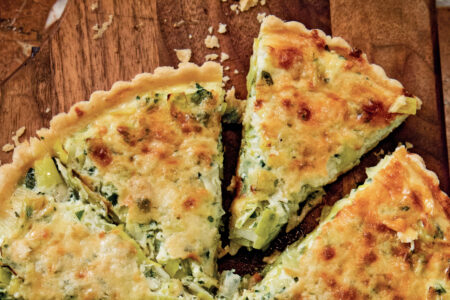
Simple substitutions cut calories, fat in scone recipe
Q: Could you show me how to modify this scone recipe to make it healthier for my family? Here’s the original recipe:
Sunrise scones
1 3/4 cups all-purpose flour
5 tablespoons sugar
2 1/2 teaspoons baking powder
2 teaspoons grated orange peel
1/3 cup butter
1/2 cup dried sweetened cranberries
1 egg, beaten
4 to 6 tablespoons half-and-half
2 eggs, beaten
Heat oven to 400 degrees. In medium bowl, combine flour, 3 tablespoons sugar, baking powder and orange peel. With pastry blender, cut in 1/3 cup butter until mixture resembles fine crumbs. Stir in cranberries, 1 egg and just enough half-and-half so dough leaves sides of bowl.
Turn dough onto lightly floured surface; knead lightly 10 times. Roll into 9-inch circle; cut into 12 wedges.
Place wedges 1-inch apart on baking sheet. Brush with beaten egg; sprinkle each with 1/2 teaspoon sugar. Bake for 10 to 12 minutes or until golden brown. Immediately remove from baking sheet.
A: Here’s a modified version:
Sunrise scones, revised
1 cup all-purpose flour and 3/4 cup whole-wheat flour
3 tablespoons sugar
2 1/2 teaspoons baking powder
2 teaspoons grated orange peel
5 tablespoons light margarine
1/2 cup dried sweetened cranberries
1 egg or 2 egg whites, beaten
4 to 6 tablespoons skim milk
Cinnamon sugar
Heat oven to 400 degrees. In medium bowl, combine flour, 3 tablespoons sugar, baking powder and orange peel. Cut in margarine with pastry blender until mixture resembles fine crumbs. Stir in cranberries, egg and just enough milk to moisten dry ingredients.
Turn dough onto lightly floured surface; knead lightly 10 times. Roll into 9-inch circle; cut into 12 wedges.
Place wedges 1-inch apart on baking sheet. Sprinkle each with cinnamon sugar. Bake for 10 to 12 minutes or until golden brown. Remove immediately from baking sheet.
Q: Is it safe to eat moldy cheese or salami if I cut away the mold? What about fruit, jelly or bread?
A: Some molds are used to make certain kinds of cheeses, including Roquefort, blue, gorgonzola, stilton, camembert and brie. The mold on these cheeses is safe to eat. Mold on other types of cheeses should not be there. Discard any soft cheese showing mold. For hard cheese, such as cheddar, cut off at least 1-inch around and below the mold spot (keep the knife out of the mold itself). After trimming off the mold, the remaining cheese should be safe to eat. Recover the cheese in fresh wrap and keep refrigerated.
Do not buy or use moldy meats. Fresh meat and poultry are usually mold-free, but cured meats and smoked turkey may not be. Examine them carefully. Exceptions: Some salamis – San Francisco, Italian and Eastern European types – have a characteristic thin, white mold coating. They shouldn’t show any other mold. Dry-cured country hams have surface mold that must be scrubbed off before cooking.
Discard any soft fruits or vegetables, jams and jellies, bread and baked goods that show signs of mold.
Q: Why is raw chicken yellow or orange in color?
A: According to the USDA Food Safety and Inspection Service, raw poultry can vary from a bluish-white to yellow. All of these colors are normal and are a direct result of breed, exercise, age and/or diet. Younger poultry has less fat under the skin, which can cause the bluish cast, and the yellow skin could be a result of marigolds in the feed.
Also, according to Dr. Scott Beyer, Kansas State University poultry specialist, the color comes from yellow corn, as well as marigold oil, alfalfa meal or corn gluten meal added to make them more yellow. Some free-range producers allow their bird’s access to green grass, which also will add a lot of color. Blue-yellow colors also may be an old bruise on the bird that was in the process of healing before the bird was processed. It also could be the result of a poor bleed after the animal was harvested, which leaves too much blood within its tissues.
Q: Why are chicken bones dark? Is the chicken safe to consume?
A: To answer your first question, chicken bones are dark red because, just as in humans, the bones are where red blood cells are manufactured. You may have noticed that when chicken is cooked in a gas oven or on a grill, that the meat surrounding the bones is sometimes pink even though it is thoroughly cooked. This is due to heme leaching from the bones and into the meat where it reacts with carbon monoxide, a by-product of gas combustion or burning charcoal.
It is perfectly safe to eat. The heme has a tendency to leach out because the chickens processed these days are very young (6 weeks old) and thus the bones have not fully calcified. Again, from a safety standpoint, as long as the internal temperature is appropriate, the meat is safe to eat.
Food
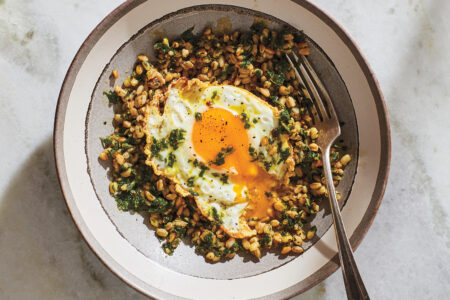
David Tamarkin’s recipe for Greens, Grains and Fried Egg works for any meal
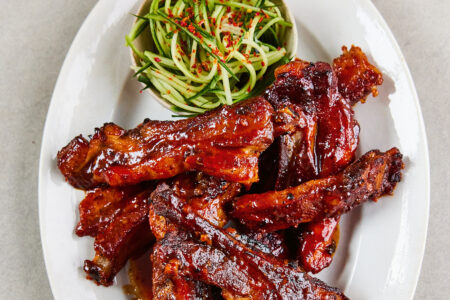
Slow-cooked, sticky-glazed pork ribs go with cucumber slaw in Sam Way’s recipe