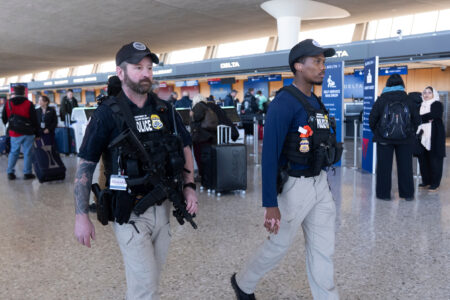
Critics decry latest ‘warrior’ cop example
Los Angeles ? The Police Department’s violent response at the end of an immigrant demonstration is the latest incident highlighting what critics describe as the force’s “warrior culture.”
It’s an ethos that’s been on display before – the use of clubs and tear gas to disperse 15,000 peaceful anti-war protesters in Century City in 1967, the Watts riots, the Rodney King beating in 1991, the harsh crackdown on demonstrators at the 2000 Democratic National Convention.
Public outcry and inquiries that followed each event haven’t deterred some officers from cracking a few kneecaps to assert order.
Chief William Bratton’s criticism of his department and decision to quickly reassign two high-ranking officers after the immigration rally near two weeks ago were roundly applauded, though skeptics say it’s not nearly enough to address deep-seated issues that produce violent responses by some officers.
Bratton was appointed in 2002 to steer the LAPD after a rogue anti-gang unit scandalized the department by assaulting and framing people in the tough Rampart district. Dozens of criminal convictions were tossed out as a result of the scandal.
Bratton has since had some success in improving community relations, including his swift action following the May 1 immigration rally violence.
However, skeptics say none of these efforts are enough to address the deep-seated culture that has caused repeated bouts of excessive force.
“The LAPD is a big ocean liner and it will take a long time to turn around,” said Joe Domanick, a senior fellow of criminal justice at the University of Southern California’s Annenberg Institute for Justice and Journalism. “(Bratton) has not focused on the paramilitary culture and us-against-them mentality that seems to still persist in the LAPD.”
He said the culture originated during the reign of William H. Parker, hired as chief in 1950, who imagined the city’s police force as an urban army.
Domanick said Parker’s view was: “We’re the only thing standing between chaos and anarchy. We are the professionals. We know better. No one tells us better.”
After the King beating, lawyer Warren Christopher, who later became secretary of state, was tapped to lead a commission in dissecting the department.
The Christopher Commission examined five years of reports, police radio communications and hearings and interviews with dozens of residents and police, and found that “a significant number of officers” routinely used excessive force.
National
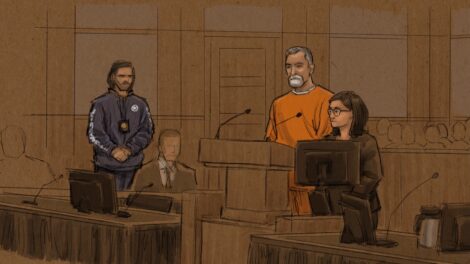
Man pleads guilty to killing a top Minnesota Democrat and her husband

New tornadoes outside Chicago as severe storms pummel the Midwest
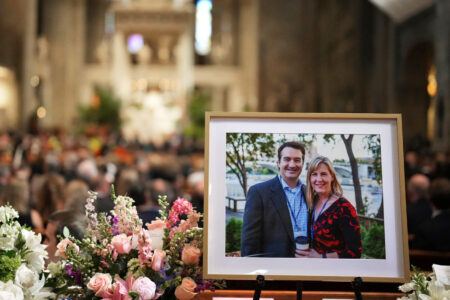
Feds won’t seek death penalty in plea deal with man accused of killing top Minnesota Democrat

NASA unveils astronauts to test tech for future moon landing
Social Security’ fund faces shortfall one year earlier than expected
WASHINGTON (AP) — Social Security 's retirement trust fund is projected to face a funding shortfall in 2032, a ...