Computer woes fixed at space station
Houston ? Two Russian cosmonauts began to get crucial computers up and running Friday, four days after they crashed at the international space station and curbed the outpost’s ability to orient itself and produce oxygen.
The progress came after days of frustrating effort and, for the time being, removed a set of troubling options lying ahead for NASA and the Russian space agency if the computers continued to fail.
“We feel like the computers are stable and back to normal,” said Mike Suffredini, space station program manager.
Cosmonauts Fyodor Yurchikhin and Oleg Kotov pulled off the feat by bypassing a power switch with a cable to get four out of six processors on two computers running.
The computers began operating the cooling system in one of the space station’s Russian modules. But Suffredini said engineers would look at how the computers performed overnight before deciding whether they can start running other space station systems today.
Suffredini said engineers were still trying to determine what prompted the power switch to cause the computers to fail.
Had the machines continued to malfunction, the three-member space station crew could have remained on board, but other steps would have been taken to maintain oxygen supplies. Russia had already begun to move up plans for a cargo ship to deliver supplies, including new computers, next month.
And ominous questions were raised about the possibility of eventually needing to bail out of the space station – something a top NASA official rejected earlier in the day.
Maintaining the correct position in orbit is key for the space station. It must point its solar arrays at the sun for power and be able to shift orientation to avoid occasional large debris that comes flying through space.
Two spacewalking Atlantis astronauts accomplished another critical task Friday: repairing a torn thermal blanket that helps protect the shuttle from heat on its return flight to Earth.
Danny Olivas used a medical stapler to successfully secure in place the 4-by-6-inch corner, and James Reilly installed an external valve.
“Hopefully it’s going to be good, good enough,” Olivas said after finishing the repair.
The 11-day mission was extended by two days so the rip in the thermal material could be fixed.
National
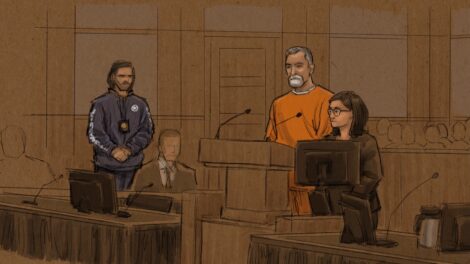
Man pleads guilty to killing a top Minnesota Democrat and her husband
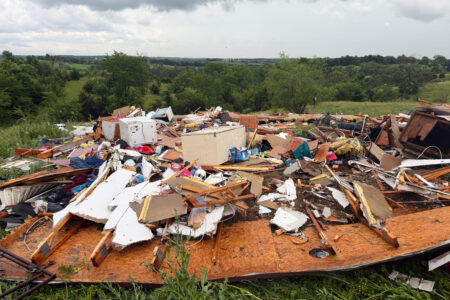
New tornadoes outside Chicago as severe storms pummel the Midwest
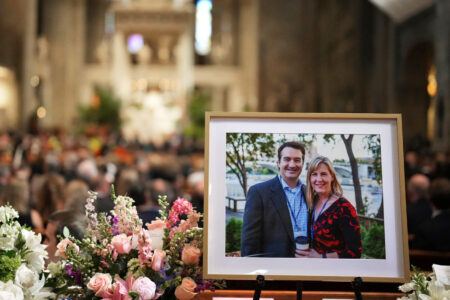
Feds won’t seek death penalty in plea deal with man accused of killing top Minnesota Democrat

NASA unveils astronauts to test tech for future moon landing
Social Security’ fund faces shortfall one year earlier than expected
WASHINGTON (AP) — Social Security 's retirement trust fund is projected to face a funding shortfall in 2032, a ...