From battlefield to Lawrence home, injured soldier knows freedom’s cost
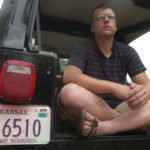
Ryan Chapman, Lawrence, still suffers effects from a sniper's bullet that struck the left side of his forehead in November 2004. He was a Marine then, fighting insurgents in Fallujah, Iraq. The bullet fractured his skull and left a scar.
Wounded veterans
- Iraq veteran overcoming post-traumatic stress disorder (07-04-07)
- U.S.worries wounded troops return with undetected problems (06-24-07)
- Armyaddresses war stress by hiring more mental health professionals(06-15-07)
- Dolefocuses on improving care for veterans (05-01-07)
- Pentagonannounces new measures to improve care for soldiers (04-18-07)
Ryan Chapman loses his balance if he closes his eyes or tries to walk through a dark room.
“It kind of looks like I’m drunk,” the 24-year-old Lawrence resident said.
Chapman also has daily headaches and at least one especially bad one each week.
“It’s gotten to the point where it’s like somebody with arthritis or tendinitis,” he said. “After a while you get used to it and it doesn’t really bother me anymore.”
He also has some short-term memory loss.
On a day when Americans are celebrating the 231st anniversary of their country’s declaration of independence, Chapman knows firsthand the cost of freedom.
His physical problems were caused by a sniper’s bullet that struck the left side of his forehead in November 2004. He was a Marine lance corporal then, fighting insurgents in Fallujah, Iraq. The bullet fractured his skull and left a scar.
Chapman was shipped to a hospital in Germany and by the end of the month had returned to the Lawrence home of his parents, Dean and Becky Chapman. One year later, in November 2005, a series of medical tests resulted in an honorable medical discharge from the Marine Corps.
He gets a temporary disability retirement pension. If there is no improvement after a few more years, the disability retirement will become permanent.
Chapman is one of about 800 military veterans of Iraq and Afghanistan who have been treated as outpatients at the Veterans Affairs hospitals in Leavenworth and Topeka, a VA spokesman said.
Chapman still gets periodic checkups at one of the hospitals. He has no complaints about the care he has received.
“They treat me pretty good,” he said.
Since returning to Lawrence, Chapman and a friend purchased a house. He has been working as a paraeducator and job coach for people with learning disabilities in the Lawrence school district.
Chapman, however, doesn’t know what he wants to do for a career. He had planned to stay in the Marines for at least four years.
“It was kind of a bummer,” he said. “I didn’t know what I wanted to do for college, but I knew I wanted to go at some point. I figured I’d have four years to figure that out.”
In August, Chapman will marry Nicole Roberts, of Gardner, who graduated from Kansas University in December. Roberts, who majored in history and journalism, has been accepted at the University of Westminster in London and the couple will be spending about a year there.
Chapman is looking forward to it.
“We’ll travel and take in the sights,” he said.
But Chapman still misses the Marines. He plans to wear his Marine dress uniform at the wedding. Some of his Marine friends will be there. He has kept in touch through the Internet with his Marine buddies, who have made three trips now to Iraq.
And sometimes he still thinks about the sniper who shot him.
Chapman was in the turret of a Humvee looking through a missile sight trying to find the sniper, who had already shot and wounded a fellow Marine and an Iraqi National Guardsman. After Chapman was shot, the sniper eventually was spotted by other Marines, who shot and killed him.
The sniper turned out to be a tall, blond Chechen mercenary, Chapman said.
Chapman also had his 15 minutes of fame on international television after he was wounded and transported to Germany. At the hospital he was one of a few wounded military personnel who were brought out for a news conference.
His mother would like to have a copy of the CNN video of that news conference, but the network wants $100 for it, Chapman said.
“I thought maybe since I did the interview they’d kind of help me out a little,” he said. “I’ve got to call and talk to them.”
City Government

City to keep Community Building open through end of 2026; leaders want more data before deciding on 2027
City leaders approve incentive for 131-unit housing development near Wakarusa and Queens

Developer seeks incentive from City of Lawrence to build 131 units of housing near Wakarusa and Queens

Lawrence city leaders will consider whether to keep Community Building open, make 2 other rec centers free to access
A STAR Bond application raises questions for city leaders about Costco and housing west of the SLT