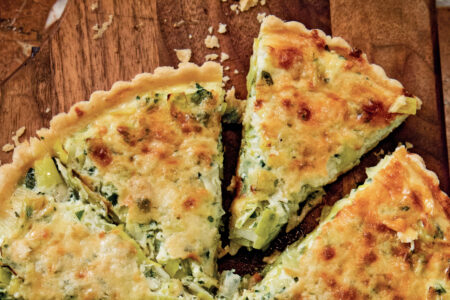
No coupling too unusual for pairing food and drink
If you’re still struggling with how to pair reds and whites, you’ve got a steep learning curve ahead of you.
That’s because the art of pairing food and drink has taken a turn to the avant-garde. Today, the question isn’t whether shellfish takes chardonnay or shiraz, but which single-source gourmet dark chocolate best marries a porter. Or whether Italian roast coffee shines with cave-aged Gruyere or fresh ricotta.
Consider this urge to pair unlikely items a symptom of the broadening of the nation’s palate. Led by chic restaurateurs and audacious gourmets, Americans searching for the next taste sensation are increasingly open to new ways of thinking about old flavors.
Such as the partnering of scotch and sushi at San Francisco’s Nihon restaurant. Or the pairing of riesling and steak tartar at New York’s Riingo restaurant. Even coffee and cheese, classes on which are offered by Murray’s Cheese shop in New York.
It’s an extension of Americans’ almost obsessive interest in the provenance of their food, says Dana Cowin, editor-in-chief of Food & Wine magazine. “As people understand the individual nuances of things, then the next question in their mind is how do they go together.”
Sure, it’s serious food geek. And esoteric doesn’t begin to do justice to the discussions that fill Web food forums. But it’s also just plain serious, especially for food processors, who are forever searching for the next “it” flavor that will launch a product to pop culture success.
The Coca-Cola Co., for example, recently partnered with the Culinary Institute of America in Hyde Park, N.Y., to brainstorm which foods go well with the company’s drinks, including its signature beverage (which they say goes well with Cajun seasonings and coconut).
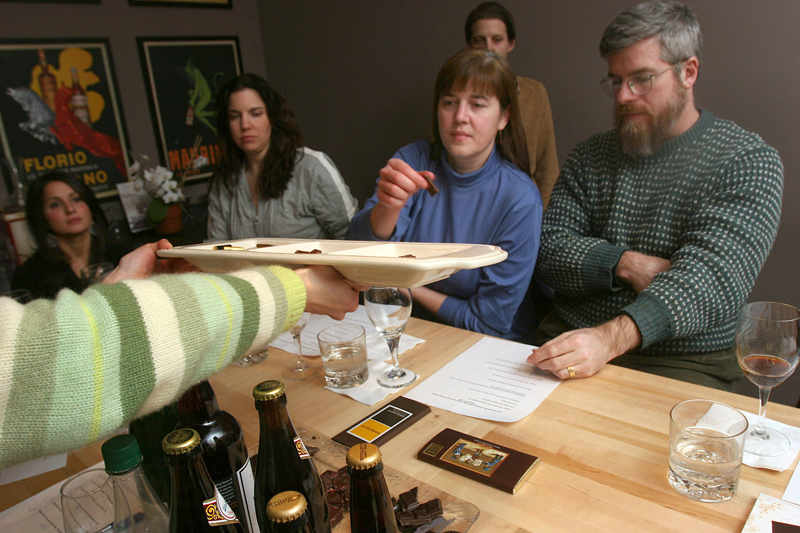
Mary Sullivan, Newton, Mass, is offered the chocolate selection that will be paired with beer during a class at The Wine Gallery in Brookline, Mass. The art of pairing food and drink has moved beyond the expected wine and cheese and taken a turn to the avant-garde. Sullivan's husband, Stephen Ludlum, is at right.
As consumers think more about how food and drink interact, marketers are happy to fuel the interest. The New York wine shop Pour, for example, organizes its bottles by how to pair them, rather than by varietal or origin.
Thus, the wall of wines labeled “crisp,” which shoppers are told to partner with seafood, poultry, green herbs and citrus.
Beyond wine
But wines are just the beginning, says Jerri Banks, the beverage director at Pour. The popularity of mixed drinks has driven interest in pairing cocktails with food. Among her favorites – a jalapeno-laced margarita alongside spicy Mexican food.
Of course, there are plenty of failures. Espresso with just about any cheese, for example.
“The espresso just blew everything away with the bitterness,” says Liz Thorpe, managing director of Murray’s Cheese. “I felt like I was sucking on aluminum foil every time I tasted something.”
She eventually settled on an aged Gouda. More successful combinations included Vienna roast with fresh ricotta (an acidic coffee with a rich cheese) and an Italian roast with aged Gruyere (a smoky coffee with a salty, beefy cheese).
For intrepid culinarians game for a taste of these unorthodox marriages but unsure where to start, help abounds.
At New York’s Institute of Culinary Education, a class on rum and chocolate last fall had students sip the Caribbean liquor alongside dishes such as chocolate-braised chicken.
Twice the sinfulness
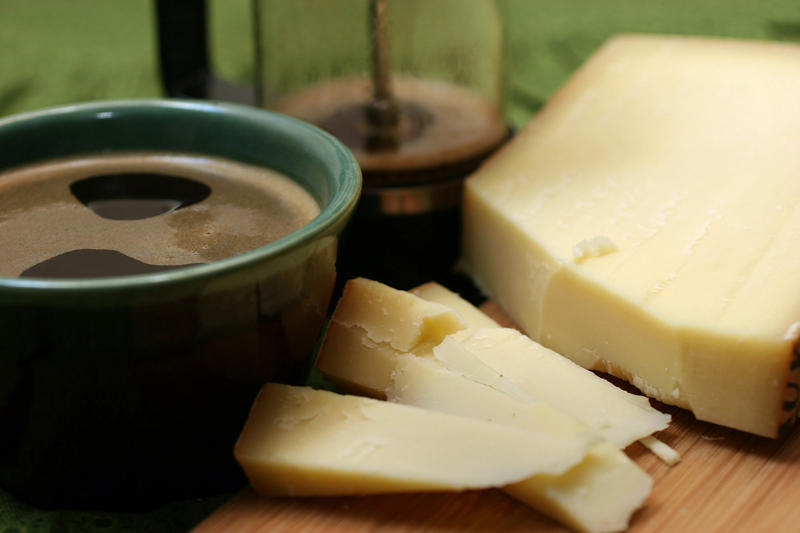
The art of pairing food and drink has moved beyond the expected wine and cheese and taken a turn to the avant-garde. Try a cave-aged Gruyere cheese with a cup of Italian roast coffee for a unique taste pairing.
And Boston’s upscale chocolate shop Temper Chocolates has teamed with a beer retailer to offer a class on pairing their products.
During one recent class, eight students matched various stouts, porters and double IPAs with chocolates ranging from a creamy milk to a funky dark bar with layers of peanut butter and raspberry jam. Some worked; some didn’t.
Either way, Mary Sullivan, a Newton, Mass., woman who attended with her husband, needed little convincing. They often have a bit of beer or scotch with chocolate in the evening. “If you don’t want to overwhelm your meal, it’s a great dessert,” she said. “And really easy, too.”
Taste is so relative, many foodies are reluctant to say which combinations work and which don’t. If you like it, it works.
Pairing tips
But there are some guidelines that can improve your odds of liking a pairing. Karen Page, co-author of “What to Drink with What you Eat,” encourages people to think regionally because foods and drinks with common backgrounds often have complimentary flavors.
Cheddar cheese and hard cider, for example, match well. Both are products of England.
Page also encourages people to generalize about the heft of the food. Hearty food, hearty drink and lighter food, lighter drink (so stout might be a better complement to a roast beef sandwich than to a leafy salad).
Perhaps most important, however, is balance.
“Every food has certain things that other foods need from a flavor perspective,” says David Kamen, chef instructor at the Culinary Institute. “Look for those opposites that attract. For example, sweet and acidity, sweet and spicy, hot and cold, salty and sweet.”
Food
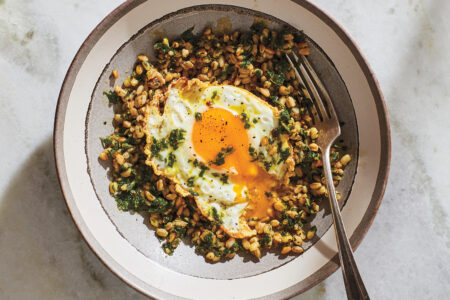
David Tamarkin’s recipe for Greens, Grains and Fried Egg works for any meal
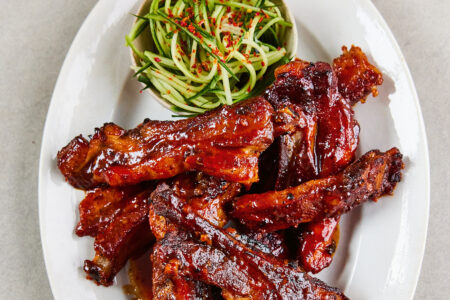
Slow-cooked, sticky-glazed pork ribs go with cucumber slaw in Sam Way’s recipe