Iraqis have taste of Hollywood with film festival
Baghdad ? Armed guards frisked attendees at two checkpoints, and foreign directors skipped the four-day event out of safety concerns.
But with its red carpet, a half-dozen television crews circling like paparazzi and a roster of 58 films, the Baghdad International Film Festival is rolling on this week to a largely hip Iraqi crowd enjoying a rare moment in the spotlight.
Organizers said they expect more than 1,000 movie fans, actors, directors and crew members to stop by the Palestine Hotel-turned-movie theater for the festival, the second since its inception in 2005.
The event marks a major departure from cinema under Saddam Hussein, when independent moviemaking came to a standstill and 35-millimeter film stock was banned under international sanctions. The only locally produced movies were sponsored by the government. At the same time, more than a dozen theaters featured family-friendly foreign films, but most have been bombed or closed since the 2003 U.S.-led invasion that drove Saddam from power. The only three remaining screen B-grade action movies and adult films.
“The cinemas in Iraq have vanished; it is crippled,” said Malik Magtouf, 22, a student at Baghdad’s Institute of Management.
While security concerns remain high, the event this week is a hopeful sign for Iraq’s young artists, including twenty-something guys sporting fauxhawks and women with uncovered heads in makeup and trendy jeans.
“When you watch and you hear the clicking sound of the movie projector, then you will feel that life has come back to Iraq,” said Yahay Allaq, 27, assistant director of “Ahlaam,” a film about the lives of three Iraqis during the Saddam regime.
Today, Iraq’s movie industry is re-emerging, said Israa Al-Bassam, 23, an aspiring actress sporting pink lipstick and blond highlights in her long brown hair.
“Now, it’s better,” Al-Bassam said, noting a “new blood” making documentaries and feature films.
Despite the hopeful outlook, none of the 31 foreign directors whose films were accepted into the festival traveled to Iraq. Representatives from the 27 Iraqi films attended.
At the Palestine Hotel, logistical problems plagued the festival. Power outages momentarily stopped movies, and equipment failures delayed start times. The frigid indoor temperatures – even by American movie theater standards – forced people to stay bundled in their jackets and scarves.
But for Allaq, those issues are nothing compared with the challenges the crew faced completing “Ahlaam.” During filming in 2004, crew members were kidnapped, beaten and threatened with execution by one-time Saddam supporters, he said. One sound recorder was shot in the leg. In another incident during the 55-day film shoot, U.S. soldiers, suspecting they were al-Qaida members, interrogated and held them in jail for four days until the Dutch embassy helped negotiate their release.
The movie’s director, Mohamed Daradji, is working on another film about the crew’s experiences.
“My heart is strong now; it is solid,” Allaq said. “When you watch a film that you worked to achieve, you feel like a flying angel.”
As the new filmmakers and actors embraced the future, members of an older generation said they were happy to pass the torch.
“We call for all the artistic side to have the initiative to produce and show new films,” said Aziz Kareem, an Iraqi comedian from the 1980s. “It will be a resurrection of Iraqi cinema.”
National
Rain along the Gulf Coast could become the first named storm of the Atlantic hurricane season
MIAMI (AP) — A cluster of storms along the Gulf Coast could become the first named tropical storm of the 2026 ...
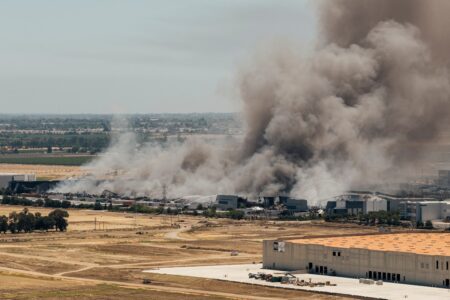
Unhealthy air quality in California city as huge warehouse fire burns for 3rd day

Judge orders Trump administration to restore National Park changes at sites that ‘disparaged’ US
Teens’ reading and math scores have stagnated, US test results show
WASHINGTON (AP) — Younger students have regained ground academically after the pandemic's disruptions while older ...
Lawyers for man accused of killing Charlie Kirk try to block death penalty