The truth about red teas
First there was black tea, then green tea and white tea. But the newest tea on supermarket shelves is red tea. Several distributors, including Lipton and Republic of Tea offer red tea in bags and loose form, and Snapple has a bottled red tea.
But while red tea is caffeine-free and has some of the same antioxidants as other teas, it’s not truly a tea.
National wellness expert Andrew Weil recently addressed the red tea issue in a column at www.drweil.com.
Black, green and white teas all come from “Camelia sinensisis,” “the tea plant,” he says. They differ only in the processing, which determines the levels of caffeine and antioxidants.
Red tea or Rooibos (“red bush”) tea is a South African herbal infusion used for the treatment of hay fever, asthma and eczema and to soothe heartburn and stomach ulcers and relieve nausea. It has a fruity taste when brewed.
If your goal is to get the documented health benefits of tea, Weil recommends sticking with black, green or white teas.
Black bean, corn and red pepper salad
- 1/2 teaspoon ground cumin
- 1/2 teaspoon chili powder
- Pinch of cayenne
- 6 tablespoons fresh lime juice
- 5 tablespoons olive oil
- Kosher salt
- 1 1/4 cups dried black beans, soaked overnight and cooked, or 2 (15-ounce) cans black beans, drained and rinsed
- 2 ears fresh sweet corn, steamed, cooled and kernels removed
- 1 red bell pepper (roasted or raw), diced
- 3 scallion greens, very thinly sliced
- 1/4 cup minced red onion
- 1/4 cup chopped fresh cilantro
In a small bowl, whisk the spices, lime juice, oil and salt to taste. In a medium bowl, mix the beans, corn, red pepper, scallions and onion. Pour on the dressing and mix well. Just before serving, add the cilantro. Makes 8 servings.
Source: Adapted from “Raising the Salad Bar” by Catherine Walthers (Lake Isle, $19.95).
Food
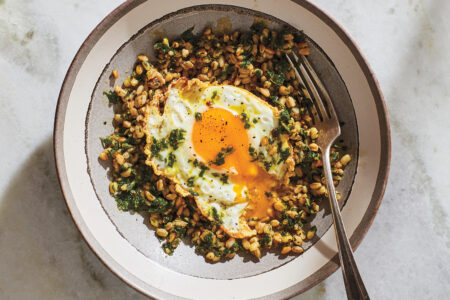
David Tamarkin’s recipe for Greens, Grains and Fried Egg works for any meal
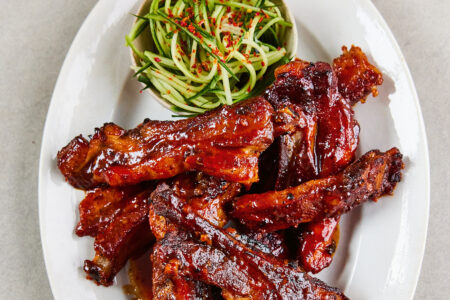
Slow-cooked, sticky-glazed pork ribs go with cucumber slaw in Sam Way’s recipe

This quiche just might make you love leeks