Hybrid car sales gaining in Lawrence as gasoline prices continue climb
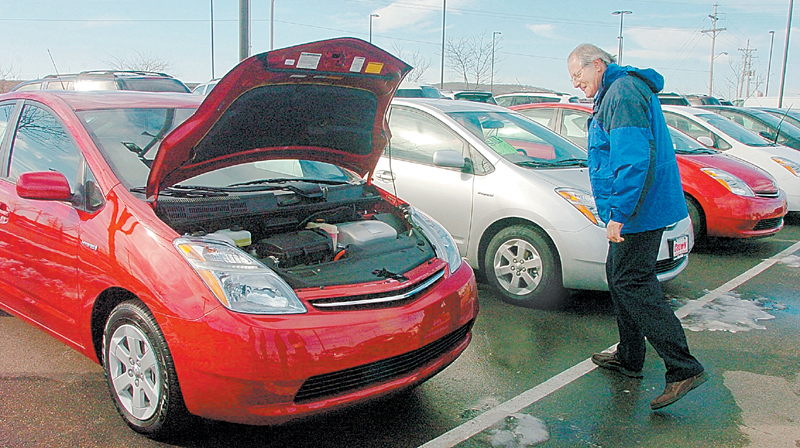
Tim Ballew, salesman for Crown Toyota, looks over one of three types of hybrid cars sold by the Lawrence dealership, 3430 South Iowa. Sales of hybrid cars have correlated with rising gasoline prices.
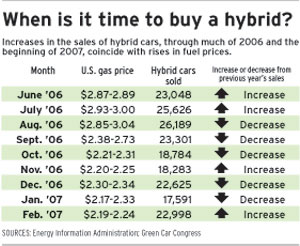
Forecasting the rise and fall of gasoline prices is an intricate science, but anticipating the consequences of another increase is not. Automobile dealers report a spike in hybrid car sales whenever consumers are fed up with pump prices.
“It is hard to predict future gas prices, but what people are learning is that no matter what, they will save a lot of money if they buy a hybrid vehicle,” said Vince Rose, hybrid car sales representative at Jack Ellena Honda, 2957 Fourwheel Drive.
A hybrid car is any vehicle that uses two forms of fuel sources to run. Most common is the use of a gas-powered engine and a battery-powered motor. The result is a much more gas-efficient vehicle that omits less harmful pollutants.
In summer 2006, the U.S. and Kansas experienced gasoline prices in the $3 range. During that period, hybrid sales were at a national high of 26,189.
“It is safe to say that we have certainly seen increased interest in hybrid vehicles, especially last summer when gas prices were remarkably high,” Rose said.
When gas prices rise, Rose said that they see an increase in hybrid sales of about 10 to 15 percent. But because hybrid vehicles traditionally cost $4,000 more than their gas-powered counterparts, that sometimes turns customers away.
Hybrid owners save roughly $500 a year on gas, Rose said. Compared with the 34 miles per gallon that a gas-powered car gets, hybrid vehicles receive up to 60 miles to the gallon. And that’s not the only perk.
“On top of gas savings, hybrid owners receive a $2,800-$3,000 tax break from the government,” Rose said. This tax break deducts from the total amount that is owed at the end of the tax period.
With two years of gas savings and tax breaks, the hybrid owner has, in most cases, already made up for the more expensive purchase price, he said.
“In the long run owners will save money. People need to see hybrid purchases as a long-term investment,” said Tim Ballew, hybrid sales consultant at Crown Toyota.
Ballew said that consumers start out wanting to save some money on gas, but when they see all the added perks, they often become repeat customers.
Families are starting to become regular hybrid purchasers. Ballew said that once one of the family members experiences the value of owning a hybrid vehicle, they come back to buy hybrids for the rest of the family.
“This is my second hybrid. I gave my first one to my son,” said Judy Paley, Toyota Prius owner since 2004.
Paley said that what originally interested her in hybrids was when she test-drove a friend’s hybrid. Paley spends half as much on gas as she used to, and come this tax period, between the two hybrids that she owns, will have had a total of $5,000 dollars deducted from her taxes.
However, better than all of the savings, “It is so much better for the atmosphere,” Paley said. “That is the most important thing of all.”
When hybrid cars idle at stop lights, the gas engine turns off, eliminating toxic gases from being omitted.
In the past, purchasing a hybrid was more complicated. Customers could test-drive one at the dealership but wouldn’t be able to bring one home. Instead they had to order them and wait nearly six months to receive it. That’s not the case anymore.
“Now we have them all here on the lot,” Ballew said.
City Government
Developer seeks incentive from City of Lawrence to build 131 units of housing near Wakarusa and Queens

Lawrence city leaders will consider whether to keep Community Building open, make 2 other rec centers free to access
A STAR Bond application raises questions for city leaders about Costco and housing west of the SLT
Soccer gear honoring Lawrence history’s all-star team is now on sale as part of city’s public art exhibition
To honor public servants, Lawrence’s July 4 celebration will have a whole gallery of their photos on display; submissions open now