Answering the call
LEO Center's new CEO counts on business experience to help
Having left the ivory tower of Kansas University’s business school, Joe Reitz is answering a higher calling.
This month Reitz started work as chief executive officer of The LEO Center, a Christian outreach and discipleship ministry designed to meet the physical and spiritual needs of people residing in Lawrence and surrounding communities.
Less than six months into retirement from KU, the professor who spent years studying the organizational functions of corporations and emphasizing the need to conduct commerce in an ethical manner now finds himself testing his expertise in the real world.
For free.
“It’s a chance to put into practice a lot of the things that I’ve preached for a long time,” said Reitz, who declined taking a salary for his new job, considering the growing number of people who need assistance in the area. “It’s a chance to put it all together and see what I can make out of it.”
Plenty of people are counting on him.
Last year the center provided basic medical care for 4,000 people who have low incomes, are uninsured or otherwise need assistance from its clinic at the east end of the Riverfront Plaza, Sixth and New Hampshire streets.
It’s the core service for an operation that also provides a food pantry, financial assistance, pregnancy counseling and biblical counseling and discipleship.
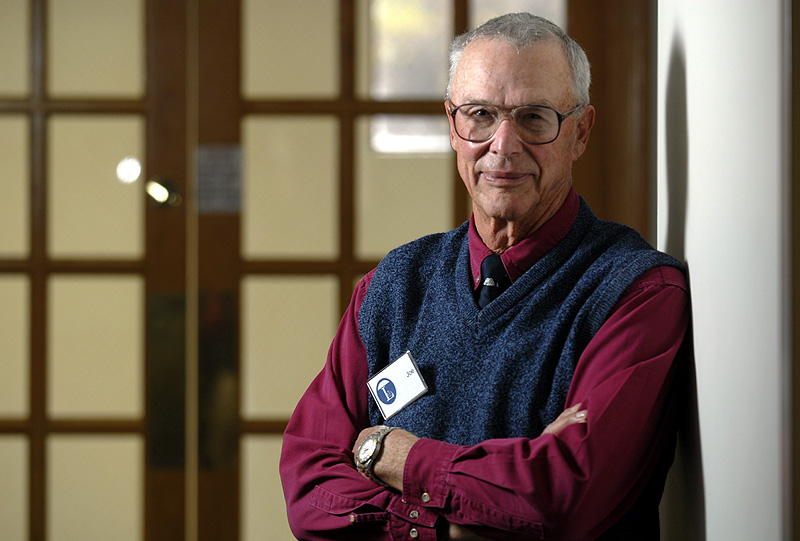
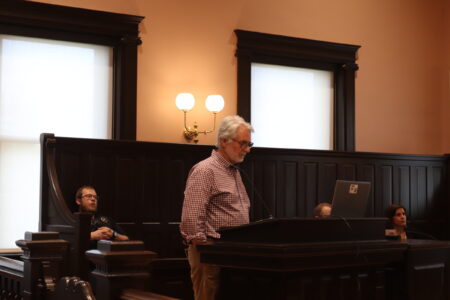
oe Reitz is the new chief executive officer at The LEO Center, a church-based organization that provides health care services for uninsured citizens in addition to other services. Reitz retired earlier this year as a business professor at Kansas University, where he co-founded the International Center for Ethics in Business.
Expanding needs
But drop by the center on a Monday, Wednesday or Friday, and a relative handful of paid, part-time and volunteer staffers will be tending to 30 or 40 patients needing help grappling with a cold or more pressing needs. The clinic provides lab tests, diagnostic procedures and other basic services.
The clinic started in 1999 at Heartland Community Church, with Dr. Dennis Sale and his wife, Mikki, joining registered nurse Pat Mayo to tend to five patients in the church lobby and nursery.
Having since relocated to the Riverfront Plaza in 2004, today the clinic is supported by six churches – Heartland Community Church, Morning Star Church, Victory Bible Church, Lawrence Wesleyan Church, Clinton Parkway Assembly of God and Mustard Seed Christian Fellowship – and the center’s board is headed by Heartland Pastor Paul Gray, who had been overseeing the center’s day-to-day operations until Reitz’s arrival.
Through its prescriptions-by-mail program, the clinic charges its most financially strapped patients $5 each for a three-month supply of medicine – or provides it free if a patient can’t afford it. Brand-name medications range from Advair for asthma to Zyrtec for allergies, with dozens in between: Requip for Parkinson’s disease, Aricept for Alzheimer’s disease, Accupril for high blood pressure and on and on.
“And I doubt we’re even taking care of a third of the people who need help,” Reitz said.
But the prescription drugs are one portion of the center where Reitz’s leadership and connections already are starting to shape operations.
Although the center hadn’t had any problems, Reitz said that securing the center’s medications and maintaining impeccable records should become a priority. And soon help was on the way.
After having a conversation with a contact from the business school – Robert Herndon, an FBI special agent who worked the case of Robert Courtney, a pharmacist who diluted cancer drugs – the center soon had two FBI agents in town to advise staffers, review operations and help to establish a plan to make the place more efficient, safe and secure.
‘Step it up’
Jacki Ziegler, who oversees the prescription program while working at the center as an AmeriCorps volunteer, said that Reitz’s can-do attitude and ability to get things done already was having a positive effect on the clinic.
“He’s going to make sure we step it up a notch,” said Ziegler, who plans to attend school to become a physician’s assistant, having already received a KU degree in microbiology.
Adds Mayo, who works full-time at the clinic: “He’s a really confident guy. In the past, we’d have hopes and we’d put them on the back-back-back-back shelf, the back burner. But he has a lot of faith and confidence in the local community – that if you approach the community with a specific need, he feels that he can persuade them into assisting.”
That’s another part of Reitz’s plan.
He’s looking for another $7,000 so that he can secure training for two staffers to use the clinic’s ultrasound machine for checking abdominal problems. He wants to get the clinic open five days a week, and that means finding money to hire more medical personnel, both full- and part-time.
Seeking grants
He already has hired someone to write grants, working 30 hours a week to find money that could help expand operations while making them more efficient.
“That’s something we needed to do. That’s a source of income that can help our programs,” he said. “Anything is better than nothing. If she gets one grant, she’s paid for herself.”
For 2008, Reitz hopes to have $1 million to spend on staff and other needs, helping to plug a gap for many of the 14,000 uninsured residents of Douglas County.
His business plan is simple.
“I’m trying to sort things out, figure out what we have, what we need most, and figure how to get some money to do it,” he said.
City Government

Developer seeks incentive from City of Lawrence to build 131 units of housing near Wakarusa and Queens

Lawrence city leaders will consider whether to keep Community Building open, make 2 other rec centers free to access
A STAR Bond application raises questions for city leaders about Costco and housing west of the SLT
Soccer gear honoring Lawrence history’s all-star team is now on sale as part of city’s public art exhibition
To honor public servants, Lawrence’s July 4 celebration will have a whole gallery of their photos on display; submissions open now