County wants to help city with rural growth
We’re the county government, and we’re here to help you.
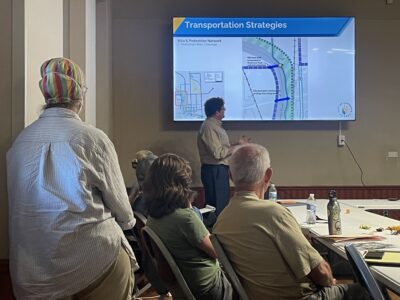
That was the message Douglas County commissioners delivered to Lawrence city commissioners Tuesday afternoon as they attempted to convince the city to adopt a new set of regulations governing rural growth.
At a city-county study session, all three county commissioners touted the new regulations as a way to reduce the costs that Lawrence ultimately will have to incur when it annexes land into the city.
“We believe that when annexation occurs, it should be simple and not costly or burdensome to the city,” County Commissioner Charles Jones said.
But that isn’t always the case. Annexation many times has been costly to the city because of a long history of unplanned rural development allowed through the 5-acre exemption. That regulation – which basically permits people with 5 acres of rural property to build a single-family home without going through the planning process – has allowed homes to spring up in places that make it difficult for the city to expand roads or other infrastructures.
Under the proposed subdivision regulations, the 5-acre exemption would be eliminated. Instead, property owners would have to go through an administrative planning process that would require them to design their home and improvements in a way that would be compatible with city development in the future.
“We’re not trying to tell people that they can’t build on their land,” County Commissioner Bob Johnson said.
“We’re just trying to tell them that they need to build with an eye to the future.”
City commissioners said they liked what they saw in the proposed regulations, for the most part.
“Under this plan, the costs to serve those new areas of town will not be anywhere near what they would be under our current regulations,” City Commissioner Sue Hack said.
But the new regulations aren’t a done deal. County commissioners said if the new regulations are passed, the city should rework its contracts with several rural water districts in the county.
The city currently treats water for several rural water districts but places limits on the number of new water meters the districts can issue in a year. The city has done that as a way of limiting the amount of unplanned growth that can occur in the county.
County commissioners now are saying that those restrictions should be removed because the new regulations will limit unplanned growth. City commissioners stopped short of saying they would be willing to rework the rural water contracts, but some members did say they were willing to consider it.
County commissioners have given formal approval to the new regulations, but because they would be part of the city-county subdivision regulations, the City Commission also needs to approve the changes.
Although city commissioners were mostly receptive to the changes, there was a bit of controversy. City Commissioner Mike Rundle distributed a memo before the Tuesday afternoon study session blasting the process the County Commission had used to create the regulations.
Rundle expressed concerns that the County Commission had failed to act on a previously proposed set of regulations that the Lawrence-Douglas County Planning Commission had created. All three county commissioners said they did not like the Planning Commission’s proposal, but county commissioners did not formally vote on the proposal. Rundle said the County Commission should have the “political decency” to first deal with that proposal.
The tone for the rest of Rundle’s letter also was particularly sharp. In it, he accused Jones of acting “pretentiously,” and said the County Commission had been “preachy” on the subject.
Rundle never mentioned the letter or his concerns during the study session, and Jones declined to comment on Rundle’s letter following the meeting.
City Government
Developer seeks incentive from City of Lawrence to build 131 units of housing near Wakarusa and Queens

Lawrence city leaders will consider whether to keep Community Building open, make 2 other rec centers free to access
A STAR Bond application raises questions for city leaders about Costco and housing west of the SLT
Soccer gear honoring Lawrence history’s all-star team is now on sale as part of city’s public art exhibition
To honor public servants, Lawrence’s July 4 celebration will have a whole gallery of their photos on display; submissions open now