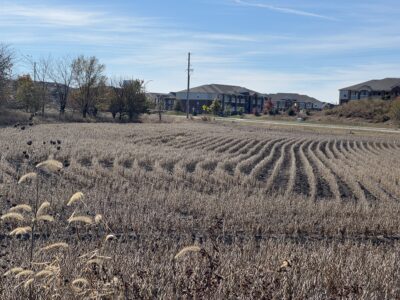
The short section of George Williams Way just south of Sixth Street looks like a city street to brag about.
The pavement is pothole-free. The sidewalks are smooth. The curbs and gutters are solid. The road is less than 2 years old.
But tonight, city commissioners will be asked to tear up major portions of the road as planners and engineers are now saying it is too narrow to deal with the expected traffic that commercial developments in the area will generate.
"I think this project is a real symbol of questionable long-term planning," said City Commissioner David Schauner.
This is happening while commissioners prepare to make the next large planning decision for the area: a request for a 337,000-square-foot shopping and office center - dubbed Mercato - at the northwest corner of Sixth Street and George Williams Way. That project's plans also are up for final approval by city commissioners tonight.
"This certainly seems like it is going to be the next large commercial area the city will have," City Commissioner Sue Hack said.
Too narrow
George Williams Way
The area has long been planned to house new retail stores, service businesses and offices. But city leaders now are conceding that they built a portion of George Williams Way - the major north-south road through the area - much smaller than it needed to be.
The section in question is about a one-tenth of a mile stretch between Sixth Street and Ken Ridge Drive. The road currently has one lane in each direction and a left-turn lane in the center. Chuck Soules, the city's director of public works, now says the street will need two lanes in each direction, along with two left-turn lanes. Construction costs for the stretch of road could be about $1 million.
Adding to the cost is that the section of road also will need a single-lane roundabout at the intersection of George Williams Way and Ken Ridge Drive.
Soules said projected traffic volumes for the section of street are significantly higher than the ones that were used to design George Williams Way a little more than two years ago. City Manager David Corliss - who took over that job in September - confirmed that's what happened, but stopped short of calling the design a mistake.
Instead, he said that it was the byproduct of a city policy that builds roads only to the size that they are needed when they open. He said he's urging city commissioners to change that practice and begin building roads to their "ultimate configuration" in the very beginning.
"It is important that we get infrastructure in ahead of development," Corliss said. "I'm trying to avoid us having to reconfigure streets and intersections on a regular basis."
Building bigger
Corliss is looking to put the new practice into place with the George Williams Way project. In addition to the construction work that is needed south of Sixth Street, commissioners also are being asked to approve the extension of George Williams Way north of Sixth Street. And Corliss and Soules are proposing that the road be large and wide from the beginning.
The portion of the road closest to Sixth Street will be seven lanes wide - two through lanes in each direction, two southbound left-turn lanes and one southbound right-turn lane. As the street goes farther north, it will narrow to five lanes.
Costs for the entire road have not been finalized, but Soules said it would be a "several million dollar project." Corliss is recommending that the city pay for $200,000 and developers who own property near the intersection pay for the rest.
Developer Brian Kubota owns property that is slated for commercial development on the southwest corner of George Williams Way and Sixth Street. He said he's not going to oppose the city's plan but wishes they would have been more forward-looking when they built the intersection to begin with.
Kubota's property paid about $1 million for the existing George Williams Way. He's estimating that he'll pay about $1.2 million to expand the existing road. If it were all done in the beginning, he estimated there would have been about $350,000 in savings.
New retail
The other major issue on the city's agenda is to determine how much new development to allow around the intersection. Thus far, the Mercato plan, which is being proposed by longtime Lawrence developer Duane Schwada and members of the Fritzel family, has not produced much controversy.
The proposal was approved by the Lawrence-Douglas County Planning Commission on a 9-1 vote, and the city's planning staff also is recommending approval. City commissioners already have approved the zoning that allows commercial development. They now are being asked to approve a preliminary development plan that spells out how the project will be designed.
The plan calls for a total of 337,700 square feet of commercial space, but only 184,600 square feet of it can house retail uses. The plan includes one large "big box" store building of 175,000 square feet. The rest of the retail is spread out in two smaller buildings.
The proposal isn't concern-free, however. Schauner said he has concerns that the city's growth rate doesn't warrant this large of an expansion of retail uses.
"Just because there are more places to shop doesn't mean that the community has more money to spend," Schauner said. "My question is what will this do to other parts of town? I'm afraid it may hurt other parts of town."
The developers of the project, though, said they think the project will attract a nice mix of national tenants that will slow the number of people who drive to Topeka or Kansas City to shop.
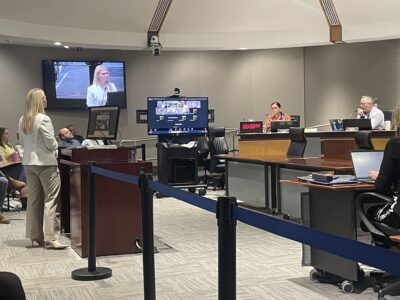
Commissioners meet at 6:35 p.m. tonight at City Hall, Sixth and Massachusetts streets.


Comments
LJWorld.com doesn’t necessarily condone the comments here, nor does it review every post. Read our full policy. Also, read about banned accounts and harassing comments.
blue73harley (anonymous) says…
By-product of city commissioners who think small. PLC = Planning a Little City.
carolannfugate (anonymous) says…
I feel soooooooooo bad for the City.
carolannfugate (anonymous) says…
They will have to sing on their way out.............
" Swing low sweet Chariot comin for to carry me home.............................................."
just_another_bozo_on_this_bus (anonymous) says…
This problem is the result of the policies of previous city commissions and the previous city manager.
Corliss has proposed a more forward-looking planning process that could avoid problems such as this.
Fortunately, the residents of this city aren't well represented by the knee-jerkers on this forum, and recognize that decades of dysfunctional planning takes a while to root out.
opinion (anonymous) says…
just_another_bozo_on_this_bus,
Are you saying that a previous administration can screw up so much that it may take a lot of hard decisions and actions to get things corrected and that just because it happens on their watch, it may not be their fault? ;^)
biggunz (anonymous) says…
what a bunch of clowns. i would have rather been voting them out this morning!
jonas (anonymous) says…
opinion: Yep. Reagan sure screwed a lot of things up irrevocably, didn't he?
hahahahahahahahahahaha
ranger73 (anonymous) says…
Gosh I hope everyone voting had a chance to read this story before going to the polls...
just_another_bozo_on_this_bus (anonymous) says…
What difference would it make, ranger73? No city commission seats are up for election till April.
opinion (anonymous) says…
jonas,
All have.
ranger73 (anonymous) says…
oh yeah-forgot about that bozo-haven't been to vote yet-kids making me wait until they are out of school-
blue73harley (anonymous) says…
Bozo - the road is less than two years old. The current city commission is at fault.
I do agree that there is a glimmer of hope in that Corliss is making long term planning an agenda item.
just_another_bozo_on_this_bus (anonymous) says…
"The current city commission is at fault."
The road was planned and designed under policies and staff put in place by previous commissions and the former city manager.
There is a new city manager, who appears to be doing a much better job at getting city commissioners accurate information necessary to make proper decisions regarding important projects like the one in this story (which demonstrates yet again that growth is expensive.)
But I know it feels good for you kneejerkers to blame this commission for all the crap that decades of cronyism and mismanagement have created, and you spare no energy scratching that itch.
kef104 (anonymous) says…
A huge thank you to Mr Corliss for bringing this idotic practice to light. I have thought for years that Lawrence's traffic issues are due to street designs that lack any planning for the future. For example, why would any major new street in the last 30 years be built without a center turn lane? Wakarusa lacks it and as traffic grows expect to constantly stop for others making left turns. Lawrence deserves planning that thinks ahead and prepares for our enevitable growth.
roger_o_thornhill (anonymous) says…
"...he said that it was the byproduct of a city policy that builds roads only to the size that they are needed when they open."
Is this true? That's stupid. Look at any major cities problems with roadbuilding through the parts of the last century that few of us left here have seen. Central Expressway was handled that way for who knows how long. It was under construction/reconstruction for the first 18 years of my life. And I'm sure it is too small today.
On another note: Did I read the lower case diatribe of a certain local tradesman of "dubious" distinction?
blue73harley (anonymous) says…
In 2004 here were the goals stated by the same jokers that are in office now (I added the caps for emphasis)...
"Public Works
Continue to develop quality transportation and infrastructure networks that improve the quality of life for our citizens, both existing and potential.
Status: Major infrastructure projects completed: 31st & Nieder, 6th & Kasold, 11th Street, 31st & Iowa, N. Michigan; Wakarusa, Overland, and Congressional Drive north of 6th. Drainage improvement projects: The final phase of the 21st and Barker project, box culverts at 19th and Learnard, will be completed this fall. The 13th and Oregon stream daylighting project started in February and will be completed this spring. The 15th and Lawrence Avenue streambank stabilization project is scheduled for construction to begin early next year. The 23rd and Haskell water quality basin is scheduled for construction early next year. Major streets in various stages of development: [bid and/or under construction]: O'Connell Road (23rd to 31st). West 6th Street (Wakarua to the SLT), Folks Road (6th to Harvard); George Williams Way (6th to Harvard). [design stage]"
Andini (anonymous) says…
I hope they build a wider roundabout to go with the wider street.
roger_o_thornhill (anonymous) says…
What about a turn lane for 6th and Eldridge? Only place on 6th outside of downtown without center lane and I have seen more accidents there than anywhere but 6th & Iowa. Granted, I don't get out of the west si-i-i-ide much. I pledge $5 if everyone in town chips in. With any extra $$, maybe redesign 6th & Iowa entirely. Make it project for engineering class at KU and save on costs.
Baille (anonymous) says…
"[The problem is] the byproduct of a city policy that builds roads only to the size that they are needed when they open. He said he's urging city commissioners to change that practice and begin building roads to their "ultimate configuration" in the very beginning.
"'It is important that we get infrastructure in ahead of development,' Corliss said. 'I'm trying to avoid us having to reconfigure streets and intersections on a regular basis.'"
Ok - who came up with a boneheaded policy like that? My understanding is that this policy pre-dated the Shauner, Highbarger, and Rundle.
merrill (anonymous) says…
"[The problem is] the byproduct of a city policy that builds roads only to the size that they are needed when they open. He said he's urging city commissioners to change that practice and begin building roads to their "ultimate configuration" in the very beginning.
"'It is important that we get infrastructure in ahead of development,' Corliss said. 'I'm trying to avoid us having to reconfigure streets and intersections on a regular basis.'"
Ok - who came up with a boneheaded policy like that? My understanding is that this policy pre-dated the Shauner, Highbarger, and Rundle. (((The Growth Machine as they were concerned about providing an appearance of keeping tax dollar costs down when in fact taxpayers pay more when a retrofit expansion becomes the order of the day)))
merrill (anonymous) says…
The proposal isn't concern-free, however. Schauner said he has concerns that the city's growth rate doesn't warrant this large of an expansion of retail uses.
"Just because there are more places to shop doesn't mean that the community has more money to spend," Schauner said. "My question is what will this do to other parts of town? I'm afraid it may hurt other parts of town."
The developers of the project, though, said they think the project will attract a nice mix of national tenants that will slow the number of people who drive to Topeka or Kansas City to shop.
Schauner is on the money. The developers have no clue what they are talking about. If the retail dollars are not here it will neither attract nor support a huge retail operation. It will be more down sized stores,if any, who cannot offer the selection or price. 12,000-15,000 job commuters will continue to shop KCMO metro and Topeka over the noon hours and/or because they are already there.
The focus should be high paying jobs. Hey developers why build/donate a state of the art VoTech campus and really do something for the community. Students are good for existing business thus new economic growth.
merrill (anonymous) says…
By Stacy Mitchell, Institute for Local Self-Reliance
originally published in Portland Press Herald, July 8, 2001
By a nearly 2-1 margin, Belfast voters recently endorsed a measure to limit new retail stores to no more than 75,000 square feet. The law will keep Wal-Mart, Home Depot, and other "big box" retailers out of the community.
The Belfast vote is part of a growing nationwide movement. In the last few years alone, more than 100 cities and towns have rejected big box stores.
Grassroots groups dedicated to halting retail sprawl and strengthening local businesses are springing up around the country. In Belfast, a citizen coalition known as Belfast First helped build support for the size limit.
The group has counterparts in dozens of other communities, including Friends of Flagstaff's Future in Flagstaff, Ariz., the Main Street Defense Fund in Northfield, Minn., and the 5 and 10 Coalition in Hatfield, Mass.
The dramatic rise of chain stores and decline of local businesses over the last decade is not simply the result of market forces. It is a trend that has been aided in no small part by public policy.
Land use and zoning rules often encourage auto-oriented development on the outskirts of town, while undermining central business districts. Local and state governments frequently provide multimillion-dollar subsidies to lure big box stores, but deny assistance to local merchants.
An increasing number of communities are adopting policies that support, rather than undermine, locally owned businesses and healthy downtowns.
more:
http://www.newrules.org/retail/smbelf...
merrill (anonymous) says…
Not everyone thinks big box stores are the darlings of the retail world therefore should NOT be allowed to bend the rules. Who are these people who believe that city plans and zoning should not apply to them? Or if an economic impact study reveals we have too much retail for the existing market/retail dollars why should city commissioners say yes? They should say no!!
It is neither the job of citizen/taxpayers nor of city or county governments to guarantee the success of land speculators. Land speculators have but one goal in mind and it's not practical city planning or growth. Buying the land does not guarantee the right to build only the guarantee to own the land nothing more and nothing less which is why it is called speculating. Developers/land speculators are not city planners and should never be considered as such. Let them be what they are...gamblers. Neither should they be allowed on governing bodies for it is inevitable land use decisions will come before them then conflicts of interests surface.
Meatwad (anonymous) says…
I forwarded the story to someone (not in KS) who studies urban planning and this was the response. I don't know a lot about this topic but I found the response interesting anyway:
"First they will widen the road. Then a bunch of stores and offices will come bringing a lot of traffic to the newly widened road. Then the local traffic commissioner will say "See, I told you we needed to widen that road. Can you imagine how bad the traffic would be if we had left it alone?"
Its perhaps some of the least-enlightened thinking that goes on in the entire realm of urban planning. The propensity of people to travel on a road is dependant on the perceived cost, measured in time (and hence speed over a distance), of that particular road. When you add capacity you alter that equation in a way which attracts traffic to it. This phenomenon is call "induced traffic" and is as old as time. (Actually it was first noticed by Robert Moses when he opened the Triborough Bridge, and traffic exceeded their 20-year projections in the first week. If you build it, they will come. Conversely, when they closed the road that once ran through Washington Square Park (5th Avenue), and all of the traffic people said it would result in massive gridlock, there wa no noticeable increase in traffic on the other downtown avenues. If you don't build it, they won't).
Sadly, the other effect of widening a road to four lanes is that you attract the attention of national retailers who specifically scout out such construction projects for potential sites. It is a virtual certainty that if that road does begin its widening, Best Buy Target Walmart and everyone else will snatch up the adjacent properties, further fulfilling your traffic dept's predictions.
Result: Crap.