Homegrown alfalfa sprouts healthy choice with proper care
Q: Are homegrown alfalfa sprouts safe to eat?
A: Raw sprouts are considered a health food because they are low in calories, fat and sodium, yet a good source of fiber, minerals and phytochemicals. However, they have been linked to cases of foodborne illness due to salmonella and E. coli bacteria.
Besides alfalfa sprouts, other popular sprouts include clover, sunflower, broccoli, mustard, radish, garlic, dill, pumpkin, many bean sprouts, soybeans and wheat berries.
In general, raw sprouts are safe to consume. For those at risk, such as children, the elderly or the immuno-compromised, sprouts may be a source of illness. These consumers should consider avoiding raw sprouts or only consuming them cooked.
The Food and Drug Administration offers these tips for consuming raw sprouts:
¢ Cook all sprouts thoroughly before eating to significantly reduce the risk of illness.
¢ Sandwiches and salads purchased at restaurants and delicatessens often contain raw sprouts. Consumers who wish to reduce their risk of foodborne illness should specifically request that raw sprouts not be added to their food.
¢ Homegrown sprouts also present a health risk if eaten raw or lightly cooked. Many outbreaks have been attributed to contaminated seed. If pathogenic bacteria are present in or on seed, they can grow to high levels during sprouting even under clean conditions.
Q: Isn’t National Bake and Take Day coming up soon?
A: Good memory! Yes, the 37th annual Bake and Take Day will take place March 25. The day, sponsored by the Kansas Wheat Commission and Kansas Association of Wheat Growers, is designed to bake a product that is made from wheat or wheat products and take it to a neighbor, friend or relative. Giving a homemade gift is a great way to show someone you care.
In addition, Kansans are encouraged to write a story about their experience by April 10 to receive a free recipe book and be entered into a drawing to win one of several prizes. Prizes will be awarded in two categories: youth (up to age 17) and adult (18 and up). For more information, see www.bakeandtakeday.org/index.htm.
Here’s a quick and smart snack that is featured in the Kansas Wheat Commission’s 2005 Recipe Booklet (available free of charge by contacting our Extension Office). This recipe, made in the oven or electric skillet, promotes both wheat products and using oats as a whole grain.
Granola cereal
3 cups rolled oats, uncooked (old fashioned or quick-cooking oats)
1 1/2 cups wheat bran
1/2 cup flaked coconut
1/2 cup wheat germ
1/2 cup chopped pecans, sunflower kernels or soy nuts
1/2 cup honey or brown sugar
1/2 teaspoon ground cinnamon
Preheat oven to 325 degrees or heat a nonstick electric skillet on medium-low heat.
Mix all ingredients. Spread in an ungreased jelly-roll pan (15- by 10- inch) or electric skillet. Stir every 2 to 3 minutes, cooking until golden brown, about 25 to 30 minutes. Cool thoroughly and store in a tightly covered container in the refrigerator or a cool, dry place.
Serve as a cold cereal, snack or sprinkle on yogurt or ice cream.
Here’s another recipe from the booklet that you may like to try to promote whole grains.
Brown pancakes
1 1/4 cups whole wheat flour
1 teaspoon baking soda
1/8 teaspoon salt
1 cup low-fat milk
1 tablespoon vinegar
1 tablespoon vanilla extract
1/4 cup margarine or butter, melted
1 tablespoon honey
1 egg, beaten
Note: 1 cup buttermilk can be used in place of 1 cup milk and vinegar.
In a medium bowl, stir together whole wheat flour, baking soda and salt. To sour milk, combine milk and vinegar; let stand 5 minutes. In small bowl, using a fork, blend together sour milk, vanilla, margarine or butter, honey and egg. Stir milk mixture into dry ingredients and mix until smooth.
Grease skillet or griddle and preheat. Pour 1/4 cup batter on hot skillet or griddle.
Turn pancakes when bubbles appear and cook until lightly browned.
Makes 8 (4-inch) pancakes.
Food
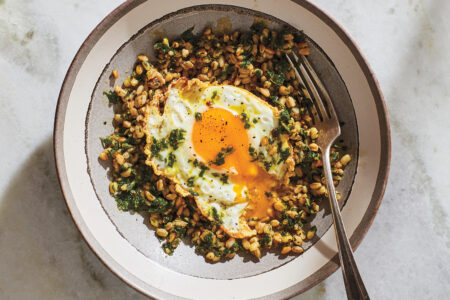
David Tamarkin’s recipe for Greens, Grains and Fried Egg works for any meal
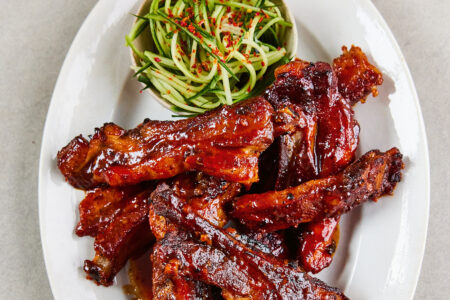
Slow-cooked, sticky-glazed pork ribs go with cucumber slaw in Sam Way’s recipe