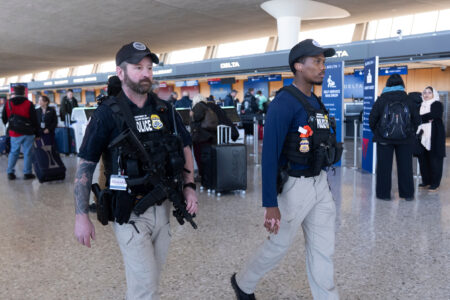
Gunmen dressed as commandos abduct 50 security workers
Baghdad, Iraq ? Gunmen wearing commando uniforms of the Shiite-dominated Interior Ministry on Wednesday stormed an Iraqi security company that relied heavily on Sunni ex-military men from the Saddam regime, spiriting away 50 hostages. The ministry denied involvement and called the operation a “terrorist act.”
Police and the U.S. military, meanwhile, reported finding the bodies of 24 men garroted or shot in the head, most of them in an abandoned bus in a tough Baghdad Sunni neighborhood.
They also reported the deaths of at least 13 others across Iraq, including a U.S. soldier and a Marine. Their deaths raised to at least 2,303 the number of U.S. military members who have died since the beginning of the war in March 2003, according to an Associated Press count. The figure includes seven military civilians.
The Sunni minority, which was dominant in the country under Saddam Hussein, has complained bitterly that it is under attack from death squads associated with the Interior Ministry, in charge of Iraq’s police. And, over the past two weeks – since the bombing of a Shiite shrine in Samarra – violence has become increasingly sectarian. Nearly 600 people have been killed since Feb. 22.
Many of the dead in that period were Sunnis, killed at close range after apparently being captured by overwhelming numbers of attackers. The nature of the killings suggested that a well-armed and organized force carried out the attacks.
Interior Minister Bayan Jabr and one of his assistants may themselves have been targets of assassination attempts Wednesday.
A bomb hidden under a parked car detonated as police from Jabr’s protection force were driving through Baghdad, killing two officers and wounding a third, police said. Four bystanders were injured.
And gunmen attacked the convoy of Interior Ministry Undersecretary Hekmet Moussa in west Baghdad, killing two bodyguards and injuring two others, police said.
Neither Jabr nor Moussa were in the convoys.
Parliament to meet
The sectarian bloodshed has complicated Shiite Prime Minister Ibrahim al-Jaafari’s bid for a second term. Al-Jaafari is opposed by a coalition of Sunni Arab, Kurdish and secular Shiite politicians – led by President Jalal Talabani, a Kurd.
The president has openly challenged al-Jaafari’s candidacy on grounds he is too divisive and would be unable to form a government representing all Iraq’s religious and ethnic factions. There was also great unease over al-Jaafari’s close ties to radical anti-American cleric Muqtada al-Sadr.
On Wednesday, Shiite Vice President Adil Abdul-Mahdi finally co-signed a presidential decree to call parliament into session for the first time since the Dec. 15 elections. The about-face appeared to break a political deadlock that had blocked attempts to begin the process of forming the country’s first permanent, post-invasion government.
“He signed the decree today. I expect the first session to be held on Sunday or by the end of next week at the latest,” said Nadim al-Jabiri, head of one of seven Shiite parties that make up the United Iraqi Alliance, the largest bloc in parliament.
National
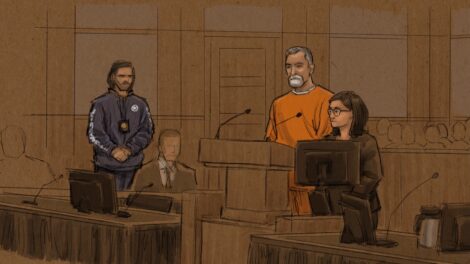
Man pleads guilty to killing a top Minnesota Democrat and her husband
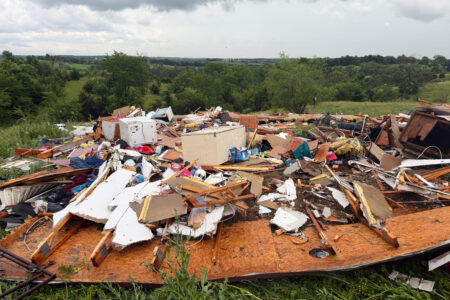
New tornadoes outside Chicago as severe storms pummel the Midwest
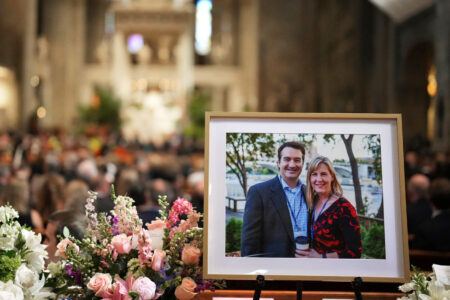
Feds won’t seek death penalty in plea deal with man accused of killing top Minnesota Democrat

NASA unveils astronauts to test tech for future moon landing
Social Security’ fund faces shortfall one year earlier than expected
WASHINGTON (AP) — Social Security 's retirement trust fund is projected to face a funding shortfall in 2032, a ...