Town to elect mayor using instant runoff
Burlington, Vt. ? Runoff elections are typically cumbersome processes, taking weeks and sometimes months to determine a winner. Burlington is going to do it all instantly.
In an innovation known as instant runoff voting, the results of Tuesday’s five-candidate election for mayor and whatever runoffs are needed to settle it will all be known soon after polls close.
For the first time in a mayoral election in the United States, voters will mark their ballots for their favorite candidate, along with their second, third, fourth and fifth choices.
If none of the five gets 50 percent of the vote on the first round, the candidate with the lowest vote total would be eliminated. Then the second choice of the voters who made that candidate their initial pick would be counted, and so on.
“As soon as somebody gets to 50 percent, it stops,” said Jo LaMarche, the city’s election director.
The winner will succeed incumbent Mayor Peter Clavelle, who announced last year he would not seek an eighth two-year term in the city of nearly 40,000 people.
Advocates promote instant runoff voting, also known as ranked-choice voting, as a way of boosting voter turnout and encouraging more people to run for public office by eliminating concerns that a third-party candidate might be a spoiler.
“Nationally, people are catching on to how IRV can open up our politics,” said Ryan O’Donnell, communications director of FairVote, the Center for Voting and Democracy. “It’s a reform that produces majority winners, encourages candidates to reach out to more voters and eliminates the ‘spoiler’ problem.”
If Florida had used instant runoff voting, the outcome of the 2000 presidential election likely would have been different, said Doug Amy, professor of politics at Mount Holyoke College and author of “Behind the Ballot Box: A Citizen’s Guide to Voting Systems.” Votes that went to Ralph Nader might ultimately have gone to Vice President Al Gore.
San Francisco has elected members of its board of supervisors using instant runoff, but Burlington will be the first community in the nation to elect its chief executive officer with the system.
Bills are pending in at least 15 states to implement instant runoffs at local levels or statewide. The state of Washington last year gave a number of midsize cities authority to conduct instant runoff voting, although none has so far used it.
Not everyone is enthusiastic about the idea. Some election administrators worry that fewer people will show up at the polls because of the system’s complexity. There is also concern about incomplete counting in later runoff rounds.
National

Man pleads guilty to killing a top Minnesota Democrat and her husband
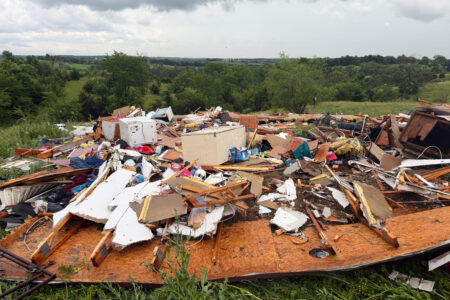
New tornadoes outside Chicago as severe storms pummel the Midwest

Feds won’t seek death penalty in plea deal with man accused of killing top Minnesota Democrat

NASA unveils astronauts to test tech for future moon landing
Social Security’ fund faces shortfall one year earlier than expected
WASHINGTON (AP) — Social Security 's retirement trust fund is projected to face a funding shortfall in 2032, a ...