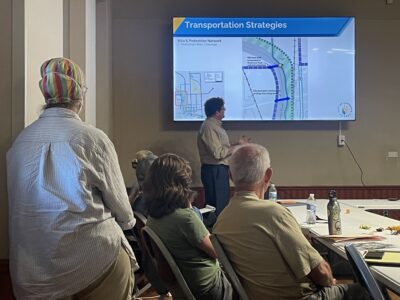
Seminar addresses challenges faced by women in politics
It takes a lot to run a successful campaign, whether you’re running for dogcatcher or governor.
Especially if you’re a woman.
Money, time, dedication: all of these factor into running and winning. But for female candidates, the list can include much more, such as demeanor, aggressiveness, even the way you dress.
So Saturday, a panel of experts, consultants and current and former office-holders took a stab at telling prospective female politicos what it takes for a woman to run and win an office on any level of government.
“It really does mean something different,” Kansas University professor Mary Banwart told the mostly female crowd at the Dole Institute of Politics.
Banwart, who teaches communications at KU, focused her comments toward building a message – an especially tricky subject when discussing women in politics, she said.
The best bet, she said, is to blend male and female messages – attacking and statistical on one hand, compassionate and anecdotal on the other.
Related link
But much of the advice the panelists gave could have applied to any young campaign.
Consultant Emily Booker spoke about building a good staff, which is one of the linchpins of successful candidates of either gender.
“It’s almost like a small army,” Booker said, describing all of the people necessary to run a campaign.
Lawrence school board member Sue Morgan explained her surprise at the “sound bite mentality” she needed to have in her speeches and appearances.
“You need to know yourself, and know your message,” she said.
Former Lawrence Mayor Bonnie Lowe mirrored Morgan’s comments. She said that when she first decided to run, she had to scramble to learn everything she needed to know to sit on the City Commission.
“You can’t know all things about all subjects,” she said. “You have to surround yourself with good people.”
That’s sound advice for any campaign. But for women, the struggle can be different, Lowe said.
During her time on the City Commission, she became her own worst critic, she said, picking apart her job performance in balance with family and private life. It’s something she said many women struggle with.
“That’s why I chose not to run after that first term,” she said.
But many of the panelists involved came back to one factor: the money, a make-or-break component of any successful candidate, male or female.
Morgan said she spent around $15,000 on her campaign, mainly on advertising.
Any female candidate must have cash in piles to succeed, said Bill Lacy, director of the Dole Institute.
“It’s the toughest issue a candidate faces,” he said.
City Government

Developer seeks incentive from City of Lawrence to build 131 units of housing near Wakarusa and Queens

Lawrence city leaders will consider whether to keep Community Building open, make 2 other rec centers free to access
A STAR Bond application raises questions for city leaders about Costco and housing west of the SLT
Soccer gear honoring Lawrence history’s all-star team is now on sale as part of city’s public art exhibition
To honor public servants, Lawrence’s July 4 celebration will have a whole gallery of their photos on display; submissions open now