Bountiful wheat crop: As harvest winds down, farmers worry about beans, corn
Lawrence area farmer Jerry Neis’ 170 acres of wheat produced more than 50 bushels an acre, a rate better than the county’s average in recent years.
But this week as he rakes hay from atop his John Deere tractor, he’s seeing evidence of dark days ahead for an even more important part of his operation: 200 acres of corn and 240 acres of soybeans, all struggling to thrive in his cracked fields near Eudora.
“It needs a drink,” Neis said.
Such is the life of Douglas County farmers as they wrap up a bountiful harvest of their No. 3 crop – wheat – while sweating the condition of their main cash products: corn and soybeans.
Countywide, wheat farmers likely will have an average yield of 50 to 53 bushels an acre, said Bill Wood, the county’s agriculture agent for K-State Research & Extension. That would top the 35 bushels-an-acre yield of a year ago, and surpass the five-year average of 46 bushels an acre.
One problem: County farmers typically plant fewer than 7,000 acres of wheat in any given year – a total that runs a distant third to soybeans (39,000 acres) and corn (25,000 acres).
And the corn is struggling. Some varieties planted in April already are getting to the pollination stage, when each plant decides how many kernels to grow and therefore how much profit to produce.
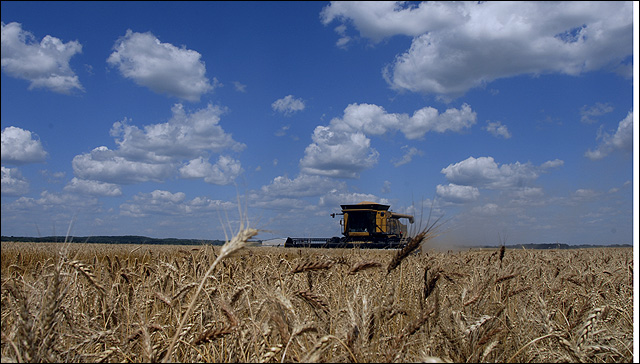
Roger Pine, of rural Lawrence, cuts wheat Monday near Lawrence Municipal Airport. Wheat harvest is nearly complete in Douglas County.
Without moisture in the ground, Wood said, many plants are deciding against filling out.
“Right now, today, I’d say our corn crop is hurting,” said Wood, who expects the corn harvest to start in late August and soybean harvest to start soon after that. “I’d say we’re not going to have an average corn crop : and below average is not good. Even our soybeans need rain. They need to be growing fast and furious right now.
“It needs rain desperately. All of it does.”
It’s getting to the point that Neis actually is rooting for rain for the Independence Day weekend – 2 inches over two or three days would be optimum – and again during the Douglas County Free Fair in late July and early August.
“Those are critical times as far as I’m looking at it,” Neis said Wednesday, still hoping to beat the county average on corn and soybeans but losing optimism with each passing dry day. “I’d hate to see it rain things out, but I’ll take rain whenever I can get it.”
City Government
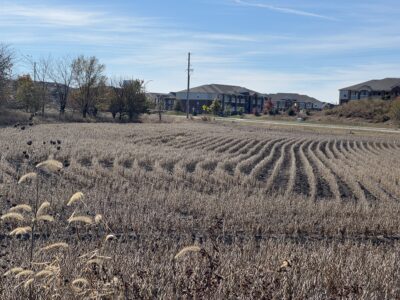
Developer seeks incentive from City of Lawrence to build 131 units of housing near Wakarusa and Queens

Lawrence city leaders will consider whether to keep Community Building open, make 2 other rec centers free to access
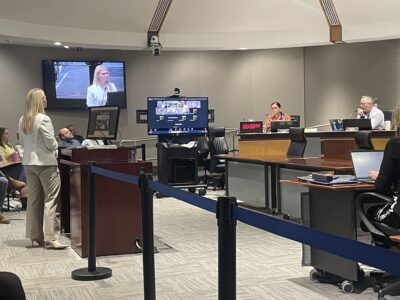
A STAR Bond application raises questions for city leaders about Costco and housing west of the SLT

Soccer gear honoring Lawrence history’s all-star team is now on sale as part of city’s public art exhibition
To honor public servants, Lawrence’s July 4 celebration will have a whole gallery of their photos on display; submissions open now