World: Abu Musab Al-Zarqawi Killed in Air Raid
Identity confirmed by fingerprints and a first-hand look at his face
BAGHDAD, Iraq (AP) – Abu Musab al-Zarqawi, al-Qaida’s leader in Iraq who led a bloody campaign of suicide bombings and kidnappings, has been killed in an air strike, U.S. and Iraqi officials said Thursday. His identity was confirmed by fingerprints and a first-hand look at his face – a major victory in the U.S.-led war in Iraq and the broader war on terror.
Prime Minister Nouri al-Maliki said al-Zarqawi was killed along with seven aides, including two women, Wednesday evening in a remote area 50 kilometers (30 miles) northeast of Baghdad in the volatile province of Diyala, near the provincial capital of Baqouba, al-Maliki said.
Loud applause broke out as al-Maliki, flanked by U.S. Ambassador Zalmay Khalilzad and U.S. Gen. George Casey, told a news conference in Baghdad that “al-Zarqawi was eliminated.”
Casey said al-Zarqawi’s spiritual adviser Sheik Abdul Rahman also was killed.
The death of Iraq’s most-wanted militant, who was responsible for the majority of Iraq’s worst atrocities, was welcome news for Iraqi and U.S.-led forces after several recent setbacks, but President Bush and U.S. military leaders acknowledged it was unlikely to stop the unrelenting violence in the country.
The news came amid more attacks, with two bombs striking a market and a police patrol in Baghdad, killing at least 19 people and wounding more than 40.
Al-Zarqawi’s death “is a severe blow to al-Qaida and it is a significant victory in the war on terror,” Bush said at the White House. “We have tough days ahead of us in Iraq that will require the continuing patience of the American people.”
The announcement was a much-needed boost to the Shiite prime minister, whose nearly three week old government of national unity has been beleaguered by rampant sectarian violence and political infighting.
Al-Maliki also moved ahead with his efforts to promote national reconciliation among Iraq’s fractured ethnic and sectarian groups, gaining parliamentary approval for new ministers of defense, interior and national security and ending a three-week stalemate.
The new ministers were sworn in a day after he began a massive prisoner release aimed at appeasing Sunni Arabs and dampening support for the Sunni-led insurgency.
Casey, the top U.S. commander in Iraq, said an American air strike against “an identified, isolated safe house.”
He said tips and intelligence from senior leaders from al-Zarqawi’s network led U.S. forces to al-Zarqawi as he was meeting with some of his associates. Casey also said Iraqi police were first on the scene after the air strike.
U.S. military spokesman Maj. Gen. William Caldwell showed a picture of al-Zarqawi after he was killed and a videotape of an attack in which he said F-16 fighter jets dropped two 500-pound bombs on the site.
“We had absolutely no doubt whatsoever that Zarqawi was in the house,” Caldwell said.
Caldwell also said U.S. and Iraqi troops carried out 17 raids around Baghdad following al-Zarqawi’s killing.
Al-Qaida in Iraq confirmed al-Zarqawi’s death and vowed to continue its “holy war,” according to a statement posted on a Web site.
Iraqi police in Baghdad’s Shiite slum of Sadr City brandished their guns, firing in the air and chanting to show their elation over the news.
The announcement about al-Zarqawi’s death came six days after he issued an audiotape on the Internet, railing against Shiites in Iraq and saying militias were raping women and killing Sunnis and the community must fight back.
The Jordanian-born terror leader became Iraq’s most wanted militant, as notorious as Osama bin Laden, to whom he swore allegiance in 2004. The United States put a US$25 million (about ?20 million) bounty on al-Zarqawi, the same as bin Laden. Al-Maliki later told al-Arabiya television that the bounty would be honored, saying “we will meet our promise,” without elaborating.
Al-Zarqawi himself is believed to have wielded the knife in the beheadings of two of the Americans _ Nicholas Berg and Eugene Armstrong _ and earned himself the title of “the slaughtering sheik” among his supporters.
Al-Maliki said the air strike was the result of intelligence reports provided to Iraqi security forces by residents in the area, and U.S. forces acted on the information. Casey said the hunt for al-Zarqawi began two weeks ago, and his body was identified by fingerprints and facial recognition.
A Jordanian official, speaking on condition of anonymity because he was addressing intelligence issues, said Jordan also provided the U.S. military with information that helped in tracking al-Zarqawi down.
Iraqi Foreign Minister Hoshyar Zebari told The Associated Press a serious effort had been under way to find al-Zarqawi after a location was pinpointed when he appeared in a videotape in late April _ the same week messages were broadcast by Osama bin Laden and his top deputy, Ayman al-Zawahri.
Baqouba has in recent weeks seen a spike in sectarian violence, including the discovery of 17 severed heads in fruit boxes. It was also near the site of a sectarian atrocity last week in which masked gunmen killed 21 Shiites, including a dozen students, after separating out four Sunni Arabs.
“Those who disrupt the course of life, like al-Zarqawi, will have a tragic end,” al-Maliki said. He also warned those who would follow the militant’s lead that “whenever there is a new al-Zarqawi, we will kill him.”
“This is a message for all those who embrace violence, killing and destruction to stop and to (retreat) before it’s too late,” he said. “It is an open battle with all those who incite sectarianism.”
Khalilzad gave a thumbs up and said it was a good day, but he acknowledged that the violence was likely to continue in the wartorn country.
“The death of Abu Musab al-Zarqawi marks a great success for Iraq and the global war on terror,” he said. “Zarqawi was the godfather of sectarian killing in Iraq.”
“Zarqawi’s death will not in itself end the violence in Iraq. But it is an important step in the right direction,” he added. “There will be difficult days ahead, and we will work together _ Iraqis and coalition forces _ to fight terrorists and those who want Iraq to fail, but today is a good day.”
In London, British Prime Minister Tony Blair said al-Zarqawi’s death “was very good news because a blow against al-Qaida in Iraq was a blow against al-Qaida everywhere.”
Al-Zarqawi’s fighters led a wave of kidnappings of foreigners, killing at least a dozen, including Arab diplomats and three Americans. He also has been a master Internet propagandist, spreading the call for Islamic extremists to join the “jihad” or holy war in Iraq. His group posted gruesome images of beheadings, speeches by al-Zarqawi and recruitment videos depicting the planning and execution of its most daring attacks.
U.S. forces in Iraq welcomed the news.
“We killed him, and it’s always great when you can remove someone that has caused this much harm,” said Maj. Frank Garcia, public affairs officer for the 2nd Brigade Combat Team, 101st Airborne Division. “We’re one step closer to providing stability to the region.”
Many Iraqi citizens had mixed reactions.
Thamir Abdulhussein, a college student in Baghdad, said he hopes the killing of al-Zarqawi will promote reconciliation between Iraq’s fractured ethnic and sectarian groups.
“If it’s true al-Zarqawi was killed, that will be a big happiness for all the Iraqis,” he said. “He was behind all the killings of Sunni and Shiites. Iraqis should now move toward reconciliation. They should stop the violence.”
Amir Muhammed Ali, a 45-year-old stock broker in Baghdad, was skeptical that al-Zarqawi’s death would end the unrelenting violence in the country, saying he was a foreigner but the Iraqi resistance to U.S.-led forces would likely continue.
“He didn’t represent the resistance, someone will replace him and the operations will go on,” he said.
In the past year, he moved his campaign beyond Iraq’s borders, claiming to have carried out a Nov. 9, 2005, triple suicide bombing against hotels in Amman, Jordan, that killed 60 people, as well as other attacks in Jordan and even a rocket attack from Lebanon into northern Israel.
U.S. forces and their allies came close to capturing al-Zarqawi several times since his campaign began in mid-2003.
His closest brush may have come in late 2004. Deputy Interior Ministry Maj. Gen. Hussein Kamal said Iraqi security forces caught al-Zarqawi near the insurgent stronghold of Fallujah but then released him because they didn’t realize who he was.
In May 2005, Web statements by his group said al-Zarqawi had been wounded in fighting with Americans and was being treated in a hospital abroad _ raising speculation over a successor among his lieutenants. But days later, a statement said al-Zarqawi was fine and had returned to Iraq. There was never any independent confirmation of the reports of his wounding.
U.S. forces believe they just missed capturing al-Zarqawi in a Feb. 20, 2005 raid in which troops closed in on his vehicle west of Baghdad near the Euphrates River. His driver and another associate were captured and al-Zarqawi’s computer was seized along with pistols and ammunition.
U.S. troops twice launched massive invasions of Fallujah, the stronghold used by al-Qaida in Iraq fighters and other insurgents west of Baghdad. An April 2004 offensive left the city still in insurgent hands, but the October 2004 assault wrested it from them. However, al-Zarqawi – if he was in the city – escaped.
City Government
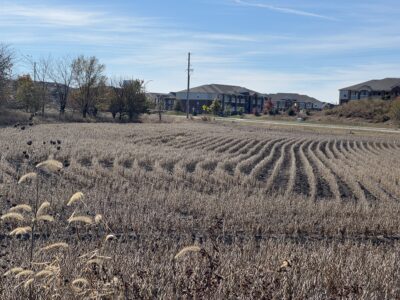
Developer seeks incentive from City of Lawrence to build 131 units of housing near Wakarusa and Queens

Lawrence city leaders will consider whether to keep Community Building open, make 2 other rec centers free to access
A STAR Bond application raises questions for city leaders about Costco and housing west of the SLT
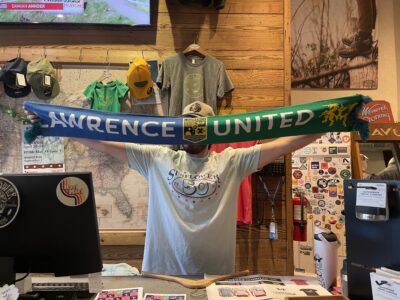
Soccer gear honoring Lawrence history’s all-star team is now on sale as part of city’s public art exhibition
To honor public servants, Lawrence’s July 4 celebration will have a whole gallery of their photos on display; submissions open now