Courts deny appeal for probation, treatment
If Dezerro D. Smith had been caught somewhere else in Kansas besides Douglas County with that cocaine in his pocket, or if it had happened a year later, he might be facing probation and drug treatment right now.
Instead, Smith has just started serving an 11 1/2-year prison sentence, at an estimated cost to taxpayers of roughly $220,000.
Smith, 35, recently learned he’d lost an appeal in which he asked to be sentenced under a 2003 Kansas law that requires probation and drug treatment instead of prison for repeat offenders. He’s now being held in the Douglas County Jail and will eventually be taken to prison to serve out a 138-month sentence.
His crime, third-time possession of cocaine, happened about a year before the Legislature changed drug-sentencing laws in 2003 to emphasize treatment. Because he was sentenced after the law took effect, he argued it should apply to him.
But prosecutors opposed the request, and District Court Judge Jack Murphy found Smith wasn’t entitled to treatment under the new law. The Kansas Court of Appeals agreed.
“There is no express language about retroactivity,” the court found. “Because Smith violated the statute before the new version took effect … he is disqualified from the drug-abuse treatment program.”
Elsewhere in Kansas, the results were different for people like Smith. According to the Kansas Sentencing Commission, in the months after the law passed, at least 32 people in 15 counties had a judge find that even though their drug crimes occurred as far back as 2001, they still were eligible for probation and treatment pursuant to the new law.
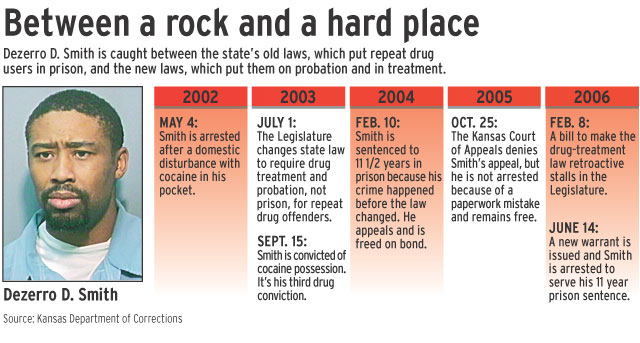
Smith had been free for the past two years waiting for his appeal to be decided. The appeals court decided Smith’s case in October, and in February, the Kansas Supreme Court denied his request to review the case.
For some reason – perhaps a paperwork error, according to District Court officials – he remained free and kept checking in with his probation officer. A warrant for his arrest was not issued until June 14.
The arrest came as a surprise, Smith said – he hadn’t been told he lost his case.
Smith said he’s been cocaine-free for two years and has been attending weekly Narcotics Anonymous meetings. He has a girlfriend and has been working in landscaping and at temporary jobs.
More about Kansas drug sentencing laws
But he hasn’t managed to stay out of trouble while awaiting results of his appeal. In February, he was charged in Johnson County with DUI, possession of marijuana and driving on a suspended license.
“I’m not out here trying to hurt nobody,” Smith said recently at the jail. “I made mistakes. There should be a system to where they can help me by giving me treatment.”
Efforts to change the law to apply to drug offenders already in prison have stalled so far in the Legislature. One such bill, introduced in the House by Rep. Bill McCreary, R-Wellington, would have given an estimated 156 inmates the opportunity to ask a judge to release them from prison to probation and treatment.
McCreary said he wants to make the law retroactive in part because of the need to save prison beds for violent offenders – especially now that Kansas has passed longer sentences for repeat sex offenders.
“We need to manage the populations,” McCreary said. “If some of these people could be released to rehab centers, it just makes good sense to me.”
City Government
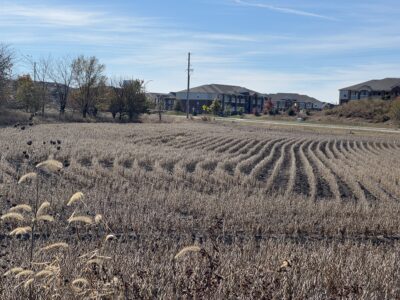
Developer seeks incentive from City of Lawrence to build 131 units of housing near Wakarusa and Queens

Lawrence city leaders will consider whether to keep Community Building open, make 2 other rec centers free to access
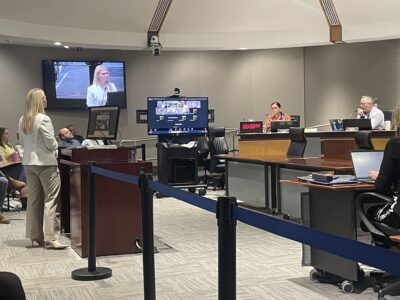
A STAR Bond application raises questions for city leaders about Costco and housing west of the SLT

Soccer gear honoring Lawrence history’s all-star team is now on sale as part of city’s public art exhibition
To honor public servants, Lawrence’s July 4 celebration will have a whole gallery of their photos on display; submissions open now