

Tittrington: McDonald not a fan of change
“We just need to think about what’s best for the athletes and what the repercussions are down the road.”
Free State High boys swimming coach Annette McDonald hammered that point home so often that she eventually called herself on it.
During a 20-minute telephone conversation Sunday night, McDonald used some variation of that phrase at least a half dozen times.
The source of her concerns is proposed legislation that came before Kansas legislators last week that would allow high school-aged swimmers to compete simultaneously for their school teams and attend practices with their club teams.
Right now, the Kansas High School Activities Assn. says such dual participation is a big no-no – not just in swimming, but in any sport. It’s a rule McDonald has bought into without reservation.
“I think the (KSHSAA) is looking out for the best interests of the student-athletes,” McDonald said. “It’s not about the coaches. It’s not about the schools. It’s really about what’s best for the student-athletes.
“It’s not like they just make this rule blindly.”
McDonald honed in on three specific areas while making her case for the status quo:
1. Time.
As a teacher and a coach, McDonald is fully aware of the demands placed on students who also compete in sports. She doesn’t see how adding one more course to an already full plate is beneficial.
“We offer practices morning and afternoon, so it’s not like they’re not getting their time,” McDonald said. “If I do both morning and evening practices, when are they going to meet with their club? I don’t know how that all fits together.”
2. Mixed messages.
Ask any high school coach in any sport about the challenges that come with guiding young athletes, and near the top of the list will be the headache of trying to eliminate outside influences that might take away from what said coach is trying to implement and accomplish.
“I think it’s hard on athletes when two coaches are saying two different things and have different goals for that athlete,” McDonald said. “It would be like having two different math teachers that are teaching two different ways.
“There are lot of different ways to teach the same thing, and they’re all correct. But trying to do them at the same time can lead to some confusion.”
3. Closing the door on the marginal athlete.
The reality is some top swimmers choose not to swim for their high school teams. Faced with the current KSHSAA rule, they prefer to remain in a club environment that’s more suited to individual training.
That leaves more spots open in the high school ranks for athletes who enjoy the competition that comes with swimming, but don’t have the talent or the desire necessary to compete at an elite level.
“If you look at my team, it’s a variety,” said McDonald, who fears some swimmers will walk away if forced to battle for pool time with an influx of seasoned club swimmers. “Maybe they wouldn’t have come out if there was just an elite athlete swimming.”
Free State
Journal-World Athletes of the Week: Ben Graves and Irelyn Kennedy
The spring sports season ended over the weekend as local athletes competed in baseball, boys golf and track and ...
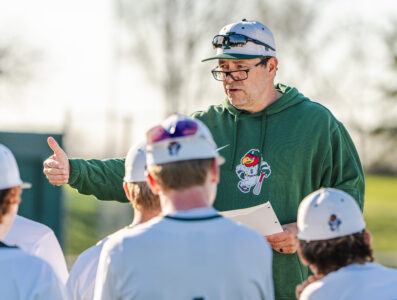
Free State baseball coach Mike Hill announces retirement

Baldwin girls take third in 4A state track meet; local schools finished with 7 state champions combined

Photo Gallery: Free State Firebirds finish as runners-up in 6A baseball state tournament

Free State baseball falls short on final play of state championship game, losing 4-3 to Washburn Rural
Graves’ complete-game gem propels Free State baseball to 6A state championship game
WICHITA — In his first pitching start of the season, Free State senior Ben Graves did not disappoint. The Oral ...