More natural ways to treat sewage interest leaders
Plans for a $75 million sewer plant considered crucial for future community growth may be delayed while city leaders study more nature-based ways to treat sewage.
Using organisms such as earthworms, fish and certain types of plants and fungi – instead of large amounts of chemicals – to naturally treat sewage is an idea that has captivated members of a city advisory committee seeking sites along the Wakarusa River for a new wastewater plant.
“I think it would be easier on the river and the environment,” said Tom Bracciano, a member of the Public Advisory Committee and facilities planning director for the Lawrence school district. “Anytime you can use a natural approach, that’s good.”
Members of the committee will ask city commissioners at their meeting tonight to put on hold the process of selecting a site for a new sewer plant. They said using this new technology – dubbed eco machines or living machines – could require a different site than a traditional sewer plant.
Delay is questioned
But some question whether the city has enough time to now look at a new technology. City staff members have said a new sewer plant needs to be on line by 2011 to keep up with projected growth. They have said that if a new plant isn’t on line by 2011, it could become difficult to issue new building permits.
Lavern Squier, president and CEO of the Lawrence Chamber of Commerce, said city commissioners should be careful about doing anything that will delay completion of the sewer plant.
“It will have an impact on a lot of our lives in relation to housing and business opportunities if we have to say no to projects in certain areas of town or just start saying no overall,” said Squier, who also is a member of the advisory committee.
But those interested in the new technology said it shouldn’t cause the project to fall behind schedule. That’s because using the eco machine concept allows treatment facilities to be built in phases.
“We think this could actually bring the system on line sooner,” said Michael Almon, a committee member who was championing the idea. “You can fire up one of these pretty quickly because you can start pretty small.”
A large greenhouse
The eco machine technology looks a lot like a large greenhouse. Almon said the system would involve a number of 10-foot-wide tanks that would have raw sewage pumped into them. Each tank would have a different type of organism or plant in it. In some parts of the country, koi fish, earthworms, snails and a variety of waterborne plants have been used to filter the sewage and add oxygen to the water. Sometimes a wetland area is used to further filter the sewage.
Almon – who has been gathering research for the committee – said instead of constructing a large building with millions of dollars of upfront costs, a community is able to simply add a new greenhouse as it grows. The process also uses about half the electricity needed for conventional wastewater treatment. Some consultants have estimated overall cost reductions of more than 20 percent, but it is unknown what the costs would be for a system that would work in a Kansas climate.
When the treatment process is complete, the wastewater is as clean or cleaner than wastewater treated through a chemical process, Almon said. He said odors also are reduced because of the amount of plants in the area.
Almon said he would like the committee to consider building roughly a half-dozen of the eco machines in growing areas of the community, instead of one large facility along the Wakarusa River.
City Commissioner Mike Amyx said he’s not sure he can support delaying the search for a traditional sewer plant site. Instead, he said he would rather have more research conducted on the eco machine concept while the search for a traditional site continues.
The eco machine system would be the first of its kind in Kansas. Across the country, several cities, universities and private industries have used small-scale eco machines to treat their waste, but it was unclear whether a city the size of Lawrence had ever used the systems for large-scale sewage treatment.
Commissioners will meet at 6:35 p.m. tonight at City Hall, Sixth and Massachusetts streets.
City Government
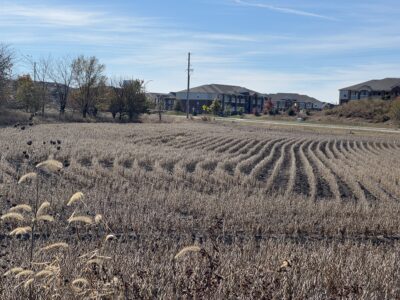
Developer seeks incentive from City of Lawrence to build 131 units of housing near Wakarusa and Queens

Lawrence city leaders will consider whether to keep Community Building open, make 2 other rec centers free to access
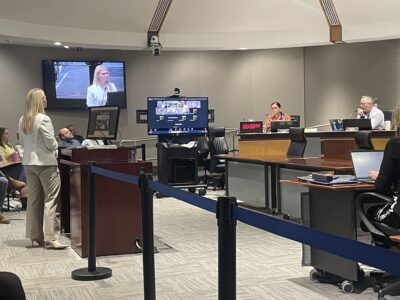
A STAR Bond application raises questions for city leaders about Costco and housing west of the SLT
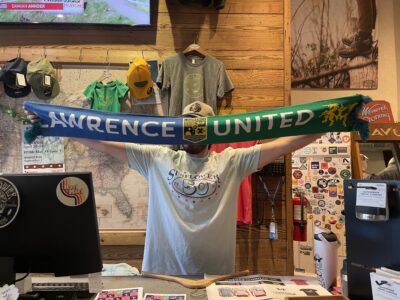
Soccer gear honoring Lawrence history’s all-star team is now on sale as part of city’s public art exhibition
To honor public servants, Lawrence’s July 4 celebration will have a whole gallery of their photos on display; submissions open now