Panel: Female candidates need cash, plan
'First Woman President' lecture focuses on financial roadblocks
A panel at the Dole Institute of Politics said Wednesday that for a woman to ever win a U.S. presidential election, she’ll need two things: money, and a plan.
Sound like a winning combination for any political hopeful? Maybe, but a simple formula can become complicated for a female candidate, the speakers said.
“We have a long way to go,” Mary Beth Cahill said at the latest installment of “The First Woman President” lecture series at the institute. “If you can’t get money the way men get it, you’re going to have to raise your own.”
Cahill should know. As executive director of the powerful political action committee Emily’s List, she has spent years raising early money for female political hopefuls at many levels of government.
“Early money is like yeast,” she said. “It makes the dough rise.”
For years she and fellow speaker Tom Daffron, who ran Elizabeth Dole’s presidential campaign in 2000, have seen female candidates fizzle out early because of a lack of funds.
Daffron experienced it firsthand while running Dole’s campaign. When her campaign hit its high-water mark of $2.7 million early in the 2000 campaign, then-Texas Gov. George W. Bush had $27 million in the bank.
“It was largely a question of money,” he said.
But even if a female candidate has the funds to run a competitive campaign, she needs a plan – and the tenacity to stick to it, the speakers said.
Candidates, especially female candidates, have to convey sincerity about issues and show that they’re standing on firm ground, with resources and a mission, Daffron said.
So, presumably with both of those things in tow, how would a potential Hillary Rodham Clinton campaign turn out?
“I think her chances are excellent,” said Daffron, a longtime Republican staffer.
With $17 million already in the bank and a policy record from the Senate, Clinton’s campaign could only get stronger, Daffron said, especially as the early Democratic front-runner.
“Money tends to follow the polling,” he said.
But Cahill said that from her estimation, the race was still wide open on both sides of the aisle – with money and political plans still up in the air.
“You never know,” she said.
City Government

Developer seeks incentive from City of Lawrence to build 131 units of housing near Wakarusa and Queens

Lawrence city leaders will consider whether to keep Community Building open, make 2 other rec centers free to access
A STAR Bond application raises questions for city leaders about Costco and housing west of the SLT
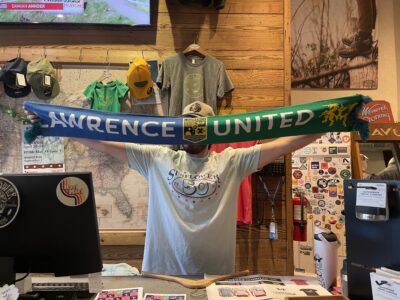
Soccer gear honoring Lawrence history’s all-star team is now on sale as part of city’s public art exhibition
To honor public servants, Lawrence’s July 4 celebration will have a whole gallery of their photos on display; submissions open now