Sales, strikes and immigration define 2006
Kansas City, Mo. ? Two of the Kansas’ biggest corporate brands – Sprint Nextel Corp. and Applebee’s restaurants – stumbled in 2006, hurt by slow sales and management questions.
Wichita’s aviation industry dealt with the aftershocks of strikes and collective bargaining. Meanwhile, meatpacking companies helped push the state into the growing national fight about immigration reform, allowing thousands of their workers to take to the streets.
All in all, it was a relatively quiet year on the Kansas business landscape. Compared with last year, which saw a number of big corporate combinations, the state’s roster of big-name businesses remained intact by the end of 2006. But there were signs that some of those companies were showing some strain.
Sprint struggles
Sprint, which is based in Reston, Va., but keeps the bulk of its operations in Overland Park, Kan., repeatedly disappointed Wall Street, adding new wireless subscribers at a pace far behind that of competitors Verizon Wireless and Cingular Wireless and seeing its leadership in customer spending shrink dramatically.
The company blamed a surge in subscribers more interested in cheap communication than lucrative add-ons, such as streaming video or personal navigation services, and set out to raise its customer profile through tougher credit requirements.
But industry analysts said the company also suffered from an unfocused marketing campaign and was distracted trying to fold in a host of purchased subsidiaries, as well as dealing with lingering technical problems in its Nextel network.
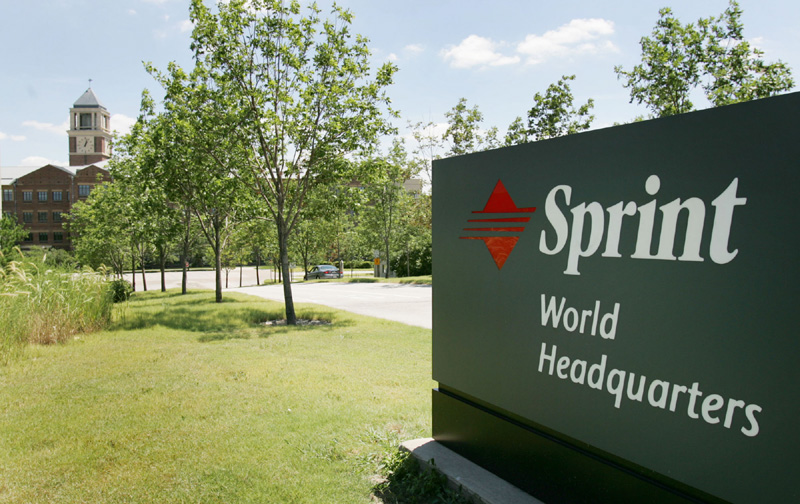
One of Kansas' biggest corporate brands - Sprint Nextel Corp. - stumbled in 2006, hurt by slow sales and management questions.
By the end of the year, Chief Executive Officer Gary Forsee stood alone in the company’s corporate suites as Chairman Tim Donahue, the former Nextel CEO, and Chief Operations Officer Len Lauer left the company.
Looking ahead, Sprint said it expects to complete its customer upgrade by the first half of 2007 and should begin catching up to Verizon and Cingular.
A positive for Sprint came in May when it spun off its local telephone division to become Embarq Corp. Based in Overland Park, Embarq immediately became the nation’s fifth-largest local wireline company.
Applebee’s cutbacks
For Applebee’s, the nation’s largest casual dining chain, high fuel prices and slimmer family wallets emptied its dining rooms, leading to declining revenues and earnings.
Under new CEO David Goebel, the company said it would cut back on its expansion plans in 2007, marking the first time in 13 years that it won’t add at least 100 locations. But that didn’t satisfy major shareholder Breeden Partners LP, which set up a proxy fight by saying it would ask investors next year to elect four of its nominees to Applebee’s board.
Other issues
Other Kansas business highlights from 2006:
l In January, a federal judge sent former Westar Energy Inc. CEO David Wittig to prison after she said he had violated terms of his release on appeal for an earlier conviction for bank fraud. Two months later, the judge sentenced Wittig to 18 years in prison for conspiracy, wire fraud, money laundering and other crimes that prosecutors said were part of a plan to “loot” the Topeka-based utility.
Wittig’s second-in-command, Douglas Lake, was sentenced to 15 years. Both have appealed their sentences.
An appeals court in November ordered U.S. District Judge Julie Robinson to change Wittig’s sentence on the bank fraud, saying five years was too harsh and that it should be no more than six months.
l In September, about 1,400 union members at Topeka’s Goodyear Tire & Rubber Co. plant walked off the job, part of a 10-state strike that lasted almost three months as the company and the United Steelworkers union argued over the proposed closure of a Texas plant and a health care fund for retirees.
l In December, Gov. Kathleen Sebelius jumped into a fight about Sunflower Electric Power Corp.’s proposal to build three coal-fired power plants in Finney County. The utility said the $2.7 billion project would expand its energy capacity sevenfold, but Sebelius said she was considering environmentalists’ request that she place a moratorium on coal-fired plants.
City Government
Developer seeks incentive from City of Lawrence to build 131 units of housing near Wakarusa and Queens

Lawrence city leaders will consider whether to keep Community Building open, make 2 other rec centers free to access
A STAR Bond application raises questions for city leaders about Costco and housing west of the SLT
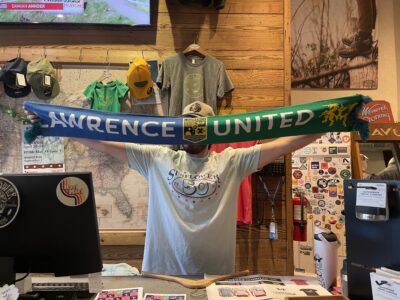
Soccer gear honoring Lawrence history’s all-star team is now on sale as part of city’s public art exhibition
To honor public servants, Lawrence’s July 4 celebration will have a whole gallery of their photos on display; submissions open now