Jelly on a roll
Unusual fruits combine for great flavor
Mary Wakeman admits the idea often raises eyebrows.
“I know, the first time I tell somebody to do mint and jalapeño together, they think you’re crazy,” Wakeman says.
Then, they try her mint-jalapeño jelly. And often, they’re impressed.
“It’s good,” she says. “It’s not real hot like you’d think.”
Wakeman is among the local cooks who realize jams and jellies don’t have to be limited to grape and strawberry.
She’ll make jellies out of whatever fruit comes to her kitchen. Blackberry, elderberry and gooseberry are among her specialties.
“It’s kind of just what’s available from Mother Nature,” Wakeman says. “Some of it’s knowing where to hunt.”
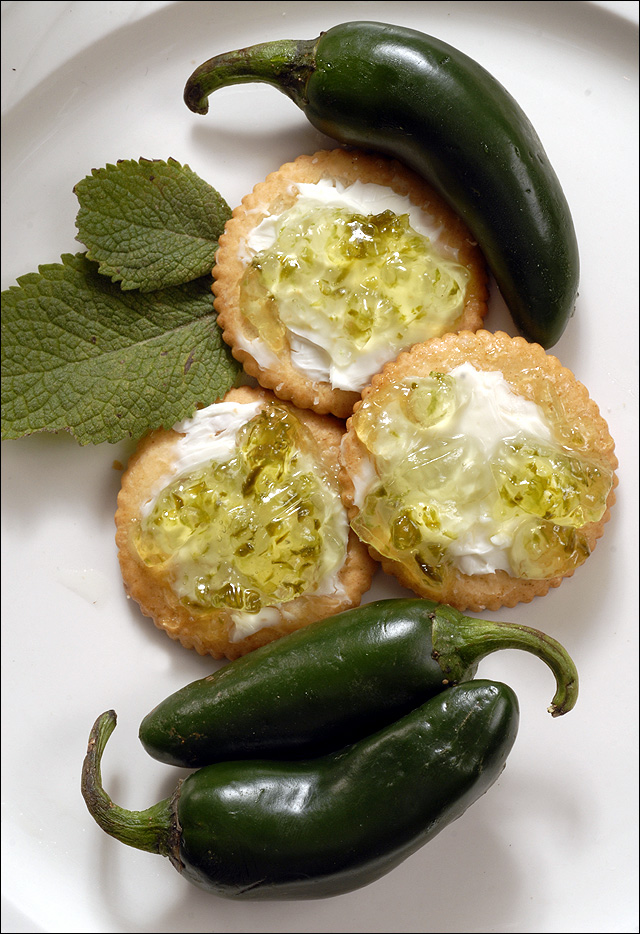
Jalepeño and mint is one combination of ingredients that can be made into a unique, delicious jelly. This recipe comes from Mary Wakeman, of Lawrence.
No matter the flavor you’re making, the process for making jams or jellies is basically the same.
First, you crush your fruit to get the juice out. Then, you combine the juice with pectin (a substance that causes fruit to form a gel), acid and sugar. Often, commercial pectin products such as Sure-Jell contain acid.
A large saucepan and canning jars are among the special equipment you’ll need.
Deb Davis is another rural Lawrence resident who likes to try new things when it comes to jellies. Her list includes cherry, apple, raspberry, apple-cinnamon and spiced peach.
Her tips: Only work with good-quality fruit, and closely follow the instructions that come with canning jars or pectin.
“It’s a long, drawn-out process,” Davis says, “but homemade is always better.”
Davis’ apple jelly won Grand Champion at the Douglas County Fair this year, and her raspberry jelly took Reserve Champion.
Jayni Carey, host of “Jayni’s Kitchen” on Sunflower Broadband Channel 6, included several jellies that use fruits and other ingredients native to Kansas in “The Kansas Cookbook,” which she co-authored with her husband, Frank.
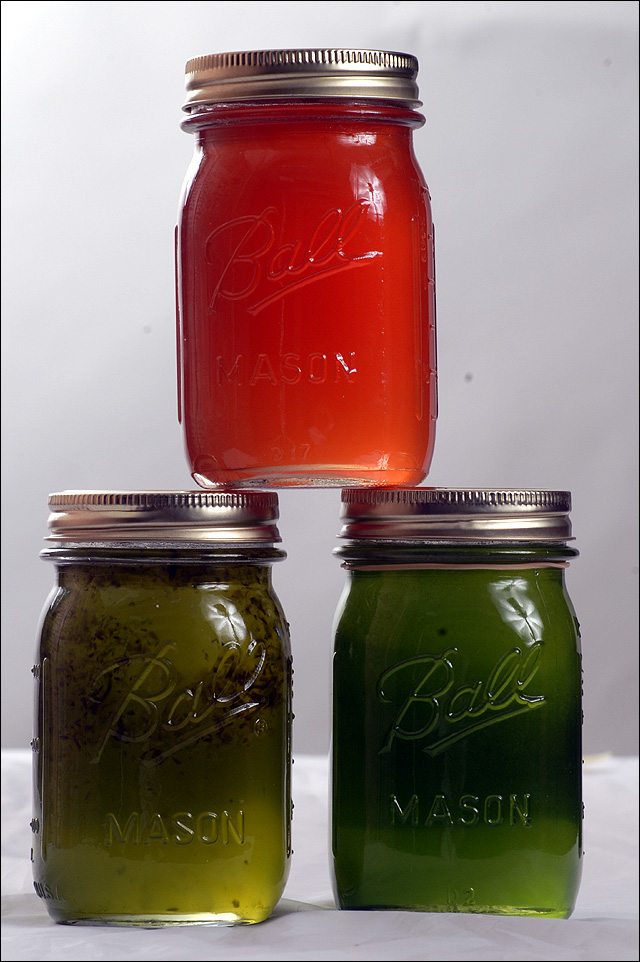
Jellies can be made with unusual fruits such as elderberry and gooseberry.
Among the offerings:
¢ Corn cob jelly.
“It had a real mild taste,” Carey says. “It almost reminded me of an apple jam. It had a light flavor.”
¢ Dandelion jelly.
“It’s a very light taste,” she says. “It has lemon or orange extract in it. But everybody sprays their yard, so you have to watch where you are picking your dandelions.”
¢ Prickly pear jelly.
Carey admits she didn’t try making jelly out of cactus. But Web sites that sell the jelly say it has a distinctive, fruity flavor.
Kelly Kindscher, a Kansas University expert on native Kansas plants, suggests native plum, chokecherry and current also can give a Sunflower State twist to your jelly.
As for Wakeman’s mint-jalapeño jelly, she suggests serving it with crackers and cream cheese. She says it also goes well with pork or cranberry sauce.
She always favors her own recipe over buying the jelly at the store.
“It’s a more home-cooked, better-quality flavor,” she says.
Jelly recipes
Gooseberry jelly
4 1/2 pounds fully ripe gooseberries, to make 5 1/2 cups gooseberry juice
1 cup water
1 box Sure-Jell Pectin
1/2 teaspoon butter or margarine
7 cups sugar, measured into separate bowl
Crush gooseberries thoroughly, one layer at a time, or grind them. Place in saucepan; add water. Bring to a boil. Reduce heat to low; cover and simmer 10 minutes. Place three layers of damp cheesecloth or a jelly bag in large bowl. Pour prepared fruit into cheesecloth. Tie cheesecloth closed; hang and let drip into bowl until dripping stops. Press gently. Measure exactly 5 1/2 cups juice into a 6- or 8-quart saucepot. Stir pectin into juice in saucepot. Add butter to reduce foaming. Bring mixture to full rolling boil (a boil that doesn’t stop bubbling when stirred) on high heat, stirring constantly. Stir in sugar.
Return to full rolling boil and boil exactly 1 minute, stirring constantly. Remove from heat. Skim off any foam with metal spoon. Ladle immediately into prepared jars, filling to within 1/8 inch of tops. Wipe jar rims and threads; cover with two-piece lids. Process in a boiling water bath for 5 minutes.
Source: Mary Wakeman
Jalapeño-mint jelly
2 cups mint, finely chopped
2 1/2 cups water
3 1/2 cups granulated sugar
3/4 cup cider vinegar
2 tablespoons lemon juice
2-3 jalapeño peppers, finely chopped
1 box Sure-Jell Pectin
Bring 2 cups mint and water to a boil in a small saucepan. Remove from heat, cover and let stand for 30 minutes to steep. Strain through a lined sieve pressing with the back of a spoon to extract as much liquid as possible; discard mint.
Measure exactly -3/4 cups juice into 6- or 8-quart saucepot. Combine mint liquid, vinegar, lemon juice, peppers and pectin in a large stainless-steel saucepan. Bring mixture to full rolling boil (a boil that doesn’t stop bubbling when stirred) on high heat, stirring constantly. Stir in sugar. Return to full rolling boil and boil exactly 1 minute, stirring constantly.
Remove from heat. Skim off any foam with metal spoon. Ladle immediately into prepared jars, filling to within 1/8 inch of tops. Wipe jar rims and threads; cover with two-piece lids. Screw bands tightly. Process in a boiling water bath for 5 minutes.
Source: Mary Wakeman
Mint jelly
2 cups firmly packed fresh mint leaves with stems finely chopped
4 1/2 cups water
Few drops green food coloring (optional)
1 box Sure-Jell fruit pectin
1/2 teaspoon butter or margarine (optional)
5 cups sugar, measured into separate bowl
Bring boiling-water canner, half full with water, to simmer. Wash jars and screw bands in hot soapy water; rinse with warm water. Pour boiling water over flat lids in saucepan off the heat. Let stand in hot water until ready to use. Drain well before filling.
Wash mint leaves and stems. Finely chop or crush mint. Place in large saucepan; add water. Bring to boil. Remove from heat; cover and let stand 10 minutes. Place 3 layers of damp cheesecloth or jelly bag in large bowl. Pour prepared infusion into cheesecloth. Tie cheesecloth closed, hang and let drip into bowl until dripping stops. Press gently.
Measure exactly 4 cups strained infusion into 6- or 8-quart saucepot. (If needed, add up to 1/2 cup water for exact measure.) Stir in food coloring. Stir pectin into infusion in saucepot. Add butter to reduce foaming, if desired. Bring mixture to full rolling boil (a boil that doesn’t stop bubbling when stirred) on high heat, stirring constantly.
Stir in sugar. Return to full rolling boil and boil exactly 1 minute, stirring constantly. Remove from heat. Skim off any foam with metal spoon. Ladle immediately into prepared jars, filling to within 1/8 inch of tops. Wipe jar rims and threads. Cover with two-piece lids. Screw bands tightly. Place jars on elevated rack in canner. Lower rack into canner. (Water must cover jars by 1 to 2 inches. Add boiling water, if necessary.) Cover; bring water to gentle boil. Process 5 minutes. Remove jars and place upright on towel to cool completely. After jars cool, check seals by pressing middle of lid with finger. (If lid springs back, lid is not sealed and refrigeration is necessary.)
Source: Mary Wakeman
Blackberry jelly
3 1/2 cups blackberry juice (about 3 quart boxes of berries)
One package powdered pectin
4 1/2 cups sugar
Sort and wash fully ripe berries; remove any stems or caps. Crush the berries and extract juice.
Measure juice into kettle. Add the pectin and stir well. Place on high heat and, stirring constantly, bring quickly to a full rolling boil that cannot be stirred down. Add the sugar, continue stirring and heat again to a full rolling boil. Boil hard for 1 minute.
Source: Texas A&M University
Corn cob jelly
12 to 14 cobs of red field corn
1 package powdered fruit pectin
3 cups sugar
Choose freshly shelled corn cobs that have not been treated with chemicals. Remove the tips of the cobs. Wash them well to remove any chaff. In a large stock pot, cover the cobs with water and boil gently for 30 minutes.
Strain the juice through a cloth and measure 3 cups into a saucepan. Add the pectin, mix well and bring to a hard boil. Stir in all the sugar at once. Bring to a full boil again, stirring constantly, and boil hard for 3 to 5 minutes or until it sheets all tines of a fork.
Remove the jelly from the heat. Skim off any foam and pour the jelly into hot sterilized jars or ornate molds, leaving 1/2-inch headspace. Seal at once with hot melted paraffin.
Source: “The Kansas Cookbook: Recipes from the Heartland”
Prickly pear jelly
1 gallon ripe prickly pear fruit
1/4 cup lemon juice
3/4 cup water
1 package powdered fruit pectin
5 cups sugar
Wash the cactus fruit and place it in a large kettle. Add just enough water to cover. Bring the mixture to a boil. Reduce heat to low, and simmer for 5 minutes, or until the fruit begins to soften. Crush the fruit with a potato masher and continue simmering until tender. Strain the juice through 2 or 3 thicknesses of cloth (such as a sheet or piece of muslin), reserving 2 1/2 cups.
In a 6- to 8-quart kettle, add the cactus juice, lemon juice and water. Add the pectin, stirring until dissolved. Bring the mixture to a full rolling boil. Add the sugar and stir to dissolve. Bring the mixture again to a full rolling boil and boil for 2 1/2 minutes.
Skim the jelly and pour it into hot sterilized jars, leaving 1/2-inch headspace. Seal at once with hot melted paraffin.
Source: “The Kansas Cookbook: Recipes from the Heartland”
Food
David Tamarkin’s recipe for Greens, Grains and Fried Egg works for any meal
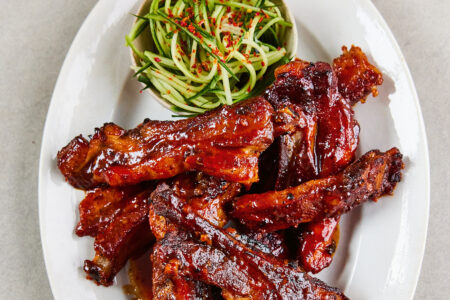
Slow-cooked, sticky-glazed pork ribs go with cucumber slaw in Sam Way’s recipe
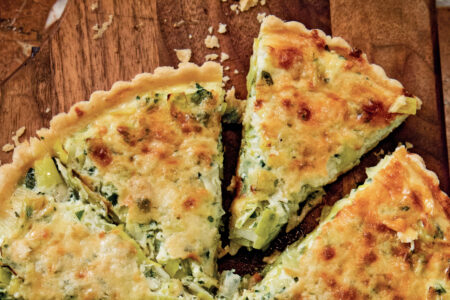
This quiche just might make you love leeks