Asian emerald ash beetle not welcome in Kansas
Meet the emerald ash beetle.
If it gets to Kansas, it could mean a lot of hard day’s nights for the state’s ash trees.
Originally from Asia, the troublesome beetle, sometimes referred to as the emerald ash borer, was discovered in southeastern Michigan in 2002. It has been spreading its territory since, and now can be found in Indiana, Illinois and Ohio.
Insect and agriculture experts fear Missouri and Kansas could be next.
“It’s still quite a ways from here,” said Steve White, environmental scientist with the Kansas Department of Agriculture. “They are worried about it spreading because of people carrying firewood from infested areas to noninfested areas.”
In Michigan, more than 5 million ash trees are dead or dying because of damage caused by the emerald ash beetle, according to the Web site www.emeraldashborer.info. Ash trees are the third most common hardwood tree in Kansas.
The beetles are larger and brighter green than the native American beetles. The ash beetle bores into the tree, leaving tunnels for larvae. Most of the leaf canopy is dead on a heavily infested tree.
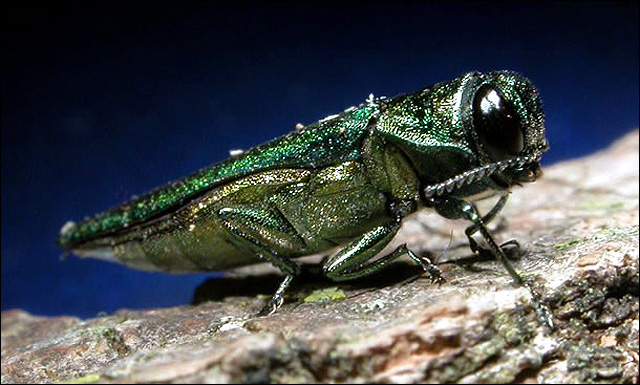
The emerald ash beetle, originally from Asia, was discovered in Michigan in 2002. It bores holes in ash trees, killing them. Ash trees are the third most common hardwood tree in Kansas.
Since the ash beetle was discovered in the United States, Kansas tree and nursery inspectors like White have been watching for it. In addition to inspecting nurseries, he checks trees in parks and other key public locations for evidence of the beetle. White’s territory includes Douglas and Johnson counties and south to the Oklahoma border.
“There’s no evidence of it being here,” White said of the ash beetle.
Nor is there evidence of it being anywhere in Kansas, said Lisa Taylor, spokeswoman for the state agriculture department. So far, there are no available pesticides that can kill the beetle, nor is there a treatment for reviving an infested tree.
Posters with pictures of the ash beetle have been placed at state campgrounds and state parks, Taylor said.
“We’re alerting folks that this is something they need to be on the lookout for and let us know,” Taylor said.
In states where the beetle has been found, fighting it has mainly consisted of cutting down infested trees.
Related link
To avoid potential problems, White suggests planting a variety of trees when starting a landscape project.
“Don’t plant just one species,” he said. “If you have a diversity of trees, you won’t get wiped out when something like this comes along.”
City Government
Developer seeks incentive from City of Lawrence to build 131 units of housing near Wakarusa and Queens

Lawrence city leaders will consider whether to keep Community Building open, make 2 other rec centers free to access
A STAR Bond application raises questions for city leaders about Costco and housing west of the SLT

Soccer gear honoring Lawrence history’s all-star team is now on sale as part of city’s public art exhibition
To honor public servants, Lawrence’s July 4 celebration will have a whole gallery of their photos on display; submissions open now