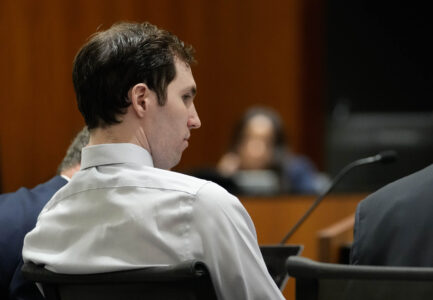
Spike Lee’s Katrina film premieres
New Orleans ? Flashbulbs, bright lights and video cameras lined the red carpet outside the New Orleans Arena, where thousands sought to get the first look Wednesday at director Spike Lee’s documentary on Hurricane Katrina.
One evacuee, back in the New Orleans area to find a home after evacuating to Cleveland, said she felt “spiritually drawn” to attend.
“I wanted to come to this so bad. I needed to come,” said Mildred White, 59. “I feel like I haven’t had a good cleansing. I feel like this will be cleansing for me, like going to a funeral.”
Lee has not tried to hide his anger about New Orleans’ devastation by levee breaks and the government’s slow response. He hopes his documentary on the subject will bring attention back to the region, where it’s needed, he said Wednesday.
“People are still in dire straits. We want to put the focus back here,” Lee said at a news conference with historian Douglas Brinkley and HBO officials.
Titled “When the Levees Broke: A Requiem in Four Acts,” the film had its premiere Wednesday night.
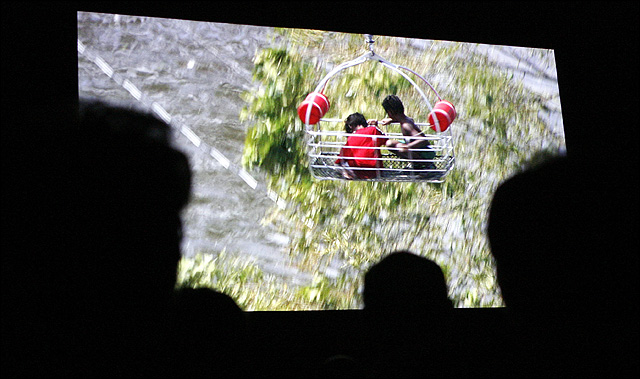
Spike Lee's new film When
The film will air in two two-hour segments on HBO on Monday and Tuesday nights. It also will be shown in its entirety Aug. 29, the one-year anniversary of Katrina’s landfall.
Lee admitted he was a bit uneasy about Wednesday’s first public showing, but his anxiety is not for himself. It’s for the thousands who experienced unfathomable loss.
A woman whose 5-year-old daughter drowned in the flood told Lee she planned to drive from Fort Worth, Texas, to see his film. So did the son of a woman who died in her wheelchair at the city’s convention center. He told Lee he was driving from Alabama.
“I told them not to come,” Lee said Tuesday night. “I’m really worried about them. This is not going to be easy.”
Lee has been criticized by some who got an early look for not including more representation from Mississippi Gulf Coast residents and New Orleans’ white population. Lee said Wednesday there is diversity in the film, but “because of the historical significance … we chose to focus here. That was my vision. I wanted to concentrate on New Orleans.”
In New Orleans, much of the city’s poor black population did not evacuate ahead of the storm and had to be rescued later.
Though he didn’t point fingers, Lee described what happened as “a criminal act.”
“The devastation here was not brought on solely by Mother Nature. People in charge were not doing their job.”
Lee said he included in the documentary theories of an intentional bombing of the levees, but he stopped short of saying he believed them.
“I don’t know if it happened,” he said. “All I know is, I talked to the people who were there, and they said they heard what sounded like an explosion, something blew up.”
Lee said the project was originally going to be about two hours long. Even at four hours, he said, “It’s incomplete. You can’t tell a story like this in four hours.”
Lee said he is considering another Katrina documentary that picks up where this one left off.
National

Authorities disrupt planned drone, gun attack on White House UFC cage-fight
Rain along the Gulf Coast could become the first named storm of the Atlantic hurricane season
MIAMI (AP) — A cluster of storms along the Gulf Coast could become the first named tropical storm of the 2026 ...
Unhealthy air quality in California city as huge warehouse fire burns for 3rd day
Judge orders Trump administration to restore National Park changes at sites that ‘disparaged’ US
Teens’ reading and math scores have stagnated, US test results show
WASHINGTON (AP) — Younger students have regained ground academically after the pandemic's disruptions while older ...