The elderberry remedy
Fruit gaining fame as health booster
More and more frequently, customers walk into the Community Mercantile and ask for elderberry concentrate.
The liquid has a tart kick, but those who take it swear that it helps with colds, flu, allergies and many other ailments.
“People tend to take it as a tonic, like an ounce a day,” says Chris Deleau, an assistant at the store at 901 Iowa. “They all come in with stories – like they haven’t had a cold in three years, and they used to get them all the time.”
The elderberry – a small, purple berry that grows on a short tree – has been used as a natural remedy for centuries around the world.
Elderberry concentrate is popping up more often in Kansas stores thanks to Wyldewood Cellars, a Mulvane-based winery that also produces a variety of elderberry products.
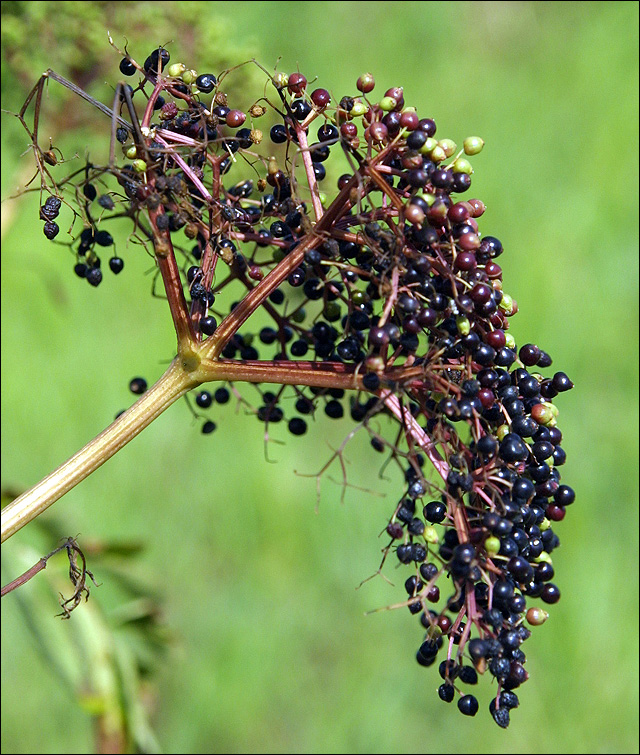
A sprig of ripening elderberries waits for picking at Wyldewood Cellars winery near Mulvane, which is south of Wichita. The winery also makes elderberry concentrate, which some use to treat a variety of ailments.
Wyldewood has additional locations in Paxico and at the Legends development in Kansas City, Kan., and sells its nonalcoholic products at the Community Mercantile and local Juice Stop locations.
Several other companies also are hawking elderberry products nationally.
“It’s been used for thousands of years,” says Merry Brewer, co-owner of Wyldewood Cellars. “It’s a wonderful product.”
Brewer suggests taking one or two teaspoons a day to help prevent colds, allergies or the flu.
She swears a daily dose allowed her to go off three inhalers, two oral medications and a machine that aided her breathing. She also says it has helped her arthritis and diabetes.
Brewer says some people have used it to treat diarrhea and hepatitis C. Given all those claims, she’s not surprised when she hears skeptics.
“You feel like you’re selling snake oil,” Brewer says. “But it really does work.”
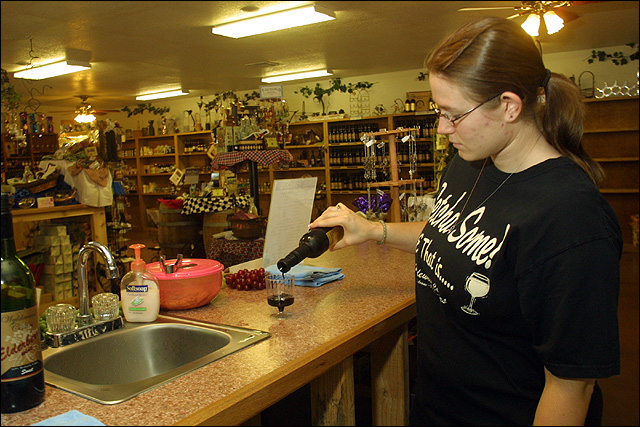
Tracie Brewer, an employee at Wyldewood Cellars, pours a glass of elderberry concentrate in the winery's gift shop.
Science has yet to catch up with the claims, says Jeanne Drisko, director of the integrative medicine department at the Kansas University Medical Center and an expert on alternative medicine.
“There’s a lot of folklore surrounding it,” Drisko says. “There’s a lot more research that needs to be done. But it’s promising – I don’t mean to say it doesn’t look good.”
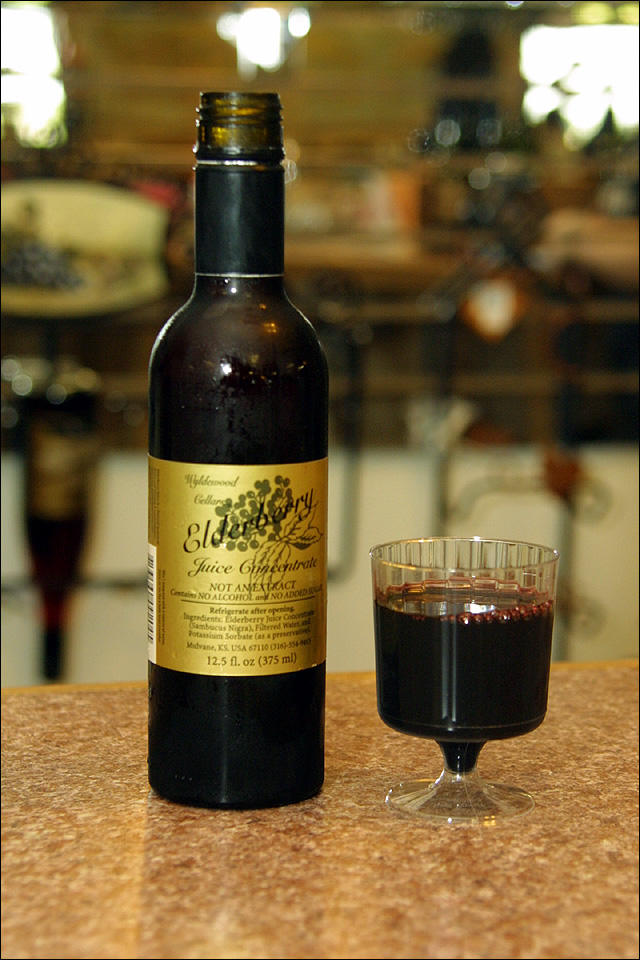
Elderberry concentrate, such as this product from Wyldewood Cellars near Mulvane, is used by some as preventative medicine. Elderberries have a high level of antioxidants.
Elderberries are high in antioxidants, which aid in cardiovascular health, and may aid as an anti-inflammatory. They also have vitamin C and good fats, so Drisko says there “certainly is potential” with the products.
Drisko says so far, only a few limited clinical trials have shown positive results for elderberries. She says she expects elderberry growers or health-food foundations to do more clinical trials in the near future to have science to back up – or refute – their claims.
“They are touting it for everything, and the research isn’t there for everything,” she says. “That could be a potential problem. The FDA (Food and Drug Administration) does closely regulate claims that manufacturers have for their products, and that does apply to a variety of natural products.”
Until the science catches up, Brewer intends to continue her daily dose of elderberry concentrate. She says many people drink it in water, 7UP or grape juice.
“My grandkids like it in water,” she says. “It foams up purple. They think it’s really awesome.”
Food

David Tamarkin’s recipe for Greens, Grains and Fried Egg works for any meal

Slow-cooked, sticky-glazed pork ribs go with cucumber slaw in Sam Way’s recipe