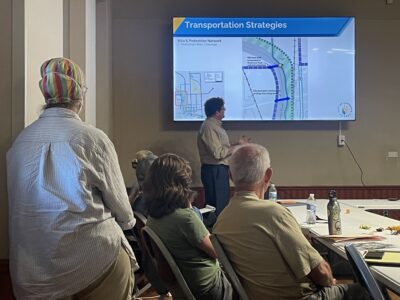
Tax abatement group differs on policy
Members of a city committee that reviews tax abatements disagreed – sometimes sharply – Wednesday about when the city should rescind or reduce tax breaks given to companies that don’t live up to expectations.
Several members of the committee said the city should not try to create a policy that automatically would reduce or eliminate companies’ tax abatements if they did not produce as many jobs, pay as high of wages or make as large of investments as they projected when applying for an abatement.
“I don’t know any business owner who can predict with absolute certainty what is going to happen in his business years into the future,” said Mike Maddox, chairman of the Lawrence-Douglas County Economic Development Board. “To me, the much more important thing is for businesses to prove to the community that they’re acting in good faith.”
The city should evaluate each business on a case-by-case basis to determine whether it remains worthy of a tax abatement, he said.
But several other committee members said a more specific policy was needed – one that would send a clear signal to businesses that when job, wage or investment totals fell below projections, they could be subject to changes in their tax abatements.
“I think the final analysis is always going to be somewhat subjective, but I think we can have rules that make it a lot less arbitrary,” Mayor Boog Highberger said.
The committee in April compiled a report that showed that seven of the 13 companies that currently receive tax abatements had fewer employees than they projected when applying for the abatement. Several were just one employee below their projections.
The largest shortfall was by DST Systems Inc., which fell 29 employees short. The report also found varying levels of compliance regarding the paying of wages that are at or above community averages.
“The numbers strike me as widespread noncompliance,” said Kirk McClure, a committee member and an associate professor in urban planning at Kansas University.
Maddox, though, took exception to McClure’s analysis and challenged him to point to specific definitions in city ordinances that would show the companies were out of compliance. McClure responded by saying the requirements were obvious and that Maddox was wasting the group’s time.
That led to Highberger asking group members to calm down.
“The civility level here is a bit below my preference,” Highberger said.
Group members agreed to meet again after city staff members have gathered information on how other communities monitor compliance of companies receiving tax abatements.
City Government

Developer seeks incentive from City of Lawrence to build 131 units of housing near Wakarusa and Queens

Lawrence city leaders will consider whether to keep Community Building open, make 2 other rec centers free to access
A STAR Bond application raises questions for city leaders about Costco and housing west of the SLT

Soccer gear honoring Lawrence history’s all-star team is now on sale as part of city’s public art exhibition
To honor public servants, Lawrence’s July 4 celebration will have a whole gallery of their photos on display; submissions open now