Small, medium artichokes boast intense flavor
Q: What do you look for when buying artichokes?
A: Fresh artichokes feel heavy and tight and tend to squeak when rubbed together. Make sure the stem end looks freshly cut, not too brown or black, but keep in mind that artichokes brown very quickly. Don’t be concerned if the outer leaves have a papery brown look to them. This is frost damage and doesn’t effect the flavor of the artichoke at all. Large artichokes are impressive but usually don’t have as intense flavor as the small and medium ones.
While larger artichokes grow at the top of the plant, “baby” artichokes grow on small side shoots. They stay small, and never develop mature, fibrous chokes, so they can be trimmed and eaten whole.
Q: How do you prepare artichokes?
A: When you bring artichokes home, be prepared to harden your heart and trim them. It is painful to discard so much of the vegetable, but have no mercy. Artichokes have tough, fibrous parts that must be removed to get to the tender vegetable. Basically, anything dark green is tough. Very light green and yellow is tender. Using a small, sharp knife, trim off the small, tough outer leaves of the artichoke near the stem. Snip off the leaf tips, if desired. Cut off and discard the stem so that the artichoke will stand upright. Gently open up the leaves to expose the hairy choke inside. Use a small stainless steel spoon and scrape out and discard the hairy choke and the small pointed purplish leaves covering it.
Artichokes turn brown quickly when cut, so keep a bowl of water with the juice of a lemon squeezed into it. Immerse the artichokes in the water as soon as you trim them. Some rub artichokes with a cut lemon as they trim. Don’t worry. When cooked, they turn a soft, even green and you don’t notice any brown.
Q: Do you have any recipes for using artichokes?
A: Here are a couple to try:
Sauteed baby artichokes
16 baby artichokes
2 tablespoons olive oil
2 shallots, thinly sliced
2 cloves garlic, minced
1 tablespoon balsamic vinegar
Salt and freshly ground pepper
Prepare the artichokes by removing all the green leaves, cutting off the green tips of the yellow leaves, trimming the stem end and cutting the artichokes in half. The choke is not developed on a baby artichoke so there is no need to remove it.
Put the artichokes in a skillet with about a cup of water. Bring to a boil, cover and simmer from 4 to 6 minutes, until they are just tender. Using a paring knife to check. Drain the artichokes and set them aside.
Heat the oil over medium-high heat in the same skillet. Add the artichokes, shallots and garlic and saute until browned, about 5 minutes. Add the balsamic vinegar, salt and pepper. Serves 4.
Fusilli pasta with artichokes and bacon
3/4 pound fusilli pasta (corkscrew-shape pasta)
4 medium artichokes
3/4 cup low-sodium chicken broth
2 ounces pancetta (cured but unsmoked Italian bacon), diced (or 2 slices bacon, diced)
1 small onion, thinly sliced
2 cloves garlic, minced
2 chopped tomatoes (or 1 cup chopped, canned tomatoes)
Salt and freshly ground pepper
Grated Parmesan cheese
Bring a large pot of salted water to a boil. Add the fusilli and cook until they are tender but still have a bite, about 10 minutes. Meanwhile, prepare artichokes for eating whole, trimming down to the tender yellow leaves. Cut them in quarters and remove the chokes. Place artichokes in a skillet with the chicken broth. Bring to a boil, cover and simmer from 7 to 10 minutes, until they are just tender. Drain the artichokes and set them aside. In the same skillet, saute the pancetta, onion and garlic until beginning to brown. Add the chopped tomato and artichokes and heat through. Add salt and pepper to taste. When the fusilli is done, add it to the skillet and mix well. Serve with grated Parmesan cheese. Serves 4.
Food
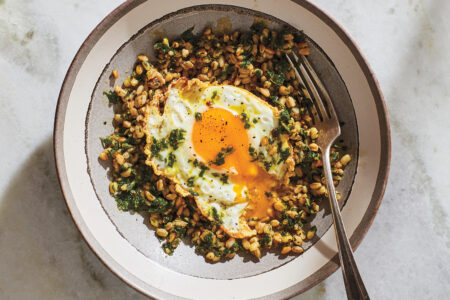
David Tamarkin’s recipe for Greens, Grains and Fried Egg works for any meal
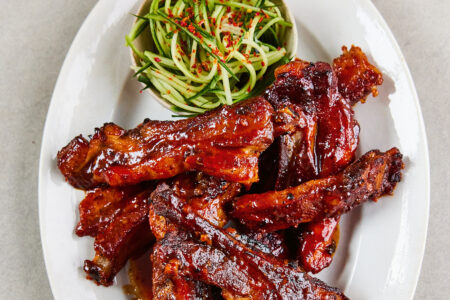
Slow-cooked, sticky-glazed pork ribs go with cucumber slaw in Sam Way’s recipe
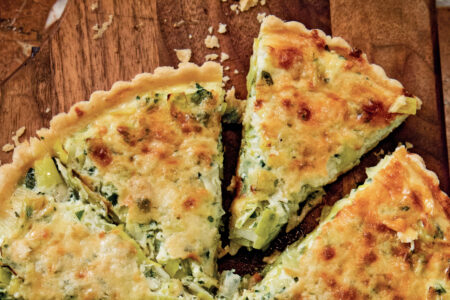
This quiche just might make you love leeks