Onions ideal for early planting
Among the vegetable crops that can be — and should be — planted early in the season are onions. In this climate, the harvest from later plantings tends to be sharper in taste and lacks the sweet edge that makes onions worth some space in the home garden. To achieve optimal flavor, onions should do most of their growing during the cooler weather in spring and should be pulled out of the ground in the early summer.
Onions can be grown three ways: from seeds; from plants, which look sort of like scallions and can be bought by the bunch at garden stores; and from sets, which are little mini-bulbs. Having planted them all, I now grow onions almost exclusively from sets.
Seeds offer more variety, and any exotic onions, such as the very flavorful varieties of Spanish onions, will probably have to be direct seeded into the garden or started indoors. The drawback to seeded onions is that they take longer to grow. Add germination time to the three months that other onions will require to mature. In addition, anytime germination is added to the equation, you introduce an opportunity to lose your crop early in the season.
Onion plants are fine, and I have used them with success. I sometimes have been unimpressed with the quality of the plants, though. It seems that every bunch contains a number of spindly plants that I end up tossing.
If you go this route, place the plants root end down and about 5 inches apart in a recently watered furrow that is 3 inches deep. Push the dirt back around the plants to leave a couple of inches of the tops showing.
I have come to prefer sets because they are more reliable. Some people argue that sets are more resistant to disease, but I just think they offer a more efficient delivery system for an onion bulb. With plants, I always have gaps in the row, where onions failed to thrive. Not so with crops planted from healthy sets.
Sets should be placed into a wet, 3-inch-deep furrow with the root end down. Set them 5 inches apart and replace the dirt so that they are covered with an inch of dirt. As the onions develop, you may want to push more dirt up around the shoulders of the bulb.
As with plants, the downside with sets is that you give up the opportunity to experiment with different varieties. Most greenhouses sell bags of white, yellow and red sets and the same basic varieties of plants, period. However, if you buy your sets and plants locally, you don’t have to worry about whether they are right for your climate.
The onion world is divided into long-day and short-day varieties. Long-day onions need 13-16 hours per day of sunlight and fare better in the North, while short-day onions can get by on just 12 hours of sunlight and are best grown in the South. We can grow the Southern onions and the Northern onions at the shorter end of the range.
Onions should be planted in well-tilled soil and should be watered regularly. As with extreme heat, drought will produce a sharp and even unpleasant taste in onions, so keep the soil uniformly moist.
Food
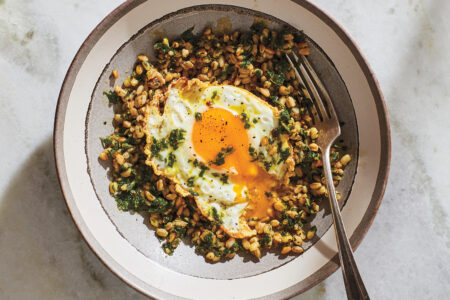
David Tamarkin’s recipe for Greens, Grains and Fried Egg works for any meal
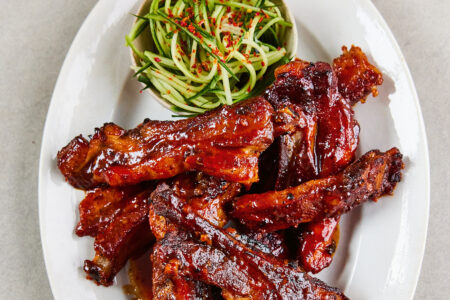
Slow-cooked, sticky-glazed pork ribs go with cucumber slaw in Sam Way’s recipe

This quiche just might make you love leeks