Quiz tests knowledge of nutritional value
Q. What is the theme for National Nutrion Month in March?
A. The theme this year is “Get a Taste for Nutrition.” Be adventurous and expand your horizons. Variety is the “spice of life” in your food choices and is key to good nutrition and health. Choose foods based on flavor, texture and colors that are tasty and healthy. Explore the wide world of nutrition by trying a variety of foods.
Here’s a nutrition quiz that was released by the American Dietetic Assn. to reinforce the importance of nutrition as a key component of good health, along with physical activity. Test your knowledge.
1. In addition to walnuts, which of the following is another rich source of omega-3 fatty acids?
a. peanuts
b. flaxseed
c. apple
d. broccoli
2. Which of the following foods has the least amount of calories per serving?
a. 1 medium apple
b. 1 slice bread
c. 1 ounce cheddar cheese
d. 4 large California ripe olives
3. How many servings of whole-grain foods should people consume daily?
a. 2
b. 3
c. 4
d. 5
4. Beans such as pinto and kidney beans, split peas and lentils count as a serving of which food group in the Food Guide Pyramid?
a. grains
b. meat
c. vegetable
d. meat or vegetable
5. Americans tend to underestimate the amount of food they eat by what percent?
a. 25 percent
b. 40 percent
c. 50 percent
d. 75 percent
6. Vegetarian diets are not appropriate for children. True or false?
7. Excess carbohydrates, not fats cause weight gain. True or false?
8. Eating a colorful variety of fruits and vegetables (red, yellow/orange, white, green and blue/purple) ensures you are getting a wide range of vitamins, minerals and phytochemicals to stay healthy and fit. True or false?
Answers
1. b. Flaxseed is derived from the flax plant, an annual herb believed to have originated in Egypt. Flaxseed and flaxseed oil are rich in heart-healthy omega-3 fatty acids. Flaxseed also contains a group of chemicals called lignans, which may have anti-cancer properties. You can purchase flaxseed whole or milled. Whole seeds cannot be digested. For a pleasant nutty taste, add milled flaxseed to salads, cereals, smoothies, juices or yogurt. When baking, generally, reduce the amount of flour by 1/2 to 3/4 cup, and add 1/2 to 3/4 cup loosely packed ground flaxseed.
2. d. Four large California ripe olives contain 24 calories and 2.5 grams of fat. Although olives are fruits and naturally cholesterol free, they are not counted as a fruit serving in the Food Guide Pyramid because they are mainly fat.
3. b. Three of the six to 11 daily grain group servings should be whole grains, such as whole wheat bread or pasta, oats, barley, brown rice, whole-grain cereal or cornmeal. Whole-grain products are made from the entire grain kernel with nothing removed. They are low in fat and rich in fiber, antioxidant nutrients (such as vitamin E), minerals (such as selenium), and disease-fighting phytonutrients.
4. d. Beans, split peas and lentils can be counted as a meat or vegetable serving. Due to their high protein content, a 1/2 cup serving is equivalent to one ounce of meat. When counted as a vegetable, one serving is 1/2 cup cooked beans. Dried beans (such as, soybeans, pinto, black and kidney beans), split peas and lentils are a staple in Greek, Mediterranean and vegetarian diets.
5. c. Many people have no idea what constitutes a sensible serving size. Today’s super-sizing trend promotes the “eat until you feel stuffed” mentality. The result is decreased attention to hunger cues and the inability to regulate how much to eat. Eat sensible portions by sharing an entree or dessert with a friend, checking product labels to judge a serving (many items sold as single portions actually provide two helpings or more, such as a 3-ounce bag of chips or a 20-ounce soda) or using smaller plates, bowls and cups so less looks like more on your plate.
6. false. Generally, vegetarian diets that include dairy products and eggs (lacto-ovo vegetarian) can meet the needs of a growing child if the recommended food group portions outlined in the Food Guide Pyramid are consumed.
7. false. When combined with a sedentary lifestyle, excess calories from any source, whether carbohydrates, fats or proteins, cause weight gain. Despite claims of “low-carb” weight loss regimens, a high carbohydrate diet doesn’t promote body fat storage by enhancing insulin resistance.
8. true. Researchers have just begun to uncover the benefits of the pigment-related phyto (plant)- nutrients found in fruits and vegetables. For example, recent studies show that adding blue/purple fruits and vegetables (such as blueberries, dried or fresh plums, concord grape juice, purple cabbage, eggplant) to your lowfat diet may help maintain memory function, healthy aging, urinary tract health and lower risk of some cancers.
Food

David Tamarkin’s recipe for Greens, Grains and Fried Egg works for any meal
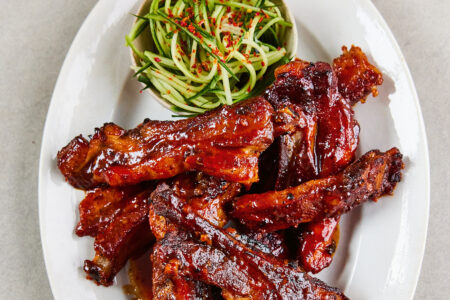
Slow-cooked, sticky-glazed pork ribs go with cucumber slaw in Sam Way’s recipe

This quiche just might make you love leeks