Schools help incoming students unlock mysteries of junior high
Megan Davis had practiced by trying to open a bicycle lock. But it didn’t make her first foray into opening a junior high locker any easier.
The soft-spoken 12-year-old in pink flip-flops stared at the locker and slowly turned the dial.
Other kids, attempting the same feat, stood beside her.
There were grunts and hollers of exasperation. One student kicked her locker in frustration.
“This is confusing!” Marshall Rawley, 12, cried.
No one said junior high would be easy. The students were participating in Junior High Jitters, a workshop to help ease the transition to junior high life that has been taking place at all of Lawrence’s junior high schools this summer.
The program is designed to make junior high seem a bit less daunting. After all, it’s a leap from elementary school.
“It is a big step, that’s for sure,” Southwest Junior High Principal Trish Bransky said. “Entering any new education experience is a big step for children and their parents.”
Megan recently moved to Lawrence from Colorado. She faces both a new community and a new school.
“I think it’s going to be kind of scary, because it’s so big and there’s so many people,” she said of junior high.
But there are bonuses to climbing the educational ladder.
According to Yarko Senyuta, 12, there are better lunches in junior high.
“You can have pizza and hamburgers every day,” he said.
There are opportunities to meet new friends and teachers. You can join clubs and play sports.
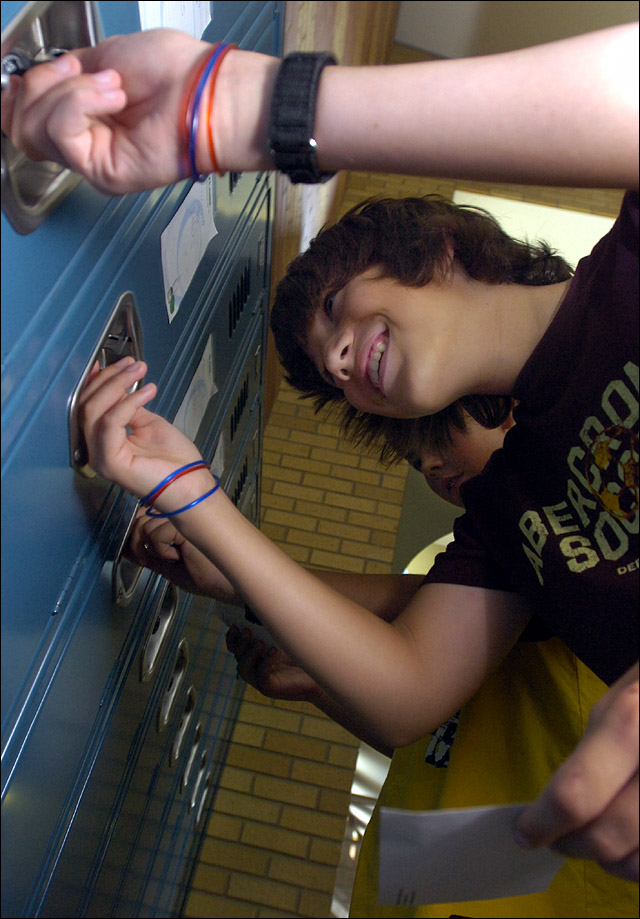
Incoming Southwest Junior High School seventh-grader Marshall Rawley attempts to unlock a locker in the hallway of the school. Seventh graders-to-be were oriented with the school and the repsonsibilities of junior high on Monday at SWJH.
But it’s also a bigger school with bigger demands, some students said.
“You have to kind of always be in a hurry to get from class to class,” said Cassie Galloway, 11.
Some students make the transition easily, and some struggle, Bransky said.
The Jitters program is run by workers in the Working to Recognize Alternative Possibilities program. WRAP is the Bert Nash Community Mental Health Center’s in-school counseling program.
The program is one of many ways officials are trying to alleviate students’ growing pains.
Bransky said it’s not uncommon for junior high schools to invite elementary students to the school for a preview of junior high life. And seventh-graders have a special first day of school before students in higher grades start.
“Kids do their best work when they feel comfortable in the environment they’re in,” Bransky said.
And students tried to get comfortable during a recent session. They toured the school and talked about schedules, assignments, school rules and other issues. And they battled their lockers.
Megan kept trying. Eventually, her locker popped open.
It was difficult, she said, like she expected.
City Government

Developer seeks incentive from City of Lawrence to build 131 units of housing near Wakarusa and Queens

Lawrence city leaders will consider whether to keep Community Building open, make 2 other rec centers free to access
A STAR Bond application raises questions for city leaders about Costco and housing west of the SLT
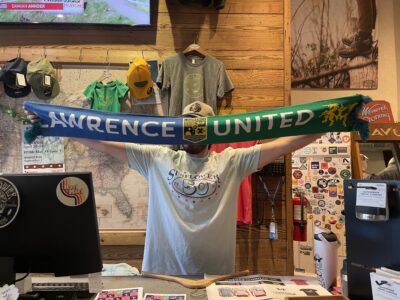
Soccer gear honoring Lawrence history’s all-star team is now on sale as part of city’s public art exhibition
To honor public servants, Lawrence’s July 4 celebration will have a whole gallery of their photos on display; submissions open now