$200 million in oil-for-food revenue to be given back to Iraq
Money will go into development fund
United Nations ? The U.N. Security Council on Friday approved the transfer of $200 million in oil-for-food revenue to the Development Fund for Iraq and said an additional $20 million can be used to pay Iraq’s past U.N. dues.
Iraq has been lobbying the council for months to stop using the country’s oil revenue to pay compensation to victims of the 1991 Gulf War and the salaries of U.N. weapons inspectors – and to transfer all money remaining in the U.N.’s oil-for-food accounts to the development fund.
Earlier this week, Secretary-General Kofi Annan proposed transferring part of the $345.9 million that was in the account at the start of the year to fund U.N. weapons inspectors who had the task of dismantling Iraq’s nuclear, chemical, biological, and long-range missile programs.
Annan proposed transferring $200 million to the Development Fund and using $20.3 million to pay Iraq’s outstanding U.N. dues.
That would leave more than $125 million to pay for continuing activities of the U.N. Monitoring, Verification and Inspection Commission known as UNMOVIC.
France’s U.N. Ambassador Jean-Marc de La Sabliere, the current president of the 15-nation council, said he has drafted a reply approving the secretary-general’s proposal. Nobody objected, so the letter of approval will be sent.
“This is an Iraqi initiative,” Iraq’s acting ambassador Mohammed Al-Humaimidi said. “Of course, we are happy about it. : It is our money.”
But Al-Humaimidi said Baghdad won’t be satisfied until all of the money in the escrow account is transferred to the development fund.
Iraq’s U.N. Ambassador Samir Sumaidaie has been arguing that Iraq does not pose a threat and does not possess any weapons of mass destruction, and therefore it is a waste of money to spend more than $10 million a year on UNMOVIC.
“This is the Iraqi people’s money,” said Richard Grenell, spokesman for the U.S. Mission to the United Nations. “We welcome the council’s decision to give the money back to them, and now the newly elected government can decide how best to spend it.”
Under the oil-for-food program, Iraq was allowed to sell oil provided the proceeds went primarily to buy humanitarian goods and pay war reparations, but a small percentage of the money also was used to pay for U.N. weapons inspections and to buy spare parts for the oil industry.
U.N. inspectors left Iraq just before the U.S.-led war started in March 2003 and the United States has barred them from returning. They have continued to work, compiling a detailed database and using commercial satellite photos to keep track of equipment with dual civilian and military uses, which they had been monitoring on the ground.
After blocking discussions about UNMOVIC’s future for nearly two years, the United States quietly started low-key talks in February on ending its work. Earlier this month, acting U.S. ambassador Anne Patterson said the United States wants the Security Council to wrap up UNMOVIC’s work before September.
But the French ambassador said not all council members were ready for a quick discuss on UNMOVIC’s future though he was hopeful talks would begin by the time the council gets its next report from the U.N. inspectors in September.
National

Authorities disrupt planned drone, gun attack on White House UFC cage-fight
Rain along the Gulf Coast could become the first named storm of the Atlantic hurricane season
MIAMI (AP) — A cluster of storms along the Gulf Coast could become the first named tropical storm of the 2026 ...
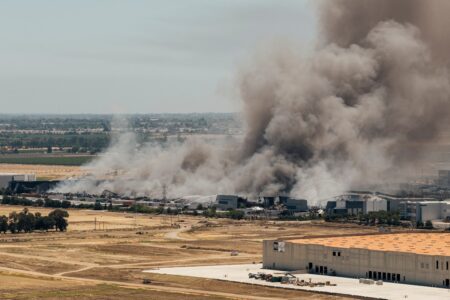
Unhealthy air quality in California city as huge warehouse fire burns for 3rd day
Judge orders Trump administration to restore National Park changes at sites that ‘disparaged’ US
Teens’ reading and math scores have stagnated, US test results show
WASHINGTON (AP) — Younger students have regained ground academically after the pandemic's disruptions while older ...