Water officials call for more study of Kaw degradation
Topeka ? Another study is needed to consider the problem of shallow stretches along the Kansas River, state water leaders said Thursday.
“It’s a very critical issue that we need to deal with,” said Earl Lewis, manager of hydrology and evaluation for the Kansas Water Office.
More than 1 million Kansans – about 40 percent of the state’s population – who live in counties along the river’s 170-mile course depend on it for drinking water, electricity-producing power plants, industrial development and recreation.
In recent years, the streambed has dropped in some areas, costing public water suppliers and power companies millions of dollars because the level of the river dipped below water intake pipes.
Degradation of the riverbed is caused by natural flooding, the effect of water released from dams that scour the bed, problems with the Missouri River, and sand-dredging operations, which pull about 1.4 million tons of sand per year that is used for construction.
On Thursday, the Kansas Water Authority approved allowing the Water Office to identify particular reaches of the river, prioritize problems within those reaches and come up with a budget on what it would cost for a major study of the river and possible remediation.
The authority has moved cautiously in reviewing problems on the Kansas River as sand-dredgers have protested that the study is unneeded and that environmentalists are trying to stir up trouble.
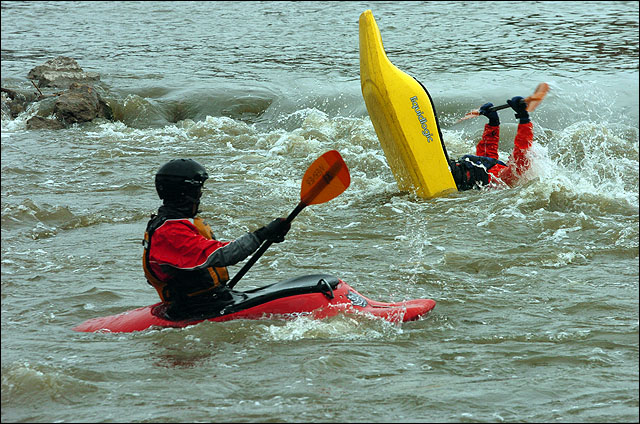
Kayakers Chase Edgerton, left, and Kevin Burk, both KU students, took to the waters below the Kansas River Bridge last April. Water officials Thursday commissioned further study of the effect of dredging on the river, which provides drinking water, power and recreation to more than 1 million Kansans.
The battle between recreational users of the river, such as Lawrence-based Friends of the Kaw, and sand-dredgers was in full sight at the authority’s meeting.
Laura Calwell, Kansas Riverkeeper for Friends of the Kaw, told the authority, “Dredging on the Kansas River is a serious problem that needs further attention.”
But David Penny of Lawrence, president of Masters Dredging Co., said dredgers were being unfairly picked on and that most of the degradation is occurring because of natural flooding and reservoir releases.


6News video: Kansas River focus of degradation study (06-02-05)
River report gets mixed reviews (06-01-05)
Water office to request study for river (04-23-05)
He said environmentalists “are downright hostile” to all other users of the river, including hunters and fishermen. “We’ve had it with these so-called environmentalists,” he said.
Others, however, said the state had a responsibility to protect the Kansas River. “The bottom line is how do we manage the Kansas River in the future to balance the interests of all concerned,” said Carl Nuzman of Silver Lake, a hydrologist who also serves on one of the state’s river basin advisory committees.
City Government
Developer seeks incentive from City of Lawrence to build 131 units of housing near Wakarusa and Queens

Lawrence city leaders will consider whether to keep Community Building open, make 2 other rec centers free to access
A STAR Bond application raises questions for city leaders about Costco and housing west of the SLT

Soccer gear honoring Lawrence history’s all-star team is now on sale as part of city’s public art exhibition
To honor public servants, Lawrence’s July 4 celebration will have a whole gallery of their photos on display; submissions open now