

Homeland Security secretary outlines department overhaul
Washington ? Homeland Security Secretary Michael Chertoff on Wednesday announced sweeping changes at his 2-year-old department, pledging to make mass transit safer from terrorists as part of a new focus on the nation’s greatest vulnerabilities.
The overhaul, in the works for months, comes on the heels of last week’s bombings of London’s subways and bus systems. It also will centralize terrorism analysis, put a higher priority on bioterrorism issues and tighten U.S. borders.
The changes are intended to settle federal turf wars and growing pains at the department. A direct response to the attacks of Sept. 11, 2001, the department was created in 2002 by combining 22 agencies.
Chertoff opened the speech with condolences to the British after the London bombings. He said the department would look to use technology to detect explosives and biological, chemical or radioactive material on rail, subway and bus systems.
Deputy Secretary Michael Jackson told reporters the detection tools probably would be installed in New York, Washington and other large cities with subway systems subject to the greatest risk of attack.
These types of technologies, still in varying stages of development, could cost the government an estimated $6 billion to buy, install and maintain, said William Millar, president of the American Public Transportation Assn. He agreed with the push for better weapons detectors, provided that Washington finds the money and the security “doesn’t hold up our passengers.”
An estimated 32 million commuters ride subways, trains and buses every day, Millar said.
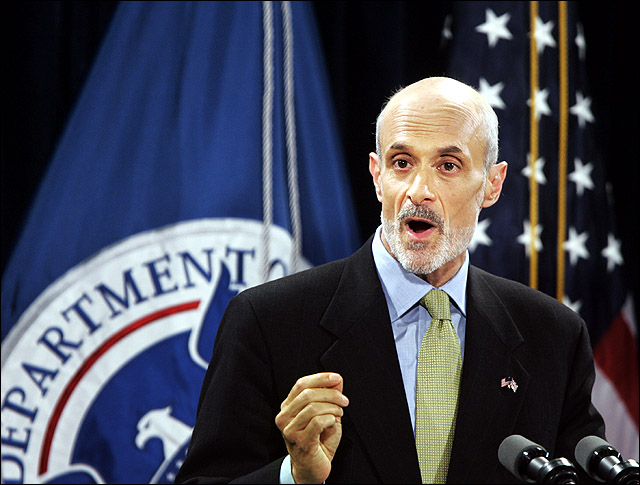
Homeland Security Secretary Michael Chertoff announces a six-point agenda for the Department of Homeland Security designed to ensure that the department's policies, operations and structures are aligned in the best way to address the potential threats. Chertoff outlined the reforms on Wednesday in Washington, D.C.
Chertoff said he would name a director to centralize intelligence information gathered by 11 bureaus under his control. This official would seek to improve the department’s standing among U.S. intelligence agencies.
Chertoff also said he would create a chief medical officer to oversee bioterrorism policy and coordinate responses to biological attacks. Poor communication among federal agencies during the Washington area’s false anthrax scare this year was a factor in this move.
Four-fifths of the proposed changes can be accomplished under Chertoff’s existing authority; the others require congressional approval.
Lawmakers generally offered cautious praise for the changes. But union leaders representing the department’s 180,000 employees questioned whether the reorganization would do much to make the nation safer.
“It’s a tired repackaging under a guise of a new agenda, but in fact, nothing is changing,” said T.J. Bonner, president of the union that represents border patrol agents. “Our borders continue to be wide open, and their only solution is the same failed polices.”
National

Authorities disrupt planned drone, gun attack on White House UFC cage-fight
Rain along the Gulf Coast could become the first named storm of the Atlantic hurricane season
MIAMI (AP) — A cluster of storms along the Gulf Coast could become the first named tropical storm of the 2026 ...
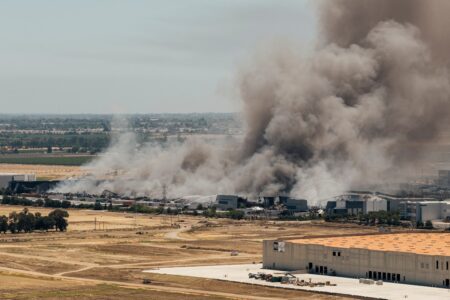
Unhealthy air quality in California city as huge warehouse fire burns for 3rd day
Judge orders Trump administration to restore National Park changes at sites that ‘disparaged’ US
Teens’ reading and math scores have stagnated, US test results show
WASHINGTON (AP) — Younger students have regained ground academically after the pandemic's disruptions while older ...
