Sticking to their diet
International students confront adjusting to new foods
When Laura Musonye came to the United States from Kenya to study human biology at Kansas University, she had some cultural adjustments to make — not the least of which was the food she ate.
“Everything tasted different. I personally did not like the meats, and I stayed away from them. They tasted fake, processed,” says Musonye, 21, a junior.
“It was just very weird for me to go to a supermarket and buy chicken in a (plastic-wrapped) pack. At home, you’d go and get a live chicken, and they’d slaughter it for you.”
Musonye is one of about 1,600 international students at Kansas University who come from around the world to earn their degrees.
A big part of that process is adapting to daily life in the United States, including how they choose to eat — whether to stick to preparing the foods they know best from their homelands or to eat more like an American college student.
Ann Chapman tends to see the ones who shift away from their own dietary traditions, choosing to consume more high-fat, high-carbohydrate meals and convenience foods.
Or, rather, she sees the results of that choice, when international students come to her for help.
“They’ve put on 10 or 15 pounds after living in the United States for a year or so. They’re coming to see me because they’ve gained weight they didn’t need to gain,” says Chapman, a registered dietitian and coordinator of nutrition services at KU’s Watkins Memorial Health Center.
“Some of them are concerned because they’re going to be making a visit home and they’re worried about their family’s reaction. You get a sense they feel people would be critical of their appearance.”
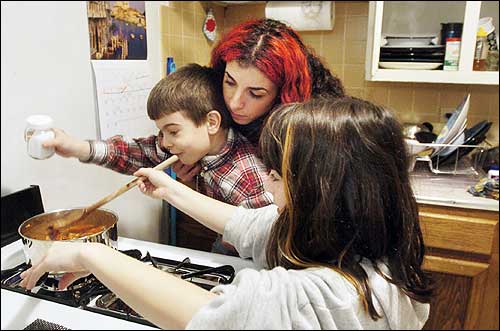
Francesca Vance, a Kansas University student from Italy, helps her son Dorian Vance, 5, add salt to sauce that is being stirred by her daughter, Sienna Vance, 8. Francesca is among the 1,600 international students at KU who must learn to adapt their diet when they come to the United States.
Chapman doesn’t have to worry about Musonye packing on the pounds, though.
The Kenyan has seen how American college students eat, and she isn’t impressed.
“I have friends who eat the same thing every day of the week, and I just couldn’t do that. People here seem to be in love with pizza. It’s beyond me; I wouldn’t even eat it once a month,” she says.
Retaining native foods
The KU students Chapman counsels — international or otherwise — are either referred to her by Watkins physicians or are self-referred, having heard about her services.
An initial appointment with Chapman costs $10; follow-up appointments are $7.
| In conversations with international students at Kansas University, the names of the following businesses were mentioned as good places in Lawrence to find ethnic or specialty foods from abroad:¢ Au Marche — the European Market, 931 Mass.: Patronized by many students from Germany, Sweden, Holland and Eastern Europe.¢ Brits, 929 Mass.: Popular with students from Britain, Scotland, Africa, Southeast Asia, New Zealand and throughout Europe.¢ Mediterranean Market and Cafe, 3300 Bob Billings Parkway: Offers large variety of products familiar to students from the Middle East, Asia and Eastern Europe.¢ Oriental Supermarket, 711 W. 23rd St.: Carries many canned, bottled and dried products imported from Asia. |
She has worked with students from South America, the Middle East, Africa and Europe.
The students from abroad have typically gained weight because they have changed their eating habits, consuming more food that isn’t part of their culture.
They’ve also become increasingly sedentary, thanks to hours spent in the library or in front of the computer.
“Fast food is a factor. They eat out and eat American food in a rush, picking up burgers. Many report that our diets have less vegetables than they are used to eating,” Chapman says.
The result of these dietary changes is often weight gain and higher cholesterol.
Which is why they come to see Chapman.
“I encourage them to continue eating as much of their own native foods as they can. That’s the diet they grew up with, and most of them were healthy eating that type of diet,” she says.
Chapman also educates students from abroad about transitioning to American food — and the huge portions typically served in restaurants.
“I talk to them about being careful when they’re eating out. A good rule is to set half the meal aside, and have it (later) as a second meal,” she says.
Chapman also urges students to seek out more vegetables and fruit, cutting down on meat and high-fat dairy products.
Missing food from home
For many international students, living in the United States means having to make dietary compromises, even while trying to hold on to their culture.
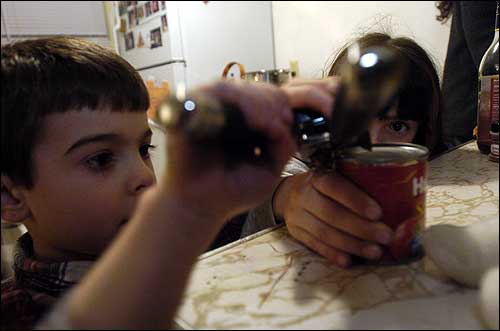
Dorian Vance, left, gets some help opening a can of tomato sauce from his sister, Sienna Vance. The children helped their mother prepare a pasta dish Sunday evening.
“When I first came here, I had to adjust to the different lifestyle, which is much more hectic here, and the fact that a lot of the things we make back home are not immediately available to me,” says Francesca Vance, 31, a native of Florence, Italy.
“For the longest time, I ate baked potatoes with mozzarella on top — so non-Italian, you know?”
Vance has lived in Lawrence since 1994. She is studying English literature at KU and teaching Italian to undergraduates.
She has two children, Sienna, 8, and Dorian, 5.
Living in Lawrence, Vance often can’t find the products she loved in Italy — and if she can, they’re often unaffordable for her.
“If I wanted to cook the Italian way, I’d have to have a bigger income. I make do. Occasionally, I treat the kids and myself with fresh mozzarella and prosciutto, but it’s not something I do every day, like back home,” Vance says.
Despite the challenges and temptations of living in the United States, she tries to hold on to her Italian roots.
“I cook pasta every day. I don’t go out nearly as much as the average American does. Ever since the kids were born, I just want to make sure they eat healthy — vegetables and fruit, meat and fish occasionally,” Vance says.
“It’s not like being at my mother’s in Florence, of course. But I try to do my best.”
Food
David Tamarkin’s recipe for Greens, Grains and Fried Egg works for any meal
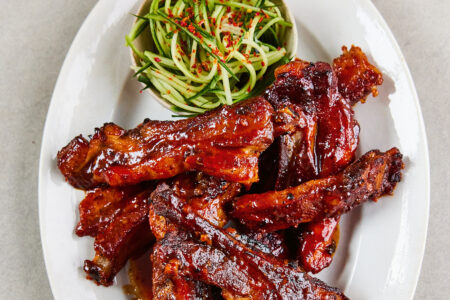
Slow-cooked, sticky-glazed pork ribs go with cucumber slaw in Sam Way’s recipe
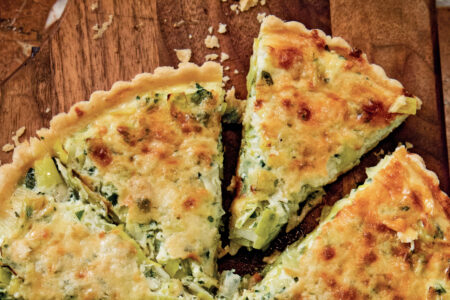
This quiche just might make you love leeks