Roberts: Continued Japanese ban on U.S. beef would be costly
Senator calls prohibition hypocritical, damaging
Wichita ? Sen. Pat Roberts assured Kansas cattlemen Friday that if Japan does not open its market to U.S. beef by the end of this month, it could face repercussions, not only in terms of trade but in the relationship between the two countries.
Speaking to reporters after addressing the Kansas Livestock Assn.’s convention here, Roberts said he thought it was unlikely that Japan wouldn’t eliminate the ban on U.S. beef soon, as Japanese Prime Minister Junichiro Koizumi has promised President Bush.
“I am not overly confident, but I am optimistic that this is going to happen,” said Roberts, R-Kan. “It’s taken way too long.”
Japan was once the biggest overseas market for American beef, buying more than $1 billion worth in 2003. Japan imposed the ban in December 2003, after the first case of mad cow disease was reported in the United States.
Roberts called the ban “a little hypocritical,” noting Japan has had 23 cases of mad cow disease in its domestic herd.
The United States, which as of Dec. 1 has tested 534,879 cattle for the disease since stepping up its surveillance program in June 2004, has found two cases, one in a cow that was imported from Canada and one in a Texas-born cow.
On Oct. 26, a group of 21 U.S. senators introduced legislation that would force Bush to impose tariffs on Japan if it does not lift the ban. Roberts said Friday that while he does not believe the bill would come to a vote this week as Congress wraps things up for the year, lawmakers are serious about it.
“We have support from both sides of the aisle that this is that important that we will vote on this in the Senate,” Roberts said, adding that senators were already working to come up with a plan on how to administer tariffs on Japanese products. “I wish it hadn’t come to that, but if that is the case, that is what we are going to do,” he said.
Roberts, chairman of the Senate Intelligence Committee, also said the United States is better prepared today for a bioterrorism attack on the food supply than it was before the Sept. 11 terrorist attacks.
“I can tell you when we talk about it in the intelligence committee … you always say what keeps you up at night now in terms of the latest threat, and food is in the top 10 and higher,” Roberts said, adding that before the attacks food security was not even on the radar.
The senator’s comments came as about 850 Kansas cattlemen were wrapping up their annual two-day conference to position the powerful livestock group for another state legislative session and for changes in the global marketplace.
Taking the helm of KLA as its new president this coming year is Ron Estes, an Atchison cattleman. David Cross, a livestock producer from Lewis, will take over in December 2006.
“We are going to have an increased supply, no question about it. Statistics show the cow herds are increasing in this state. In turn as the cow herds start to increase we are going to have more beef on the market. But we have demand that is extremely good right now,” Estes said.
He said that while domestic demand has been good, the opening up of Asian markets like Japan and South Korea are extremely important.
As far as the upcoming legislative session, KLA wants to keep the sales exemption for agricultural producers and keep property taxes “fair,” he said. It also wants to pass the responsibility for financing individual districts to those districts through local option taxes rather than taxing the whole state.
“School finance is going to be a real important thing, and as KLA members we will be there to protect our interests,” Estes said.
City Government
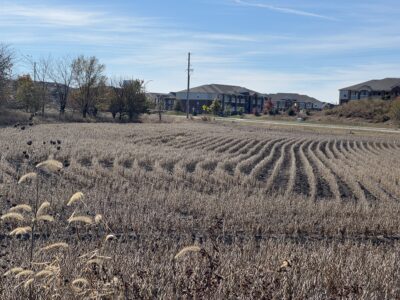
Developer seeks incentive from City of Lawrence to build 131 units of housing near Wakarusa and Queens

Lawrence city leaders will consider whether to keep Community Building open, make 2 other rec centers free to access
A STAR Bond application raises questions for city leaders about Costco and housing west of the SLT
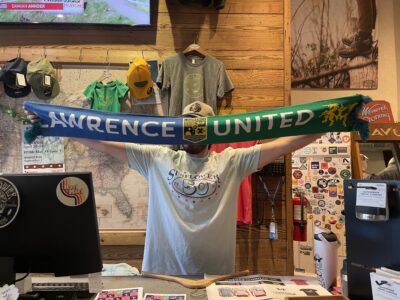
Soccer gear honoring Lawrence history’s all-star team is now on sale as part of city’s public art exhibition
To honor public servants, Lawrence’s July 4 celebration will have a whole gallery of their photos on display; submissions open now