Timing tomato crop a gamble for growers
For many vegetable gardeners, April is a month of watching and waiting. It is also a time of intense study as we track the weather forecasts and scrutinize the fine print about daily highs and lows. All of this is designed to answer the question of when it’s finally safe to plant tomatoes.
As a tropical fruit, tomatoes like their weather warm. While the plants we use in North America have been bred to thrive away from the equator, they are anything but frost-tolerant. That means that if you put tomato plants in the ground too soon, where the soil is too cool or an overnight frost can settle on the leaves, you may well lose your crop.
This really is a tortoise-and-hare issue. Do you plant now, in hopes of having plump, red tomatoes by the Fourth of July, even though it’s still a little risky? Or do you wait a week or two and be sure that cold weather won’t harm your plants, even if it means you might not have your vine-ripened fruit quite as soon?
In northeast Kansas, the last average date of a killing frost is April 20. That’s an average through the years, though. We might already have had it for 2005 — or it could come much later in the month.
My recommendation for those who are impatient is to begin planting as soon as you have successive overnight temperatures in the upper 50s. But then hedge your bet. Put a few plants in the ground, then wait three or four days and put out a few more, and so on. If they are bitten by frost, pull them up immediately to make room for new ones.
I used to mess around with Wall-o-Waters and other frost shields, but such gadgetry is usually expensive and sometimes comes with drawbacks. The water-filled cones, which are designed to contain heat, also trap moisture and can cause mold to begin growing on your plants. In addition, any plant cover that isn’t well-anchored can be blown around by the wind and may damage the plant in the process.
The same timing guidelines apply for peppers and eggplant, which also are nightshades.
If you buy plants from a greenhouse, select the sturdiest plants you can find, because wind will be an issue. If you can afford to buy larger plants, rather than those in 2-inch containers, you will increase your odds of having a successful crop. More mature plants are less likely to fail during transplanting.
Also, be sure that your nightshades have been hardened off before you put them in the ground. Plants that have been hardened off have been gradually exposed to cooler temperatures so they can spend the night outdoors without suffering.
This is a real issue when you plant in late April and even into the first week of May. Nightshade transplants can fail to thrive if they get a severe chill, even without frost.
This happened to me one year. I had purchased lush tomato plants at a local greenhouse, but within three days they clearly were dying. As I thought about it, I realized that I had found them in an enclosed greenhouse and that they undoubtedly had not been exposed to the elements until I took them home and put them in the garden. It was simply too much of a shock.
If you can, get your plants at an open-air vendor. If that isn’t possible, buy greenhouse plants, but introduce them gradually to the real weather. Start by leaving them outside during the day and then increase the time that they are outside in the evening until they can safely stay outside overnight. This usually takes four or five days.
Food

David Tamarkin’s recipe for Greens, Grains and Fried Egg works for any meal
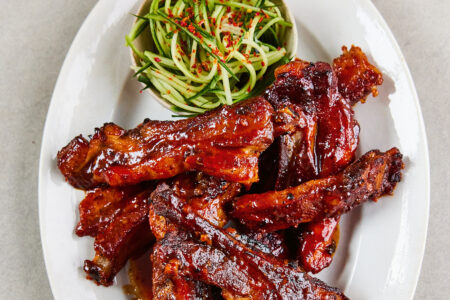
Slow-cooked, sticky-glazed pork ribs go with cucumber slaw in Sam Way’s recipe