Plug-in hybrid buses attract energy-minded officials
Vehicle would use fraction of fuel used by one SUV
Maybe someday they’ll call it the electrici-T.
Officials on Thursday toured a replica of a “plug-in hybrid” bus that would rely mostly on electricity for power to get around town. Such buses might be used by the Lawrence bus system, the T, in a few years.
“Great opportunity,” Mayor Mike Rundle said after inspecting the bus at City Hall. “An easy sell when you talk about fuel efficiency.”
The bus is being developed by an alliance that includes Kansas University, with an eye on keeping fuel consumption, fuel costs and air pollution low.
“Eighty percent of the time, you’re not using any gasoline at all,” said Karl Birns, an environmental studies instructor at KU. Birns also is director of research at the Metropolitan Energy Center, a partner in the bus-development consortium that includes the Kansas City Area Transportation Authority and vehicle-maker DaimlerChrysler. The Federal Transportation Administration is helping finance the program.
Birns said he hoped the FTA would sponsor a test program to build 100 of the plug-in hybrids and distribute them to transit systems across the country for testing. Lawrence has added its name to the list of cities hoping to participate in such a program.
Full-scale manufacturing, Birns said, probably won’t take place until at least 2009. The anticipated cost of the hybrid, $70,000 or more, would be about 60 percent higher than a paratransit bus, which now costs in the neighborhood of $44,000.
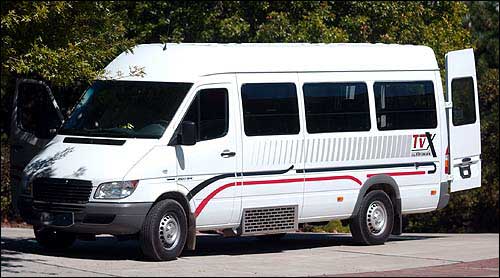
Lawrence officials have expressed interest in purchasing a fleet of fuel-efficient hybrid buses. A bus similar in appearance to the hybrids, but not itself a hybrid, sat outside City Hall on Thursday.
Traditional hybrid cars are powered by gasoline engines, generating electricity internally to keep fuel mileage low. A plug-in hybrid bus would be charged through an external electrical connection when not in use; combustible fuel would be used only for extra speed or power.
The result, according to the consortium, will be a small bus that uses less than 10 percent of the fuel needed by a full-sized sport utility vehicle.
And that’s tempting to city officials.
“In these times of budget crunches — even in good times — stretching the dollar is a mandate officials have,” Rundle said. “I think we’re going to see this as time goes on.”

 6News video: Lawrence signs up for hybrid bus program (09-16-04)
 How do Hybrid Electric Vehicles Work?
The city has 26 buses, a mixture of midsized vehicles that run regular routes and smaller shuttle buses that provide door-to-door service for disabled Lawrence residents. The bigger buses aren’t due for replacement until 2013, while the smaller shuttles — like the “sprint bus” officials saw Thursday — are already on a replacement rotation.
“We don’t have a need right now,” City Manager Mike Wildgen said. “This is looking into the future.”
City Government
Opinion: Environmentally conscious Lawrence is not focused on the biggest problem with electric vehicles
Locust Street apartments, Holcom housing development among this year’s applicants for $700K in Affordable Housing Trust Fund money

Business owners hurting from Wakarusa Drive closure say they’re getting no answers, no signs, no accountability
Planning Commission recommends adding more layers to approval process for data centers in Lawrence
Lawrence Loop trail may go along busy downtown street; city wants to steer clear of Riverfront for development reasons