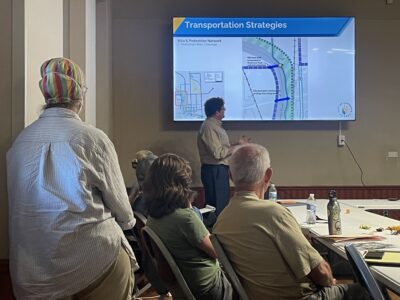
Education official touts No Child Left Behind
As experts predict the United States’ economic supremacy in the world is slipping, it’s more important than ever to improve U.S. schools, a federal education official said Tuesday.
While the U.S. economy is the largest in the world, Christina Culver told about 50 people at a Lawrence Chamber of Commerce-sponsored luncheon, its days at the top may be numbered.
When asked whose economy would be the biggest in 75 years, most of a group of Nobel-Prize winning economists picked not the United States, but China. Some picked the European Union.
Few of the economists thought the United States would even be a contender in 75 years because China and the European Union will have larger populations and better-educated workers, Culver said.
For every engineer who graduates from a U.S. college, 40 graduate in China, she said.
The Bush administration’s No Child Left Behind Act seeks to improve schooling so America can stay competitive in the world, she said.
For example, the president and Congress saw in 2001 that two-thirds of fourth-graders could not read proficiently, she said.
“That’s a frightening number,” Culver said. “Before No Child Left Behind, we only vaguely identified problems and tried to spend our way to a solution.”
Culver, deputy assistant secretary in the U.S. Department of Education, graduated from Lawrence High School in 1984. She also graduated from Kansas University.
Culver said the No Child Left Behind act also increased accountability in schools and was improving test scores.

 6News video: Official discusses No Child Left Behind
Nearly 72 percent of Lawrence public school students have tested proficient and above in reading, up 0.5 points from the year before, according to material Culver made available at the luncheon.
Nearly 71 percent have tested proficient and above in math, up 7.4 points from the year before.
Still, only 14 percent of black fourth-graders and 37 percent of white fourth-graders in Kansas recently tested proficient in reading.
Lawrence school board member Rich Minder said after the luncheon that he doubted the Bush administration’s commitment to education.
“I think the people of Kansas need to ask themselves if they want a government that is spending money on a ridiculous war in Iraq,” Minder said. “We could be investing in education.”
School board President Leni Salkind, who also attended the luncheon, said the Kansas Legislature had not been meeting its obligation to adequately fund public schools.
“I think that the notion of … No Child Left Behind is certainly a good one; I couldn’t disagree with that,” Salkind said. “What would really make it perfect is having the funding to help us. The state has been so negligent.”
City Government

Developer seeks incentive from City of Lawrence to build 131 units of housing near Wakarusa and Queens

Lawrence city leaders will consider whether to keep Community Building open, make 2 other rec centers free to access
A STAR Bond application raises questions for city leaders about Costco and housing west of the SLT

Soccer gear honoring Lawrence history’s all-star team is now on sale as part of city’s public art exhibition
To honor public servants, Lawrence’s July 4 celebration will have a whole gallery of their photos on display; submissions open now