City, county leaders peruse rural development plans
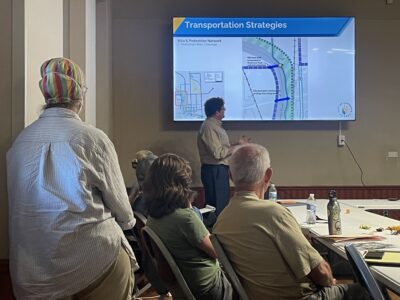
Lawrence and Douglas County commissioners Thursday got their first look at a proposed set of guidelines to eliminate the five-acre exemption and push rural development closer to the city limits.
Commissioners weren’t sure they liked what they saw.
At a joint meeting between city, county and planning officials, commissioners questioned whether the proposed rural development plan would too drastically change the way the county grows. The plan was developed by a rural development subcommittee of the Lawrence-Douglas County Planning Commission.
“I felt like we asked for a plan that would give us some more clearly defined means of how we could encourage orderly development,” said County Commissioner Bob Johnson. “It seems like what we have is a plan that sets out to change the world.”
Plan details
If approved, the plan would be added as a new chapter to Horizon 2020, the city and county’s comprehensive land-use plan.
Among the items the plan would change:
- The current five-acre exemption would be replaced with essentially a 20-acre exemption. The five-acre exemption allows landowners who have at least five acres of rural property to build a home without going through the sometimes expensive rezoning and platting process. People who have already bought a 5-acre tract of land would be allowed to develop it under a grandfather clause in the regulations.
- In exchange for eliminating the five-acre exemption, the city of Lawrence would ease its restrictions on the amount of water it will treat for use by rural water districts. The city has limited the number of new water meters districts may add during a year in an effort to control rural growth. City officials have expressed concern about uncontrolled rural growth because they believe it ultimately costs taxpayers more money to provide services to scattered rural homes.
- The county would begin charging an undetermined impact fee on rural homes to help pay for the costs related to new development, such as roads, police and fire services.
- County commissioners would cede part of their planning authority to city commissioners. County commissioners would continue to give approval to rezoning requests in the urban growth areas surrounding cities. But city commissions or councils in each city in the county would approve the plats for new developments. Plats are the plans that show where streets, sidewalks, utility easements and other necessary infrastructure devices are located in a development. Planning officials said the change was needed to make it easier and cheaper for the rural developments to ultimately be annexed into the cities.
Concerns mount
Concerns about the plan ran the gamut. County Commissioner Jere McElhaney said he was concerned impact fees would worsen housing affordability problems in the county.
County Commissioner Charles Jones said he was concerned the plan did not place enough restrictions on where rural subdivisions could be built in the urban growth areas, which are areas that cities are expected to annex in the next 20 years.
“I don’t think we want to see subdivisions growing willy-nilly in the urban growth area,” Jones said. “I think that creates some transportation and planning issues.”
Planning Commissioner Ernie Angino said the elimination of the five-acre exemption would make the plan difficult politically.
“I suspect once this document starts being discussed among landowners, something will hit the fan,” Angino said. “I don’t think it is going to sell very well.”
City Commissioner David Schauner, though, urged everybody to try to work through their differences because the rural area was in need of better planning practices.
“If we do nothing, something will still happen in the urban growth area and in the county, it just may be that it is something we don’t like,” Schauner said. “I want us to leave here believing some plan needs to be developed.”
Members of the rural development subcommittee agreed to rework the plan and bring it back to the full Planning Commission for further debate. No timeline for the plan to re-emerge was set.
City Government
Developer seeks incentive from City of Lawrence to build 131 units of housing near Wakarusa and Queens

Lawrence city leaders will consider whether to keep Community Building open, make 2 other rec centers free to access
A STAR Bond application raises questions for city leaders about Costco and housing west of the SLT

Soccer gear honoring Lawrence history’s all-star team is now on sale as part of city’s public art exhibition
To honor public servants, Lawrence’s July 4 celebration will have a whole gallery of their photos on display; submissions open now