Gardeners begin planning for spring plantings
Tips on growing potatoes
To anyone who has not spent an early spring day tilling up a vegetable garden, what I’m about to say will undoubtedly seem like nonsense. By the same token, those of my ilk, the folks who have dirt under their fingernails in mid-March, will understand.
On Saturday I worked the little section of my garden where I intend to make my first spring planting. This rectangle, which measures about 16 feet by 35 feet and is right next to my bed of overwintered garlic, is where I’ll plant onions, carrots, snow peas and potatoes later this week.
Many years ago, my early-season garden was almost as big as the area I planted for summer. I no longer have the time to maintain a large garden before the end of the school year, so I’ll plant just enough to keep my hand in.
That’s just the point. The size of the garden is unimportant; what matters is being outside doing what gardeners do. One thing I’ve learned over time is that the gentle labor involved in growing food is a source of relaxation. In years when I’ve skipped the spring garden altogether, I have been a less happy person. On Saturday, I was reminded why.
An exhilarating experience
The dirt gave up easily, as it had many times before, erupting behind the tiller in a swath of deep brown velvet and filling the air around me with the aroma of pure earth. That’s a smell I’ve encountered only in the very early spring, after ground that has been dormant for the winter has been jostled into the new season.
I suspect this is the aroma of near fertility. It’s a different scent than the musk that arises from the ground in June, when the first drops of a summer thunderstorm dampen the soil. What I experienced Saturday was the opening of the dirt before the earthworms have passed through, before the warmth of the sun has drawn them toward the surface.
A cold breeze and a faint drizzle buzzed at my face and hands as I worked, but the feeling of exhilaration that came from being right there, when the ground relented for spring, warmed the task. In many respects, I was in a gardener’s limbo, suspended between the seasons, in both the chill of winter and the thaw of spring.
Before me lay all the potential of a harvest not yet planted. With the exception of the bed of garlic, my garden this time of year is an empty space, two-dimensional surface awaiting decisions. Its destiny is to be three-dimensional, when the garden grows up and down, obscuring the plane on which it rests.
I’ll till again a time or two before I plant. The forecast called for rain early this week, but no matter. Where the ground has been broken for this season, the soil will dry quickly and I will plant when it’s time. What is important is that I’ve made the beginning.
Potential for potatoes
Now for a practical matter: The only component of the early-spring garden that requires advanced planning is potatoes. A potato crop is grown from potatoes, cut so that each piece of potato contains two or three eyes. The chunks of potato must be cured in open air overnight, so that the exposed part of the flesh dries before planting.
Just as potatoes sprout in a dark place in the kitchen, these chunks of potato will produce plants underground. Five pounds of potatoes will plant three to four 25-foot rows. The individual pieces should be planted about six inches apart, four inches deep.
Start the crop from seed potatoes purchased at a nursery or garden store, or use organically grown potatoes from the supermarket. Do not use traditionally farmed potatoes from the grocery store because they probably have been treated with a chemical to keep them from sprouting.
A number of mail-order companies sell potatoes but many will not ship to addresses in Zone 5 until later in the season, which means the customers miss the opportunity to plant their spuds on or near St. Patrick’s Day. Many potato vendors delay shipping because they don’t want their merchandise sitting in mailboxes when the temperatures are still cold enough to damage it.
But unless you’re looking to plant exotic varieties of potatoes, the local stock should work just fine.
Food
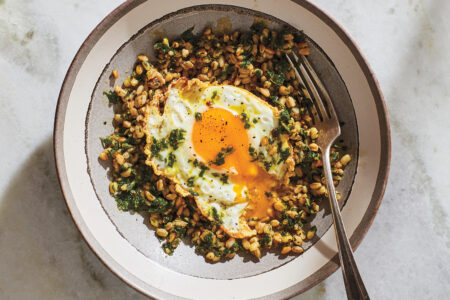
David Tamarkin’s recipe for Greens, Grains and Fried Egg works for any meal

Slow-cooked, sticky-glazed pork ribs go with cucumber slaw in Sam Way’s recipe

This quiche just might make you love leeks